
A secret Antarctic world emerges: Ancient marine life found beneath shattered iceberg
Scientists rush to explore a hidden undersea habitat—possibly centuries old—revealed by a sudden iceberg break-off


A scenic view of an iceberg in the Gerlache Strait, near the Antarctic Peninsula. While not the A-84 iceberg, it offers a glimpse of the dramatic icy landscapes where events like the recent A-84 break-off unfold.
Juan BARRETO / AFP
When a Chicago-sized iceberg splintered off the George VI Ice Shelf earlier this year, it didn’t just raise concerns about climate change—it revealed a window into an ancient, unseen world teeming with marine life.
What scientists found lurking beneath the ice defied expectations.
Using a remotely operated vehicle named SuBastian, a team of researchers from the Schmidt Ocean Institute dove nearly 230 meters into the newly exposed Bellingshausen Sea seafloor. The site—previously buried under 209 square miles of ice—had likely not seen sunlight for centuries.
In an article for ABC News, journalist Julia Jacobo reports that researchers observed a vibrant ecosystem of deep-sea corals, enormous sponges, icefish, sea spiders, and even octopuses—some possibly undiscovered species. The expedition offered a once-in-a-generation glimpse into a world long hidden beneath Antarctica’s ice.
“We found a beautiful, thriving ecosystem,” said expedition co-lead Patricia Esquete. One particularly large sponge suggests this undersea community may have existed for decades, even hundreds of years.
Life in the dark
Typically, deep-sea ecosystems rely on nutrients falling from the ocean surface. But with 500 feet of ice overhead, scientists were puzzled by how this community thrived.
Experts now believe that strong underwater currents may have delivered life-sustaining nutrients to the seafloor, keeping the ecosystem alive in what was assumed to be an inhospitable zone.
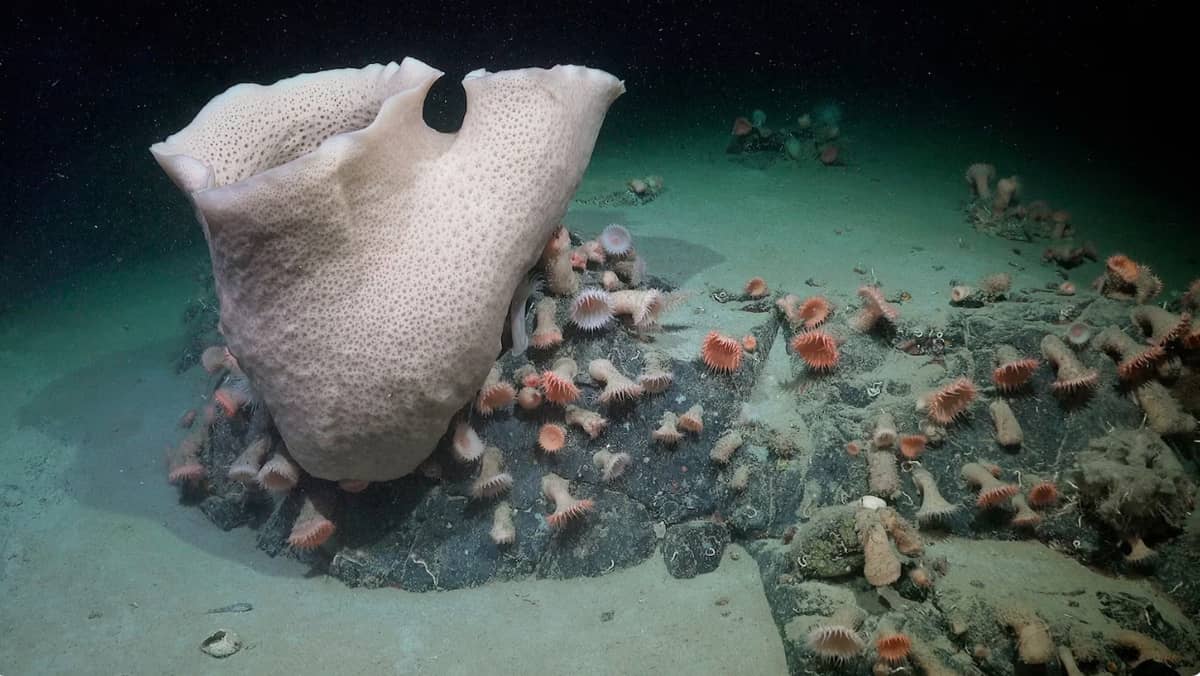
A massive sponge and anemones spotted 230 meters deep beneath the former George VI Ice Shelf, suggesting a centuries-old undersea community.
ROV SuBastian / Schmidt Ocean Institute
Climate science in real time
The iceberg, known as A-84, drifted over 250 kilometers from its point of origin, bouncing along parts of the Antarctic coastline. Its dramatic separation from the George VI Ice Shelf was documented by NASA satellite imagery, offering a rare look at the shifting face of Antarctica.
“The ice loss from the Antarctic Ice Sheet is a major contributor to sea level rise,” said Sasha Montelli, a researcher from University College London and co-lead of the expedition. Montelli emphasized that understanding these changes is crucial for modeling future sea-level scenarios.
Researchers deployed underwater gliders to collect data on how glacial meltwater is affecting local ocean chemistry. Early findings show a strong flow of meltwater from the shelf—evidence of how global warming is reshaping even the most remote corners of the planet.
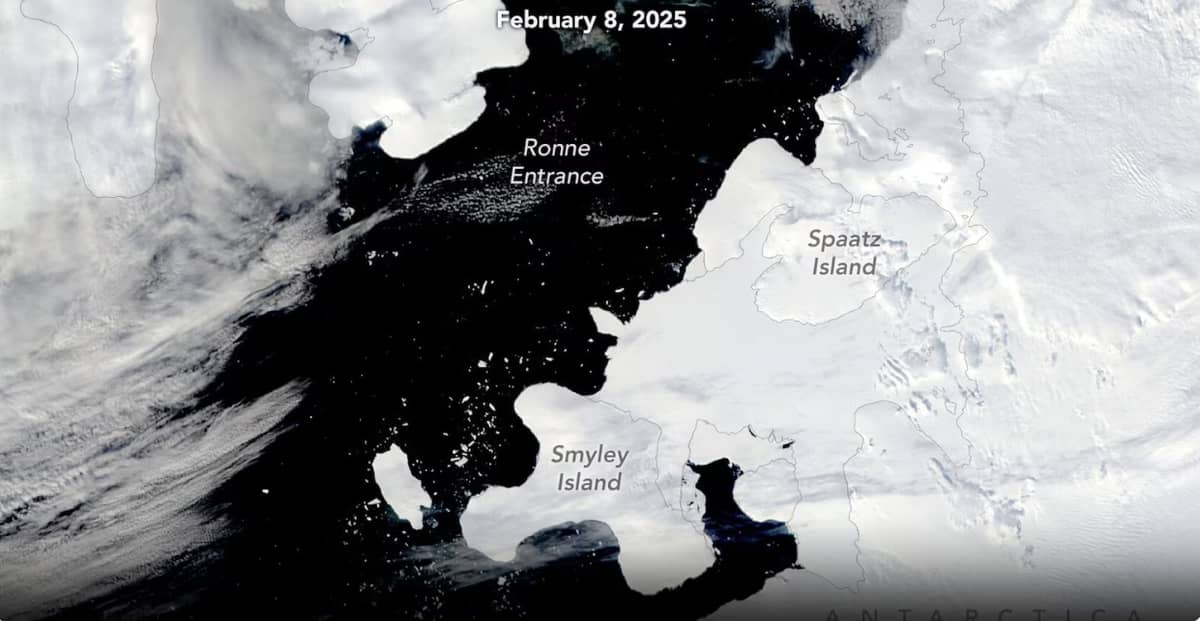
A new iceberg has spent part of the Southern Hemisphere’s 2024-2025 summer ricocheting off parts of the Antarctic coastline. Over the past month, the potato-shaped berg has drifted about 250 kilometers (150 miles) from its point of origin near the George VI Ice Shelf’s southern end along the base of the Antarctic Peninsula.
NASA
A bigger picture
This discovery isn't just a marvel of marine biology—it also unlocks clues about how Antarctica’s ice has behaved over centuries. “Our work is critical for providing longer-term context of these recent changes,” Montelli added.
As climate change continues to accelerate, scientists hope these insights will help inform global environmental policy and prepare vulnerable regions for what’s to come.