
PPO welcomes Rowena Arrieta home and celebrates Lithuanian ties in concert
Her long-awaited homecoming was marked by her headlining Concert VI: Homecoming, part of the Cultural Center of the Philippines’ Philippine Philharmonic Orchestra’s Forte concert series


Way back in 1985, several cultural and educational activities were lined up in the Windy City to commemorate the inaugural flight of Philippine Airlines (PAL) from Manila to Chicago, which was everything we could have wished for and more. If memory serves me right, there was a curated never-seen-before Filipiniana dinner supplemented by globally acclaimed Filipino entertainers, all for valued patrons. There was even a string of seminars and workshops conducted by members of the tourism and travel trade delegation.
Now National Artist for Visual Arts Federico Aguilar Alcuaz had an on-the-spot painting at the metropolis’ prime park, to capture the breathtaking scene of the Chicago skyline, which we understand, was donated to the city’s top official. We likewise witnessed the turnover of some Philippine tarsiers from Bohol to the renowned Chicago Zoo. Am I right to recall then-president of PAL took the baton of the Chicago Symphony Orchestra briefly and conducted a few numbers?
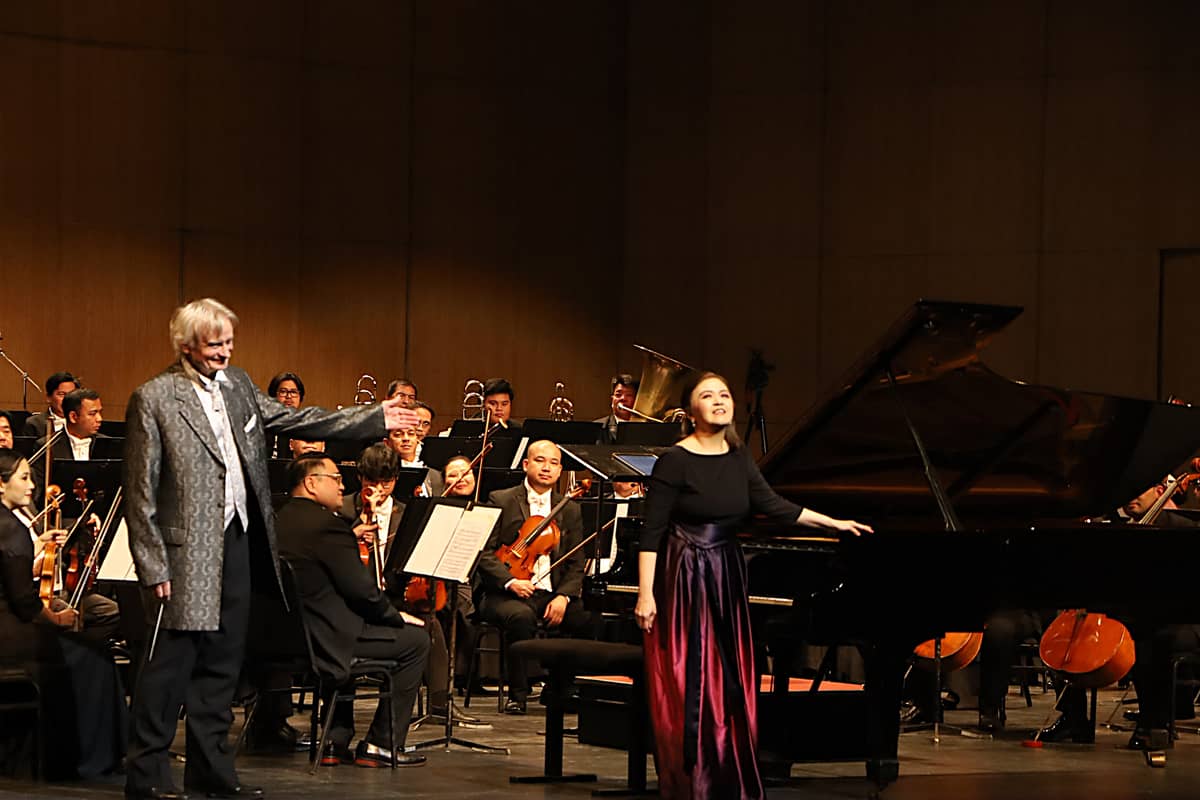
PPO conductor Gregorz Nowak presents Rowena Arrieta.
Photographs courtesy of the Cultural Center of the Philippines
And then there was Rowena Arrieta, a rising star in the classical music world, who left a lasting impression as she performed with the same orchestra. Suffice to say, Arrieta was a sensation!
We learned that she had privately visited Manila on several occasions. But this year heralded the very first time she returned to our shores to perform professionally.
Her long-awaited homecoming was marked by her headlining Concert VI: Homecoming, part of the Cultural Center of the Philippines’ (CCP) Philippine Philharmonic Orchestra’s (PPO) Forte concert series. This concert celebrated the 35th anniversary of Lithuania’s restoration of independence and the 150th anniversary of the birth of Lithuanian artist Mikalojus Konstantinas Ciurlionis.
As a child prodigy, Arrieta started to play the piano by two, read musical notes by three, and composed by five. She was one of the first graduates of the Philippine High School for the Arts and continued her education at the Moscow State Conservatory, where she graduated with highest honors.
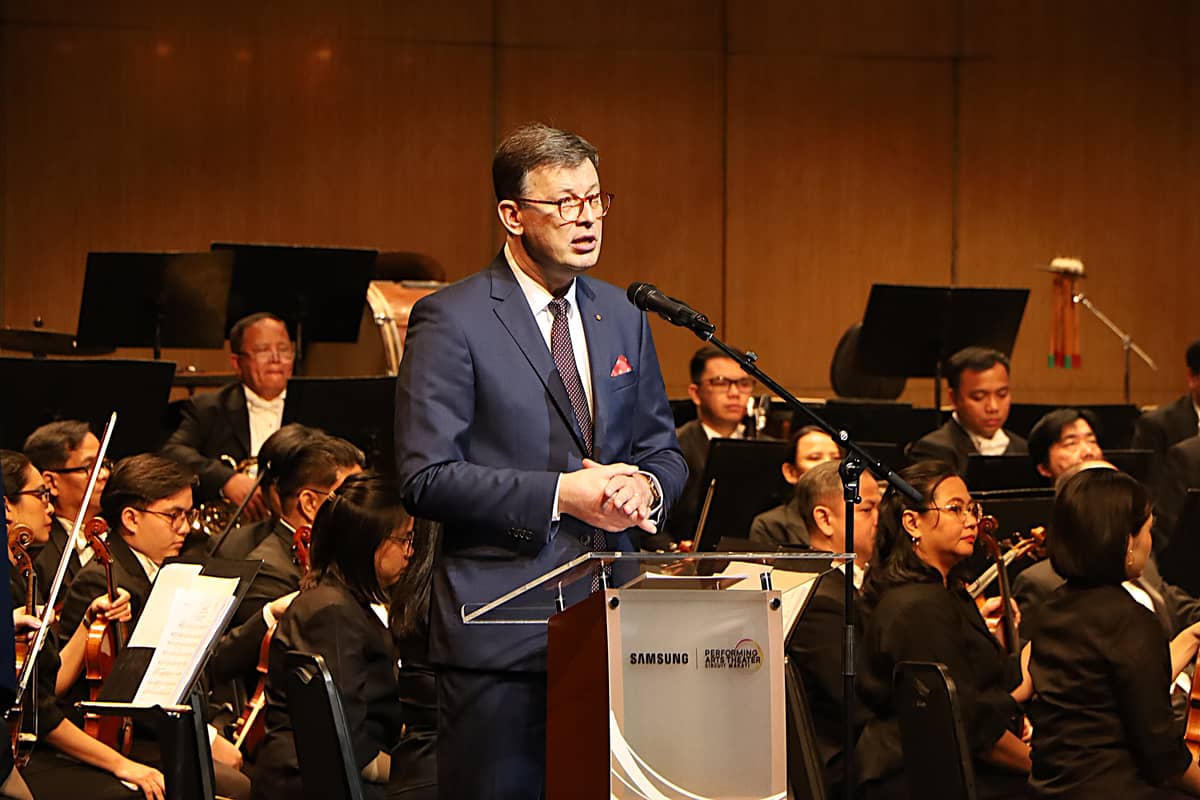
Ambassador of the Republic of Lithuania to the Philippines Ricardas Šlepavicius delivers a message.
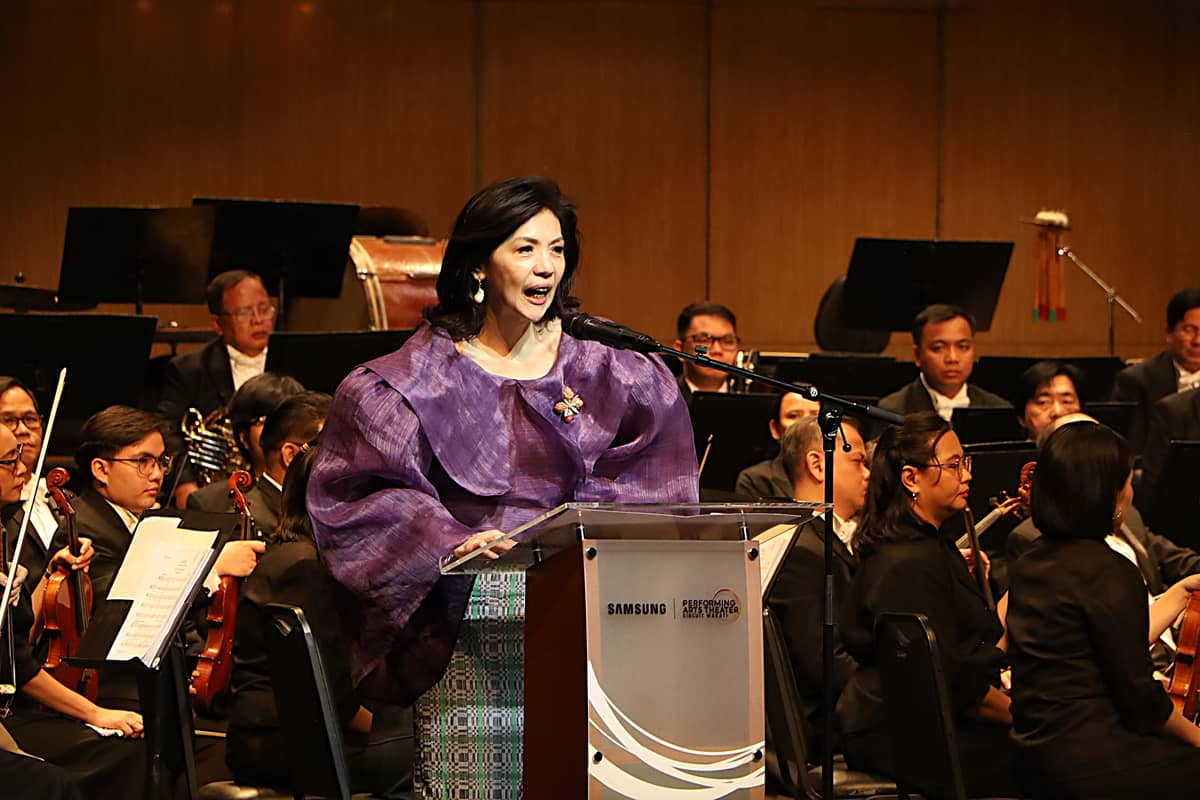
CCP president Kaye Tinga with her welcome remarks.
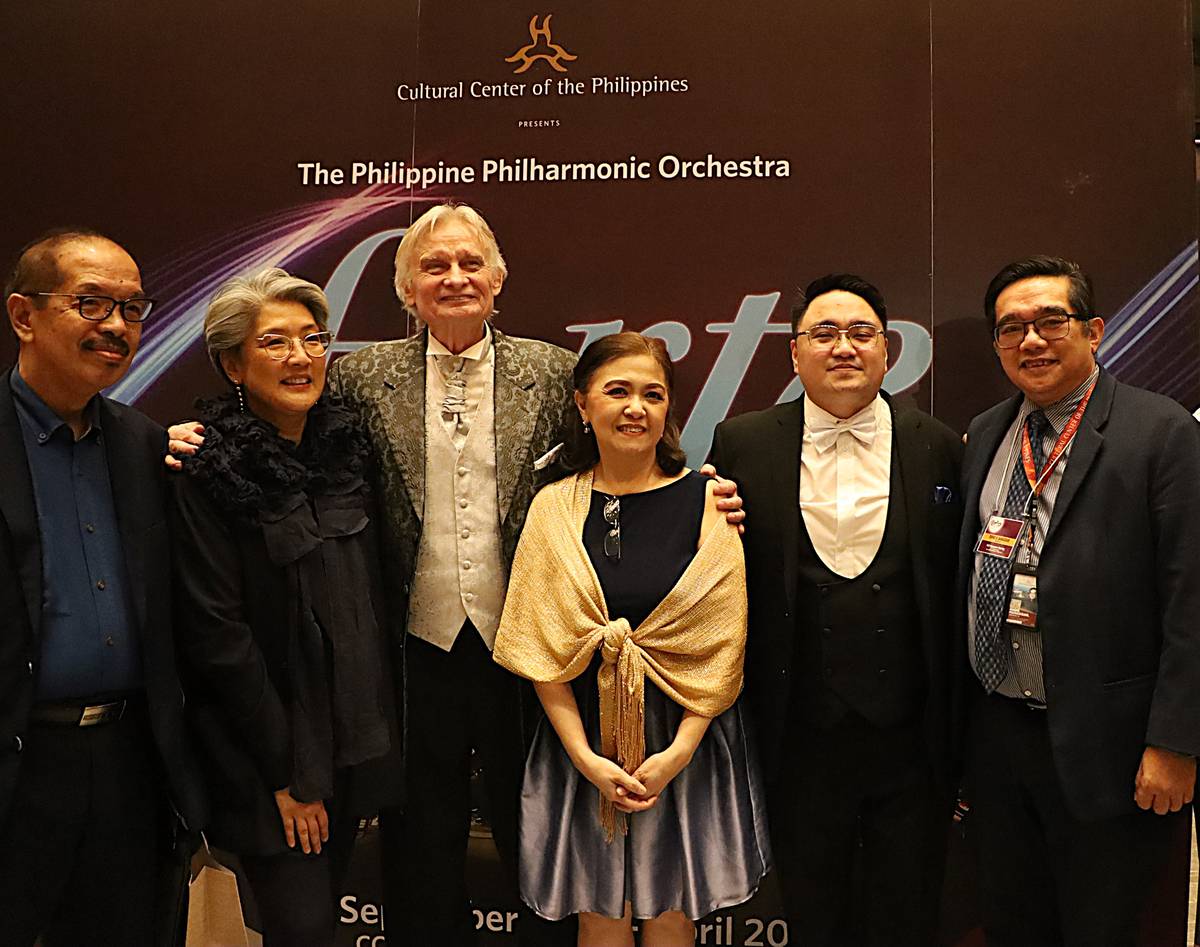
Critic Pablo Tariman (left), Irene Marcos (second from left) and CCP VP and artistic director Dennis Marasigan (right) join the performers for a photo.
She was the pioneer and only Filipino pianist to be recognized as a laureate of the prestigious Tchaikovsky International Piano Competition in 1982, winning fifth prize, plus a special award for being the youngest and most promising competitor. She went on to clinch First Prize at the José Iturbi Competition in Valencia, Spain, and the Frinna Awerbuch International Competition in New York. And she had continued to accumulate citations after citations, awards after awards, through the years for herself and for the country. Unstoppable, that’s what she is!
The evening began with an address from the Ambassador of the Republic of Lithuania to the Philippines, Ricardas Šlepavicius, followed by a message from CCP president Kaye Tinga.
The first performance of the night was Ciurlionis’ symphonic poem Miske (In the Forest), a grand orchestral work which beautifully captured the Lithuanian landscape, where he likewise immersed himself while he painted. The full orchestra — complete even with a harpist — filled the stage with lush, immersive sounds, evoking the gentle rustling of pine trees and the mystical ambiance of the forest.
Then came Arrieta’s moment. She took center stage to perform Franz Liszt’s Totentanz (Dance of Death). The piece, inspired by medieval depictions of death’s omnipresence, was executed with striking intensity. Arrieta’s interpretation was both dramatic and powerful, somber and subdued. At times, she seemed to stomp on the piano keys, her arms raised in the air, only to transition into sudden, delicate passages which demonstrated remarkable control and restraint. I was dumbfounded! “She has not lost it,” I thought to myself.
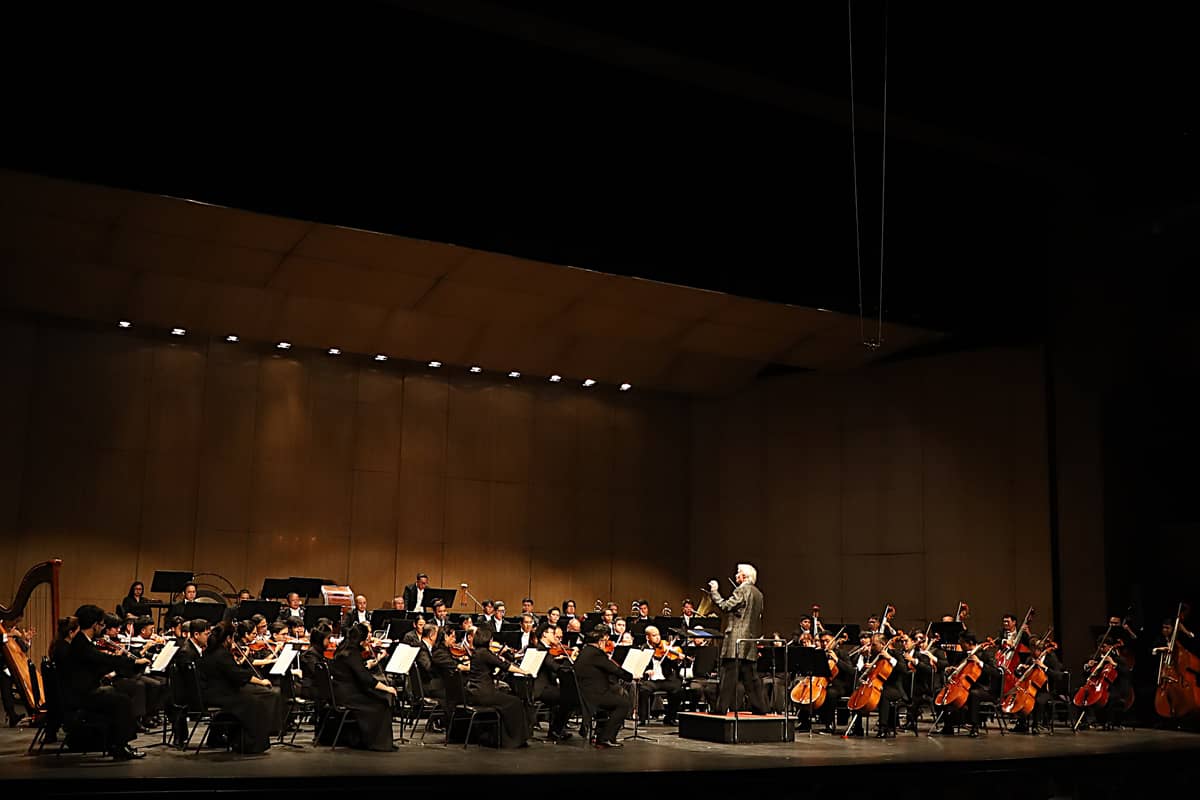
The Philippine Philharmonic Orchestra in full force.
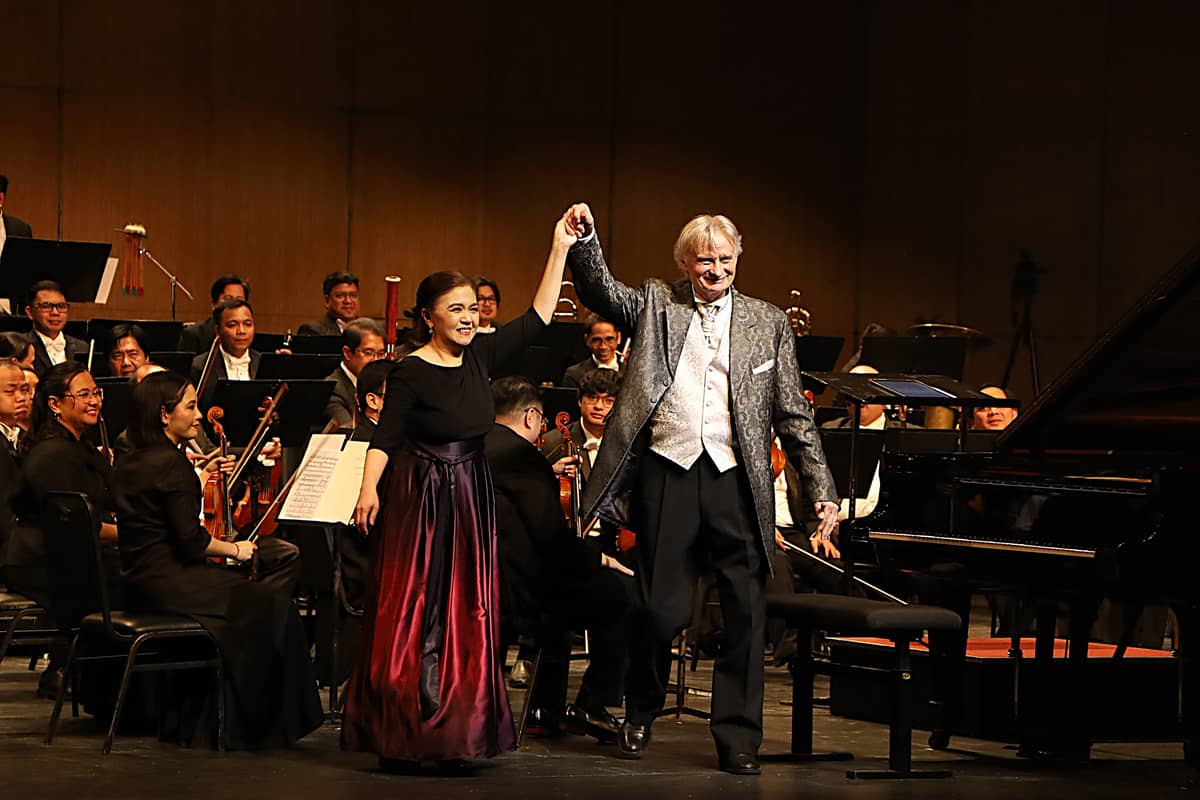
Nowak raises the hand of the featured artist.
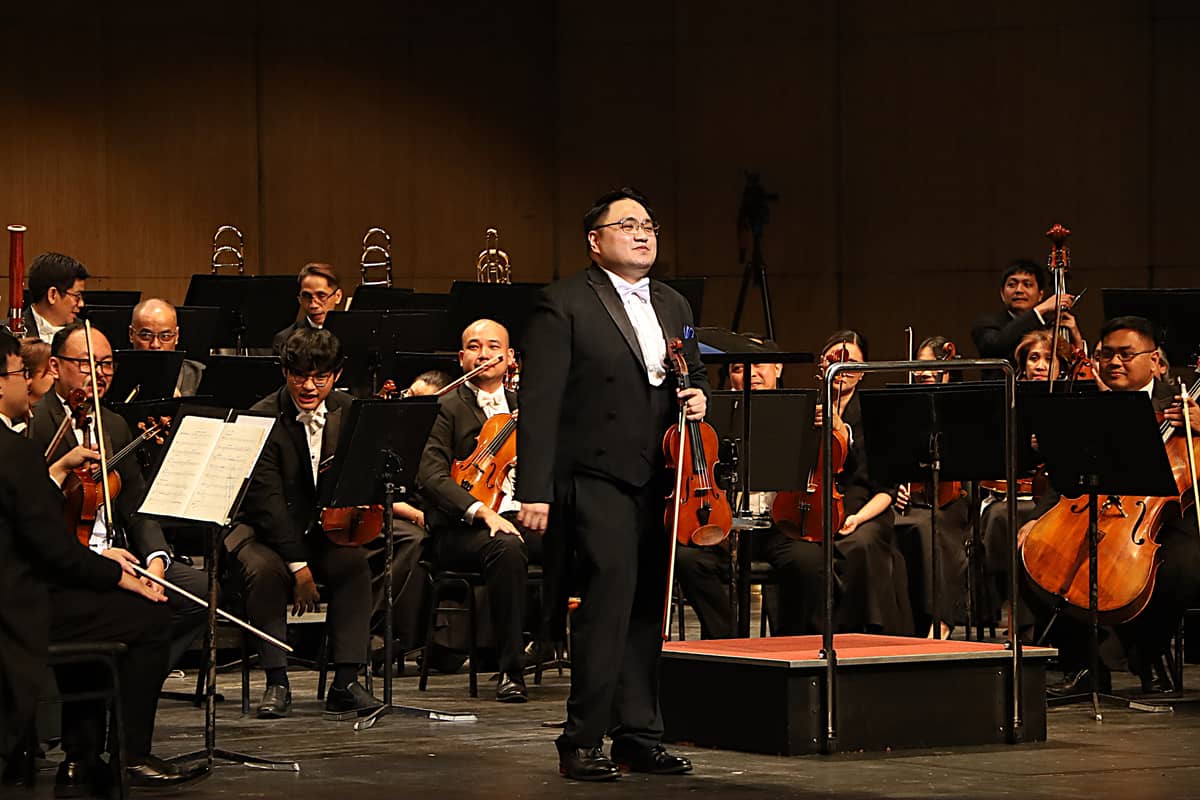
Philippine Philharmonic Orchestra’s concertmaster and artist-in-residence Diomedes Saraza Jr.
The audience erupted into a worthy standing ovation, with cheers and applause. She obliged us with a tender rendition of First Nocturne by National Artist Nicanor Abelardo as the encore.
Following Arrieta’s performance, the audience was treated to a spellbinding interpretation of Ralph Vaughan Williams’ The Lark Ascending, with solo portions performed by PPO’s concertmaster and artist-in-residence Diomedes Saraza Jr. The music soared, capturing the image of a lark gliding effortlessly through the sky. The delicate, fluttering notes transported the audience to an ethereal realm.
The concert concluded with a selection from Pyotr Ilyich Tchaikovsky’s Swan Lake Suite. Listening to the pieces without the accompanying ballet was a unique experience. And yet, the music itself was so evocative that I could almost imagine dancers glide across the stage.
Throughout the entire concert, conductor Gregorz Nowak did not miss a beat. Huge props to the maestro!
It was a grand night for music, truly a homecoming and commemoration to remember.
¡Enhorabuena, Rowena Arrieta and the CCP! Mabuhay! Sveikinimai!