
Pune Grapples with rare nerve disorder outbreak
Guillain-Barré Syndrome cases surge in India, tracing roots to foodborne pathogen


Pune Municipal Corporation Commissioner and Administrator Dr. Rajendra Bhosale visited Kamala Nehru Hospital to review the various measures being implemented to prevent GBS disease. He also gave instructions to the concerned parties regarding further actions.
Photo from Pune Municipal Corporation on X.
Pune, India – The western city of Pune is facing an alarming outbreak of Guillain-Barré Syndrome (GBS), a rare nerve disorder where the immune system attacks nerve cells, leading to muscle weakness, paralysis, and in severe cases, death. Since early January, approximately 160 cases have been reported, with five suspected fatalities.
What Is Guillain-Barré Syndrome?
GBS begins with numbness or tingling in the hands and feet and progresses to muscle weakness, difficulty moving joints, and, in extreme cases, the inability to breathe without ventilator support. The disorder worsens over 2–4 weeks and can have a mortality rate of 3% to 13%, depending on healthcare access and severity.
The outbreak in Pune has drawn global attention due to its suspected link to campylobacter jejuni, a foodborne pathogen and the leading cause of GBS worldwide. Experts believe the strain circulating in Pune may have molecular properties that mimic human nerve cells, causing the immune system to attack both the pathogen and the nerves—a process known as molecular mimicry.
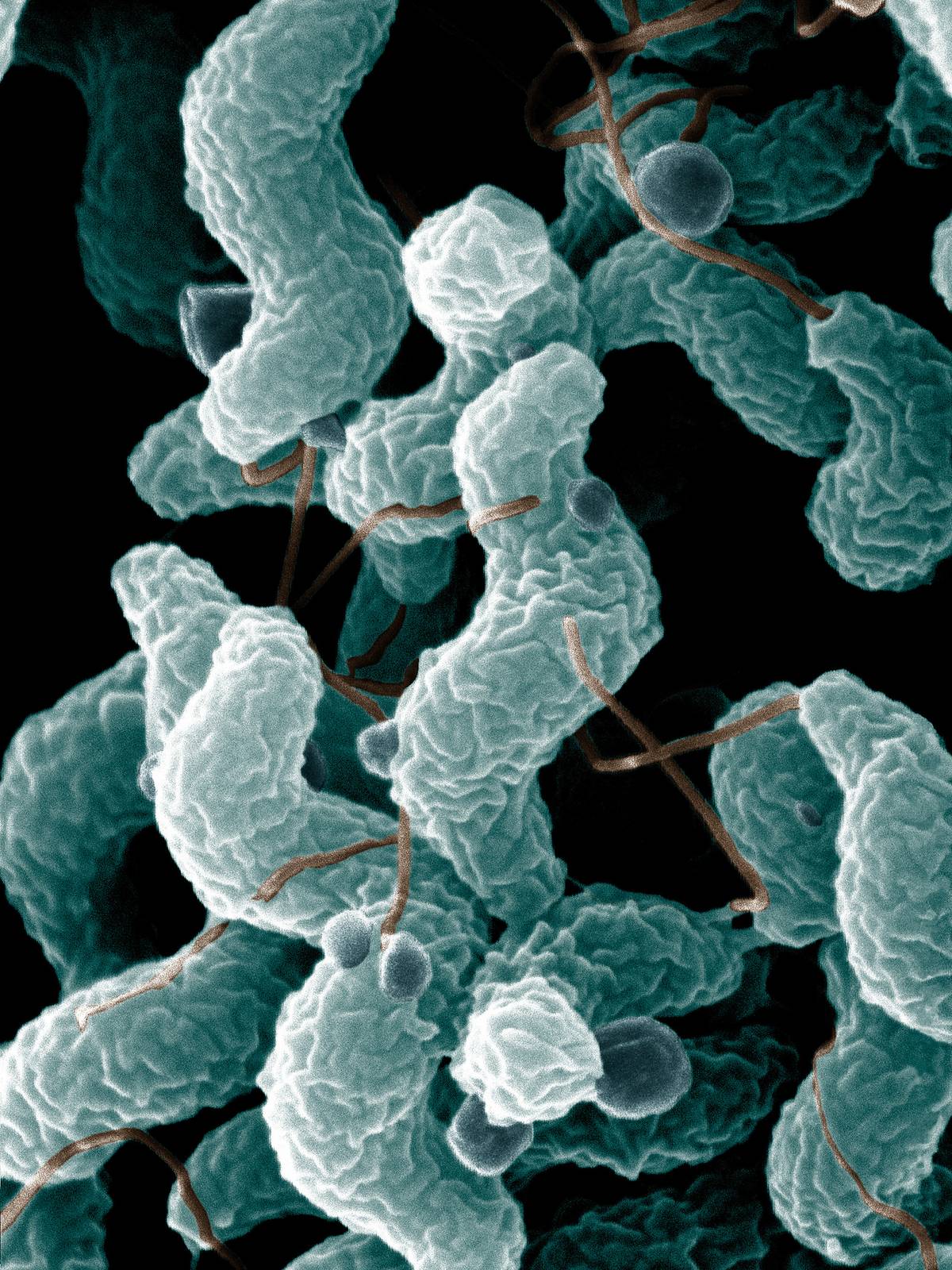
Campylobacter bacteria are the number one cause of bacterial food-related gastrointestinal illness in the United States. To learn more about this pathogen, ARS scientists are sequencing multiple Campylobacter genomes. This scanning electron microscope image shows the characteristic spiral, or corkscrew, shape of C. jejuni cells and related structures.
Photo by De Wood; digital colorization by Chris Pooley. USDA, ARS, EMU. - Agricultural Research Service (ARS) is the U.S. Department of Agriculture's chief scientific research agency., Public Domain, Wikimedia Commons.
The Role of Campylobacter
While campylobacter jejuni is commonly associated with undercooked poultry, it can also spread through contaminated water. Outbreaks linked to this pathogen have been documented globally. For instance, in 2023, Peru reported over 200 cases of GBS linked to campylobacter, prompting a national health emergency.
According to neurologists, only certain strains of campylobacter have the ability to trigger GBS due to their nerve-like molecular structure. This highlights the rare yet devastating nature of such outbreaks.
Local and Global Impact
In Pune, the outbreak has overwhelmed hospitals. Currently, 48 patients are in intensive care, 21 on ventilators, and 38 have been discharged. The surge in cases underscores the challenges of managing rare diseases in densely populated areas with varying hygiene standards.
Historically, GBS outbreaks have also been linked to respiratory infections and viruses, such as the Zika virus in Brazil in 2015. While rare, certain vaccines have been associated with GBS cases, though experts emphasize the risks are minimal compared to the benefits of immunization.
Path Forward
There is no cure for GBS, but treatments such as plasmapheresis and intravenous immunoglobulin (IVIG) can reduce the severity of symptoms. Public health officials are urging greater awareness of food hygiene and water safety to prevent future outbreaks.
As Pune battles this crisis, the outbreak serves as a reminder of the delicate interplay between pathogens and the immune system and the critical need for rapid response in containing rare diseases.