
Work of ‘obscure’ Angono artist now a national treasure
The century-old painting ‘Baptism of Christ’ by Juan ‘Tandang Juancho’ Senson is now being recognized as an important work not only in the so-called the ‘Art Capital of the Philippines’ but in the whole nation
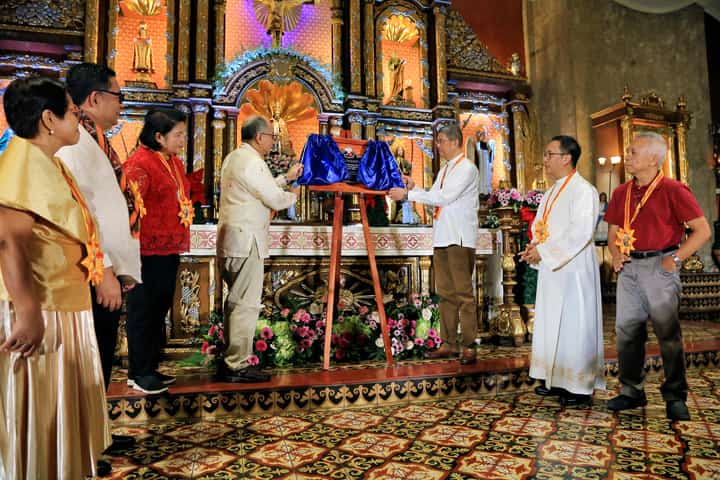
In the heart of Angono, Rizal, the Diocesan Shrine and Parish Church of Saint Clement stands as a symbol of how faith and art can come together to shape culture, where local artists could use their talent by enhancing its interiors and museum with sacred art. One such artist is Juan “Tandang Juancho” Senson, a master painter whose name was once unknown beyond his hometown, which is now being called the “Art Capital of the Philippines.”
Born in 1846 in Hacienda de Angono, Senson quietly created artworks including Baptism of Christ, which was declared a National Cultural Treasure (NCT) by the National Commission for Culture and the Arts (NCCA) 14 December 2024.
For decades, Senson’s contributions to culture and the arts were overshadowed by more prominent names. His works were primarily appreciated within Angono’s tight-knit community, but often mistaken as mere church decorations.
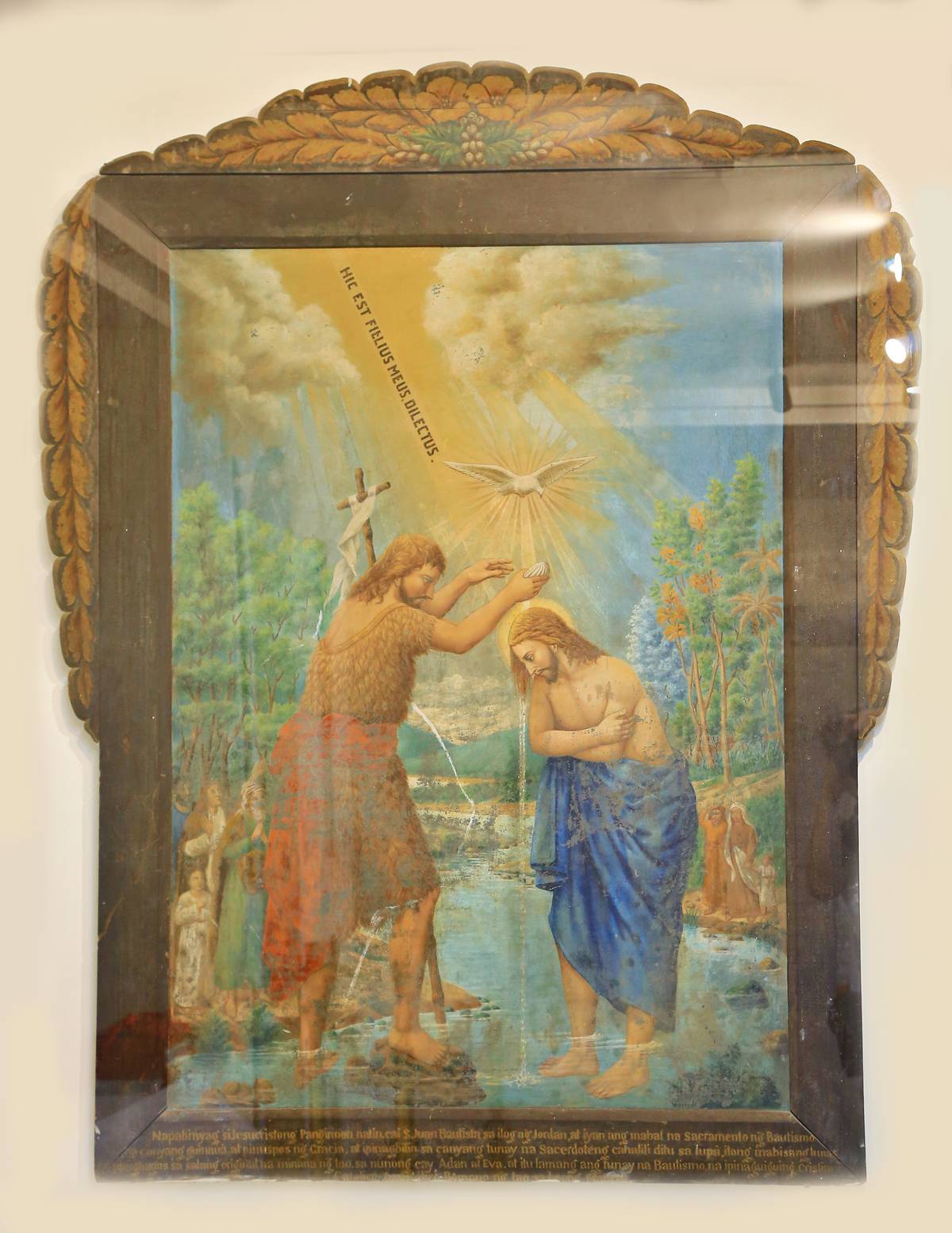
‘Baptism of Christ’ by Juan Senson.
An art historian who has extensively researched about Senson, James Owen G. Saguinsin wrote in his assessment report to the NCCA, dated 21 November 2024, that Senson, who died in 1927, “was a prominent master artist from Angono, whose prolific career spanned the Spanish era. Notably, he was commissioned to create religious imagery for the hacienda and surrounding suburbs of Angono. His seminal work, Vista Parcial del Pueblo de Angono y la Laguna Bay Distrito Morong (1880s), now part of the Bangko Sentral ng Pilipinas collection, garnered recognition at the 1895 Exposition de Manila. This exhibition showcased Senson’s artistry alongside other esteemed Manila-based artists, including Juan Luna, Felix Hidalgo, Justiniano Asuncion, and Fabian de la Rosa.”
He further said, “Senson’s influence extended to subsequent generations of artists, particularly Carlos ‘Botong’ Francisco, National Artist for visual arts (1973). According to Francisco himself, Senson’s works served as his seminal source of local color inspiration. Furthermore, Francisco collected several of Senson’s religious pieces, underscoring the significance of Senson’s artistic legacy.”
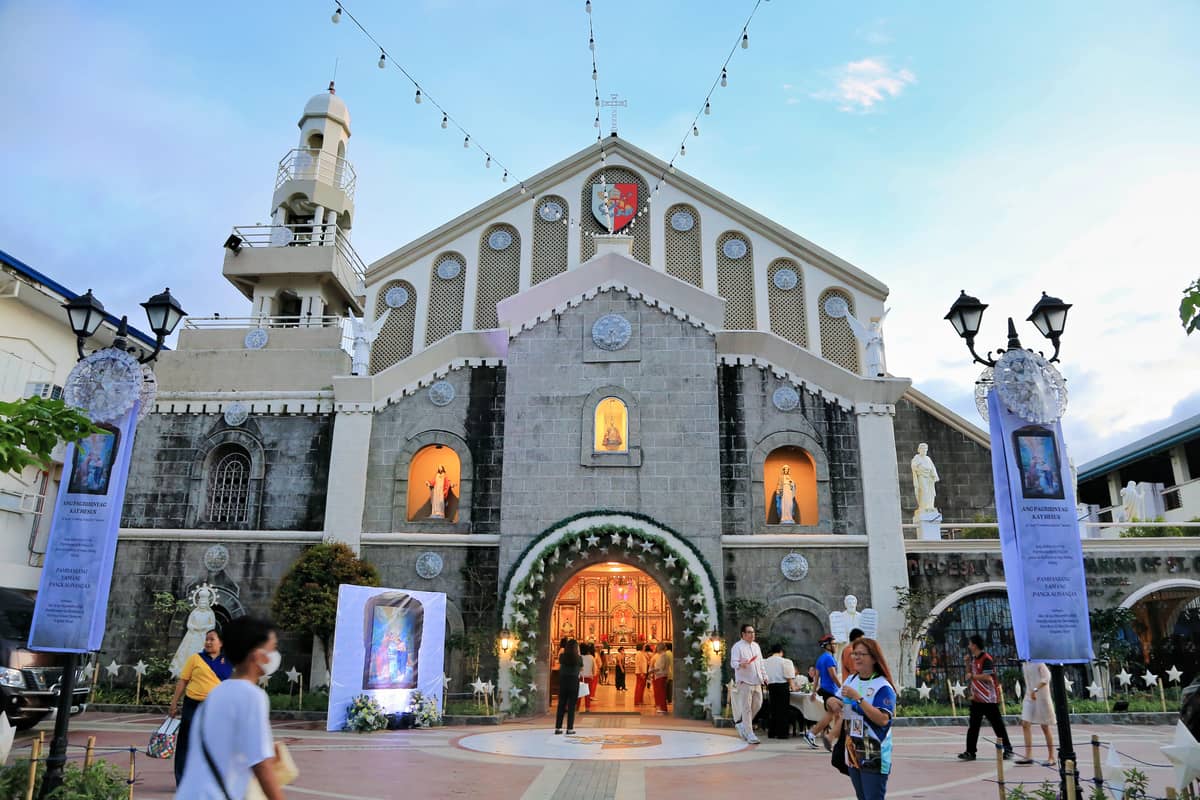
The Diocesan Shrine and Parish Church of Saint Clement in Angono, Rizal.
The declaration of Baptism of Christ as an NCT has cemented Senson’s place in Philippine art history, proving that even the most modest beginnings can lead to an enduring legacy.
An NCT is described in Republic Act No 10066, or National Cultural Heritage Act of 2009, as a “unique cultural property found locally, possessing outstanding historical, cultural, artistic and/or scientific value which is highly significant and important to the country and nation, and officially declared as such by pertinent cultural agency.”
Baptism of Christ is an oil painting on galvanized tin sheet measuring 122 by 89 centimeters. It depicts Jesus being baptized by Saint John the Baptist in the River Jordan. Above them is a dove symbolizing the Holy Spirit descending, while a shaft of light carries the words, “Hic est Filius Meus, Dilectus (This is my beloved Son).”
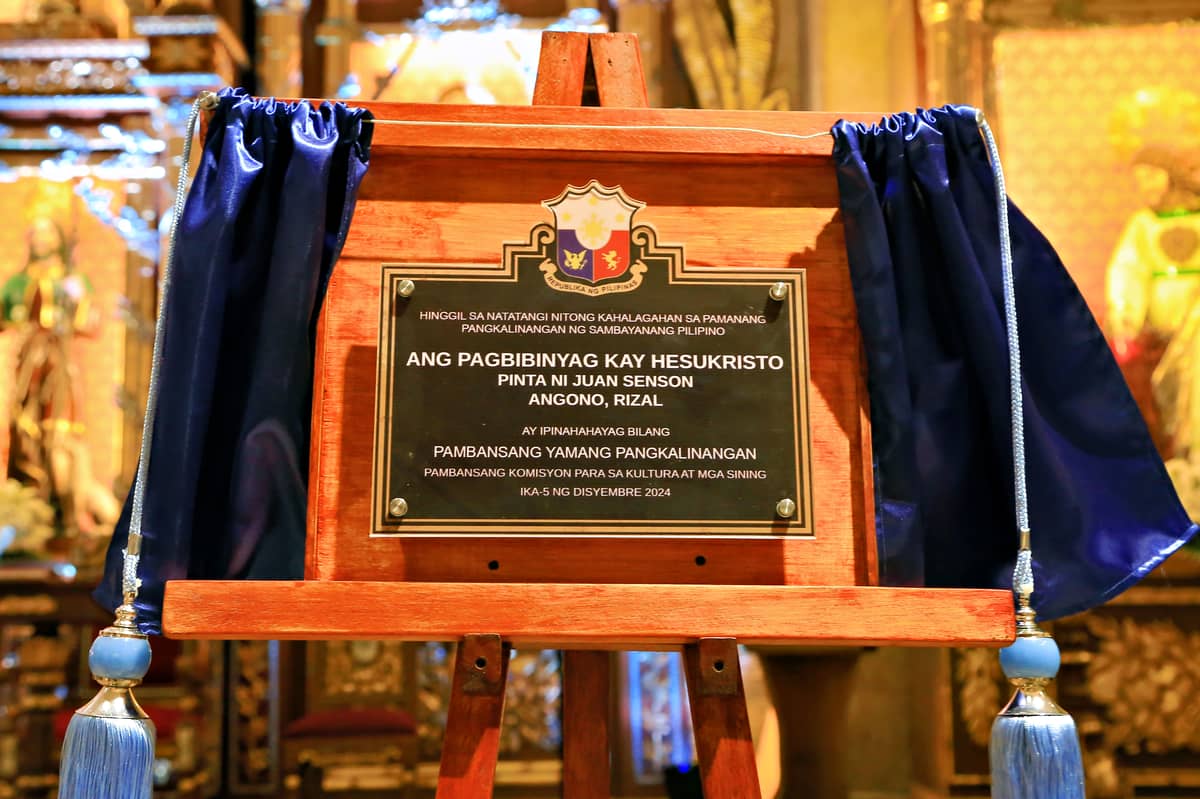
The National Cultural Treasure marker of ‘Baptism of Christ.’
Senson’s mastery shines in his use of European and Ibero-American artistic influences. The renditions of the figures of Jesus and John the Baptist are detailed, with Jesus in a blue robe and John in fleece clothing tied with a red cape. The onlookers in the background also add depth and realism to the biblical scene.
“The painting exemplifies miniaturismo, a style characterized by meticulous attention to minute details. This aesthetic approach was initially introduced by the Academia de Dibujo in the 1820s. Notably, students of the Academia, including the Asuncion brothers, who were relatives of the hacendera of Angono, played a pivotal role in disseminating this artistic style. As pioneering art instructors, the Asuncion brothers were instrumental in imparting the fundamentals of painting and sculpture to the local community specifically to Juan Senson,” Saguinsin said.
This painting, signed and dated 20 January 1923, is believed to be Senson’s last known work.
“The Baptism of Christ painting, a seminal work of art, has endured for over a century, surviving the devastating consequences of war and neglect. Initially housed in the Saint Clement Church, the second ecclesiastical structure erected in the town following the destruction of the original church at the old hacienda by the catastrophic earthquake of 1869, this painting formed the inaugural collection of the church. Since its creation in the 1920s, the artwork has been prominently displayed and utilized as a pedagogical tool for catechetical instruction, thereby imbuing it with profound historical significance,” Saguinsin wrote.
Now part of the Saint Clement Parish collection and displayed in a museum within the church compound which allows visitors to appreciate it in its original state, the painting has suffered from natural deterioration through the years. Due to its fragile state, restoration is now being proposed.