 Daily Tribune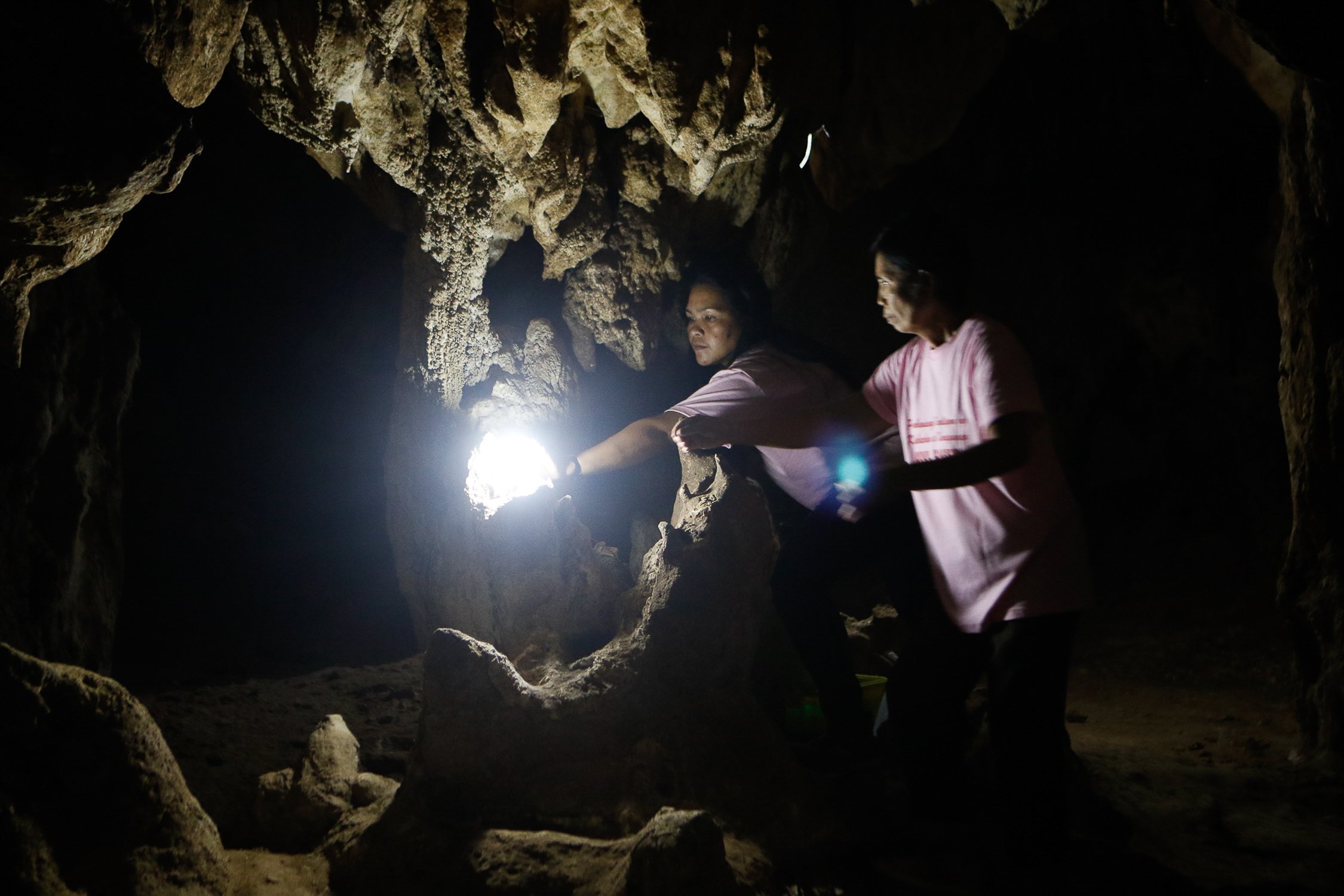
SOLAR light illuminates Tinabanan Cave in Marabut, Samar. The cave serves as a shelter for residents when there is a typhoon. Previously, a diesel generator was used to power lights, but its exhaust is bad for children taking refuge there.
PHOTOGRAPHS COURTESY OF ICSC
TACLOBAN CITY — A fire that killed a family of seven here 10 years ago impelled the use of renewable (RE) energy in disaster response to avoid a repeat of the tragedy.
A tent city for families displaced by super typhoon Yolanda was set up in the fishing village of Costa Brava in the aftermath of the disaster. On 28 May 2014, six months after the most powerful typhoon struck the country, 38-year-old Maria Elisa Ocenar and her six children aged four months to 12 years old were asleep in one of the tents when their kerosene lamp toppled. Fire quickly spread in the polyester-made tent killing the trapped family inside. They survived the storm only to die later from fire.
It haunts local disaster responders like Arturo Tahup.
“We were able to prepare the community on what to do when another storm surge happens in the future but we were not able to prepare them for fire,” says the teary-eyed disaster resilience manager of the Institute for Climate and Sustainable Cities (ICSC).
Tahup recounts that a few days before the fire, his group conducted a training on storm surge and typhoon contingency and community drill for three villages of San Jose district including Costa Brava.
“We were satisfied with the outcome because we were able to evacuate the residents of Costa Brava to Astrodome. It gave us a sense of comfort knowing that the community would know what to do when a storm like typhoon Yolanda occurs in the future,” he said. “Then a few days later this fire happened.”
Tahup says the donor of the tents, the United Nations High Commissioner on Refugees (UNHCR), also provided the residents with solar lamps but not everybody was able to get them, including the Ocenar family.
“This incident was a wakeup call for us, disaster responders, on the importance of safe energy in all aspects of humanitarian response,” he says.
Had the Ocenar family used solar lamps, the fire could not have happened and they would all still be alive today.
RE in disaster planning
Lord Byron Torrecarion, regional director of the Office of Civil Defense (OCD) in Eastern Visayas, says the use of RE in disaster management is crucial especially in the early recovery stage.
“Having a renewable energy that will not run out is critical in disaster response,” he stresses. “Solar home systems can provide power to critical infrastructures such as hospitals, emergency shelters and water treatment plants.
Typhoon Yolanda and the magnitude 6.2 earthquake in 2017 left Eastern Visayas without electricity for months affecting vital services.
Torrecareon says that in the recent flooding in the CARAGA region and Davao de Oro, OCD was able to deploy a portable water filtration system powered by solar energy.
The use of clean RE also helps combat climate change.
“We can reduce greenhouse gases, greenhouse emissions, improve energy security and provide millions of people access to clean, renewable and reliable energy,” he adds.
In 2022, the UNHCR published an “Emergency Handbook” which emphasized the use of RE in disaster response.
“All refugees, host communities and support structures should be able to satisfy their energy needs in a sustainable manner, without fear or risks to their health, well-being and personal security, while ensuring the least possible environmental impact,” according to the handbook.
However, the Philippines’ updated 10-year National Disaster Risk Reduction and Management Plan for 2020 to 2030 is silent on the use of RE in disaster management.
Just before the Holy Week, humanitarian responders, local government units, national government agencies, RE suppliers and manufacturers and other stakeholders conducted a two-day forum to draft a roadmap on how to integrate RE in their disaster risk reduction plans.
“The forum gives humanitarian actors an opportunity for collaboration and links up to further the agenda which is to have renewable energy in humanitarian action,” says Elaine Joyce Borejon, Oxfam Pilipinas’ research and advocacy officer on Just Energy Transition.


