




ASEAN EV market boost, issues undertaken

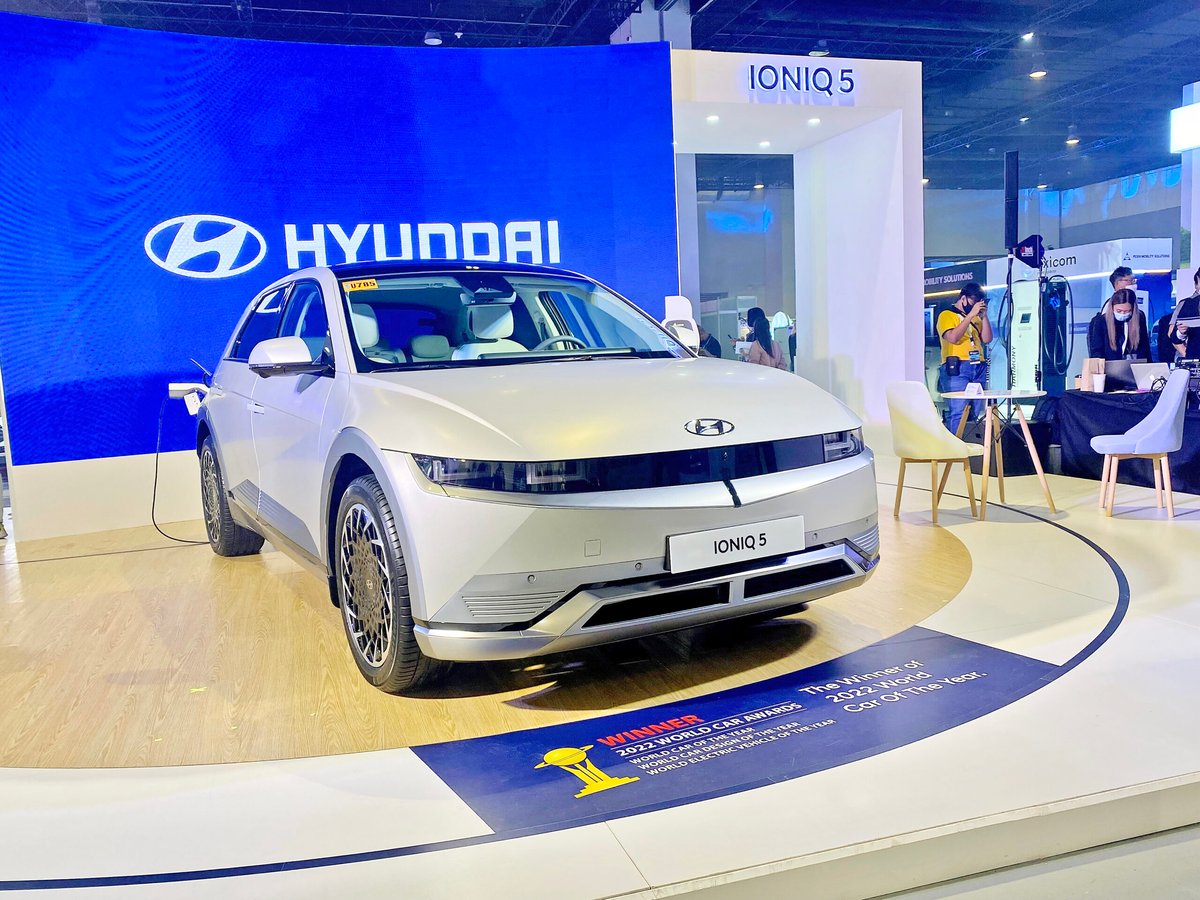
PHOTOGRAPHS by RONALD DE LOS REYES for the daily tribune MULTI-AWARDED Hyundai Ioniq5 banners the Korean carmaker’s booth at the EV Summit.
Text size
PHOTOGRAPHS by RONALD DE LOS REYES for the daily tribune MULTI-AWARDED Hyundai Ioniq5 banners the Korean carmaker’s booth at the EV Summit.

PUBLIC utility vehicles were likewise showcased during the EV Summit.

DONGFENG and other electric vehicle players were able to showcase their distinguished features.

ELECTRIFICATION is also available for single-seaters.
The ASEAN Center for Energy and the Asian Federation of EV Associations conducted a policy dialogue during the recent 10th Philippine EV Summit at the SMX Convention Center Mall of Asia in Pasay City. The United Nations Environment Program supported the policy dialogue as part of its new global program to promote the shift to electric mobility in low and middle-income countries worldwide.
The purpose of the policy dialogue is to accelerate the development of the electric vehicle market and industry in the ASEAN by addressing issues affecting individual member states, as well regional affairs. Two major issues that are apparent in the region were discussed — the absence of policies on electric two/three wheelers and retrofitting /conversion of internal combustion-engine vehicles to electric.
Event organizer, Electric Vehicle Association of the Philippines president Edmund Araga underscored the imperative role that two and three wheelers play in e-mobility in the ASEAN. They provide the greatest potential for EV adoption, as well as the opportunity to grow the EV industry in the region.
Meanwhile, June Yeonju Jeong, program officer, Sustainable Mobility Unit UN Environment Program presented UNEP's Global Electric Mobility Program that supports more than 50 low-and-middle-income countries with the shift from fossil fuel to electric vehicles. In the Philippines, a demonstration project on electric two and three-wheeler for freight deliveries was implemented with Pasig City local government units and the Philippine Postal Office as project recipients.
Under the program, EV adoption is strongly promoted in the region with the aim to reduce energy intensity by 32 percent by 2025 and encourage massive efforts, especially in transport and industry. ACE sees potential collaboration with AEFVA in EV integration in five key areas: Cooperation on the promotion of harmonized EV standards and technologies; networking within the region/member associations to promote joint ventures/collaboration of business entities; sharing of best practices and information about the industry; extending support and active participation in member associations' initiatives and projects; facilitating student exchanges and university cooperation within the region.
Three decades after the Marcopper mining disaster devastated Marinduque’s waterways, the province is again pressing the…
Housing is probably the biggest issue affecting people the world over.
Malacañang on Monday called for a more thorough investigation into the questioned flood control projects in Taguig…
The defense on Monday backed the move by senator-judges to exclude a prosecution witness who testified on the firearms…
Two sessions were allotted to discuss the two major issues, respectively. Joining the panel discussions were Septia Buntara Supendi, manager for Sustainable Energy, Renewable Energy, Energy Efficiency and Conservation ASEAN Center for Energy; Dr. Yossapong Laoonual, honorary chairman Electric Vehicle Association of Thailand; Krisda Utamote, president of Electric Vehicle Association of Thailand; Dato Dennis Chuah, president of Electric Vehicle Association of Malaysia; and Edmund Araga, president of Asian Federation EV Associations.
The first session discussed the situation of electric two and three wheelers in ASEAN with respect to market and policy. Dr. Manny Biona, executive director of the Electric Vehicle Association of the Philippines presented an overview on state of play on electric two and three-wheeler in the ASEAN. The panel discussed the need to craft a policy with regard to technical regulations and standards with the respective ASEAN member countries, as well as their harmonization at the regional level.
The second session on conversion of ICE powered vehicles to electric. Krisda Utamote, president of Electric Vehicle Association of Thailand presented the challenges and opportunities for conversion in the case of Thailand. Thailand's national target to achieve 30-percent ZEV usage or around 225,000 units/year in 2025 is challenging. Despite of the market needs, certain BEV models are not yet available, especially for pickup trucks.
There are 40 million registered vehicles in Thailand. Target group of vehicle models for EV conversion are the million pickup trucks and the more than 10-year-old vehicles which are around 3.5 million units. Thailand government through the state-run Electricity Generating Authority of Thailand plans to develop electric vehicles by modifying used cars. Thai authorities is also in the process of allowing Electric converted vehicle to registered. EVAP is also advocating for a policy on EV conversion to accelerate the adoption of electromobility in the country.
