
Health advocates form ‘Cebu Clean Air Network’
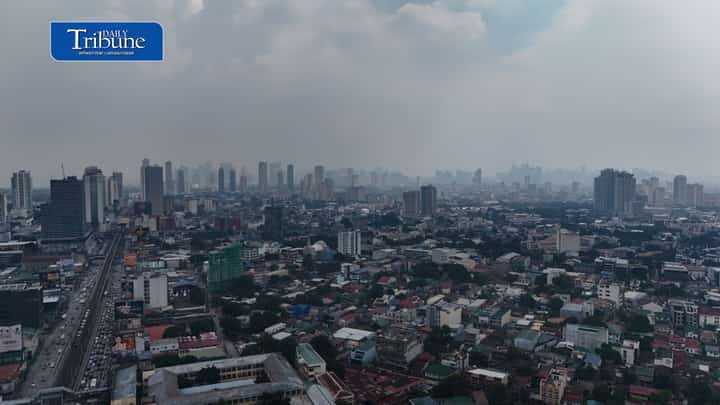
(October 03 2026) Haze blankets over Metro Manila as seen from Quezon City on Saturday October 3 2026, according to the Department of Environment and Natural Resources (DENR) on October 2, two cities had stations that recorded “unhealthy” air quality, while the rest of the 18 monitoring stations in the National Capital Region registered “fair” or “good” readings. Photo/Analy Labor
Health professionals, scientists, and civil society organizations launched the Cebu Clean Air Network (Cebu CAN), urging the Department of Environment and Natural Resources (DENR) and the Department of Health to align national air quality standards with World Health Organization (WHO) guidelines.
During the launch at the University of the Philippines Cebu campus, the coalition emphasized that cleaner air protects public health while lowering household electricity and medical expenses over time.
Cebu CAN pointed out that nearly 900 megawatts of coal-fired power plant capacity in Toledo and Naga cities, combined with heavy urban vehicular emissions across Cebu province, are driving persistent air pollution.
The group called for immediate, localized clean air action plans and continuous, real-time air quality reporting.
Advocates noted that Cebu has experienced several severe air quality episodes this year. In April 2026, the DENR Environmental Management Bureau in Central Visayas monitoring station in Talisay City recorded a “very unhealthy” air quality index attributed to local vehicle and industrial emissions.
Air quality in Metro Cebu was further degraded by volcanic activity from Mount Kanlaon in July and transboundary haze from forest and peatland fires in Indonesia in September.
Despite Cebu province’s population exceeding 5 million residents, the coalition cited that only two government air monitoring stations operate in Talisay and Toledo cities, leaving wide gaps in localized, real-time data and coordinated emergency response protocols.
“Clean air isn’t just about hospital visits. It’s about building healthier communities where our families can thrive,” said Ara Alejo, clean air campaigner at 350 Pilipinas.
“Our national limits allow five times more PM2.5 than WHO recommends. Haze comes and goes and only exacerbates the air that is already being polluted by our own sources. As ASEAN chair, the Philippines should lead by example,” she added.