
Palace blames calamities for low GDP
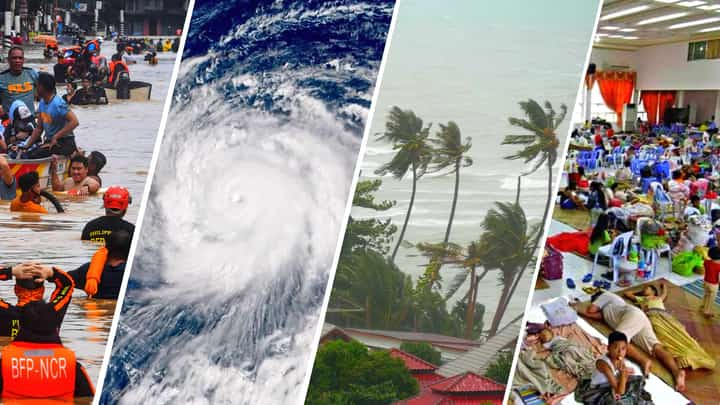
AFRHILL Rances, who works at the Asia-Pacific regional office of the International Federation of Red Cross and Red Crescent Societies, says the Philippines is struck by more typhoons every year than almost any other country in the world. Furthermore, she said, ‘In the Red Cross we call the Philippines a ‘supermarket of disasters,’ because you name it — the country has it.’
Photographs courtesy of Lumina
As the country’s Gross Domestic Product (GDP) growth in the third quarter registered 2.1 percent, one of the slowest in the ASEAN region, Malacañang Palace said ASEAN neighbors clinched their own respective high growth because they were spared major environmental catastrophes such as flooding and strong typhoons.
China Banking Corp. (China Bank) research cited Vietnam as ASEAN’s fastest-growing economy at 9.9 percent, followed by Indonesia at 5.5 percent, Singapore at 5.4 percent and Malaysia at 5.3 percent.
Economy to remain weak
The bank expects the Philippine economy to remain weak, if not deteriorate further, in the fourth quarter, missing the 3.5 to 4.5 percent growth target set by the government for 2026.
“Most likely what the Philippines experienced wasn’t experienced by our neighbors; they didn’t experience successive flooding, strong typhoons, and what we’re currently undergoing, I mean, the extreme El Niño. We’re near the Pacific Ocean and we’re speedily visited by strong storms,” said Palace Press Officer, Presidential Communications Office Undersecretary Claire Castro, in a press briefing on Tuesday.
Philippine Atmospheric, Geophysical and Astronomical Services Administration earlier said that the Philippines may be hit by four more typhoons, amid the onset of the El Niño phenomenon.
“So, for instance, we can’t compare Singapore with the Philippines because Singapore does not experience the kind of storms that hit us,” she insisted.
U.S.-Iran war’s crippling effect on Phl economy
Further, Castro said the ongoing war between the United States and Iran has crippling effects on the Philippine economy, because of the country’s dependence on fuel coming from the Middle East.
“The President said there needs to be sufficient supply, especially for rice — this is what Filipinos really need — when the price of rice is high, the prices of other commodities also go up. So, there needs to be sufficient supply.”
With this, she said the government is not stopping to reduce the inflation rate, which hit 7.8 percent in October.