
Bentley’s golden dozen
Mulliner revisits 1926 classic in 12 Continental GTs
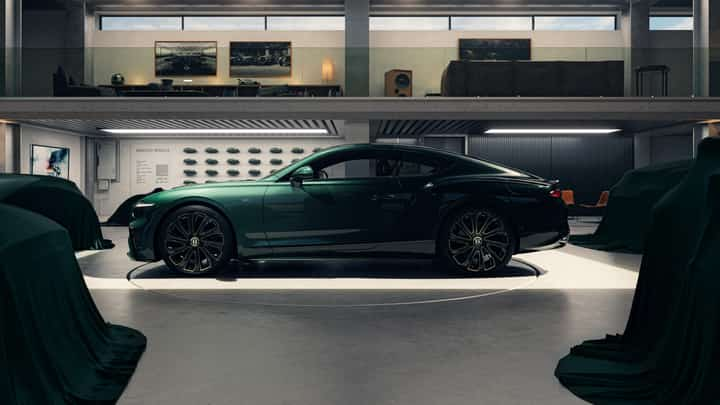
BENTLEY showcases the Olympia Collection Continental GT with its specially developed dark green paint finish and Champagne Gold accents.
PhotographS courtesy of Bentley
A chance encounter on a French road in 1924 has become the unlikely link between Bentley’s latest limited-edition grand tourer and one of its earliest cars.
Bentley has unveiled the Olympia Collection by Mulliner, a series of just 12 individually numbered Continental GTs. The collection comes 100 years after the company presented its 6½ Litre at the Olympia Motor Show in 1926.
The original car was Bentley’s answer to customers who wanted more room and a stronger engine than its 3 Litre could offer. Its six-cylinder engine, however, owed some of its size to an unexpected meeting in France.
According to Bentley’s account, founder W.O. Bentley and three colleagues were on a test drive from Lyon to Dieppe when they encountered a rival manufacturer’s prototype at a road junction.
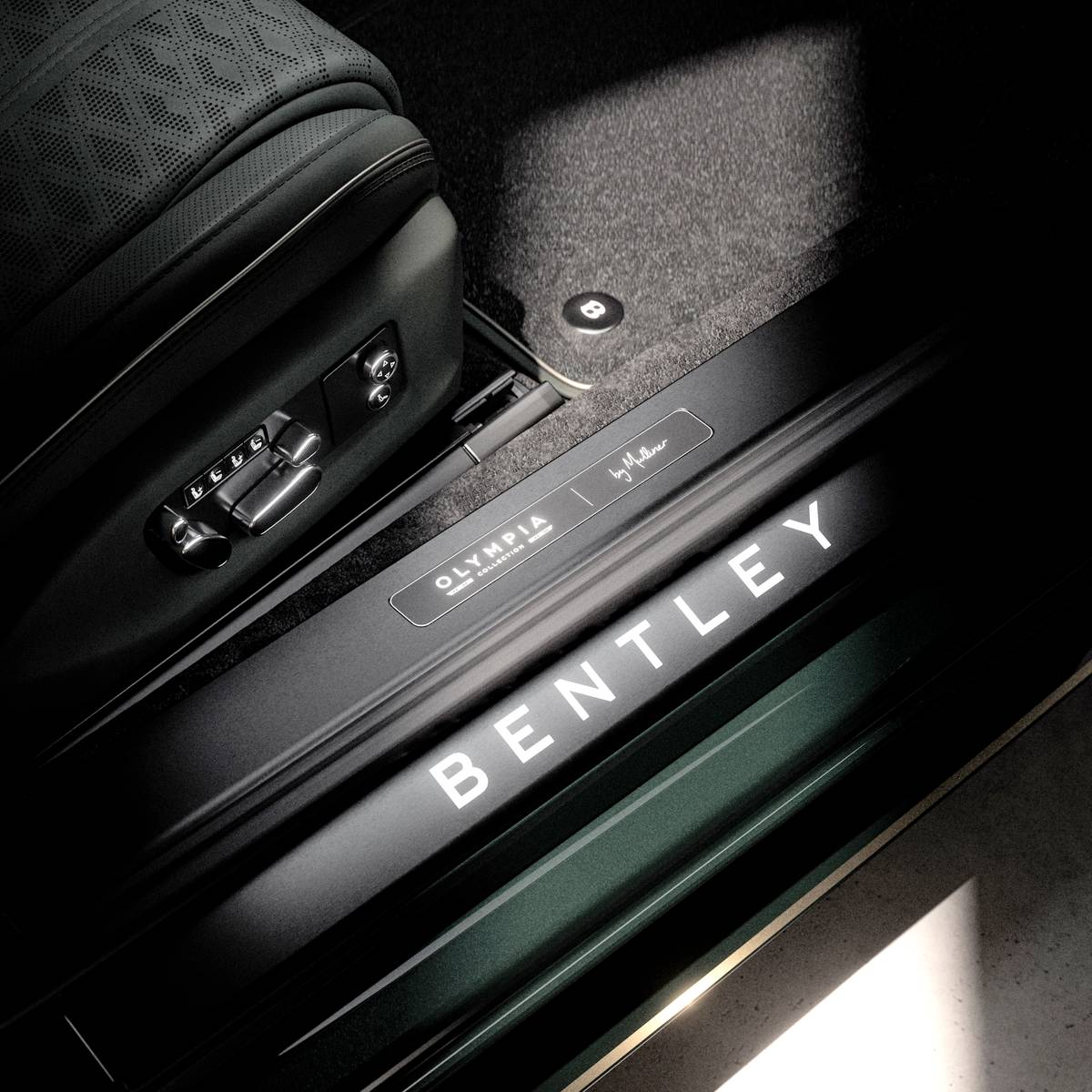
ILLUMINATED Bentley lettering and a special Olympia Collection treadplate identify one of the 12 individually numbered Continental GTs.
The teams recognized one another and raced side by side at speeds above 80 mph. Bentley’s car came out ahead, although its founder was unhappy with how close the contest had been.
Back in England, he increased the engine’s capacity from 4.5 to 6.5 liters. The production 6½ Litre made its public debut two years later.
That encounter now appears on the new Continental GTs in an unusual place. An animated welcome lamp projects an image of the Lyon-to-Dieppe drive onto the ground when a door opens. Embroidery near the rear ski hatch also traces the route in Champagne Gold thread.
Mulliner gave the cars a special paint finish that shifts from Verdant to Midnight Emerald. The gradual change between the two dark green shades requires 56 hours of work, according to Bentley.
The choice recalls the British Racing Green finishes of Bentley’s early cars, although the company notes that no single standardized shade existed during the 1920s.
Champagne Gold accents appear on the exterior badges, lower-body pinstripe and black 22-inch Mulliner wheels.
The remaining exterior trim follows Bentley’s Blackline specification, with black details on the grille, air intakes and rear diffuser. Each front wing carries an Olympia Collection badge.
Coach Green leather receives a special patina treatment to resemble an older hide, while Cumbrian Green provides a second shade. Black-stained, open-pore walnut covers the dashboard and door trim. The controls feature Bentley’s familiar diamond-pattern knurling.
The Bentley Rotating Display has a clock and instrument details that recall the 1926 car. Box stitching on the steering wheel takes its design from the rope-bound wheels of the period, while Champagne Gold accents continue on the seats and controls.
Each owner will also receive a Brooklands Watch Co. chronograph with an individual number that matches the car. Its strap uses the same Coach Green leather as the cabin. Two interchangeable tachymeter bezels refer to the Brooklands Outer Circuit and Double Twelve Circuit.
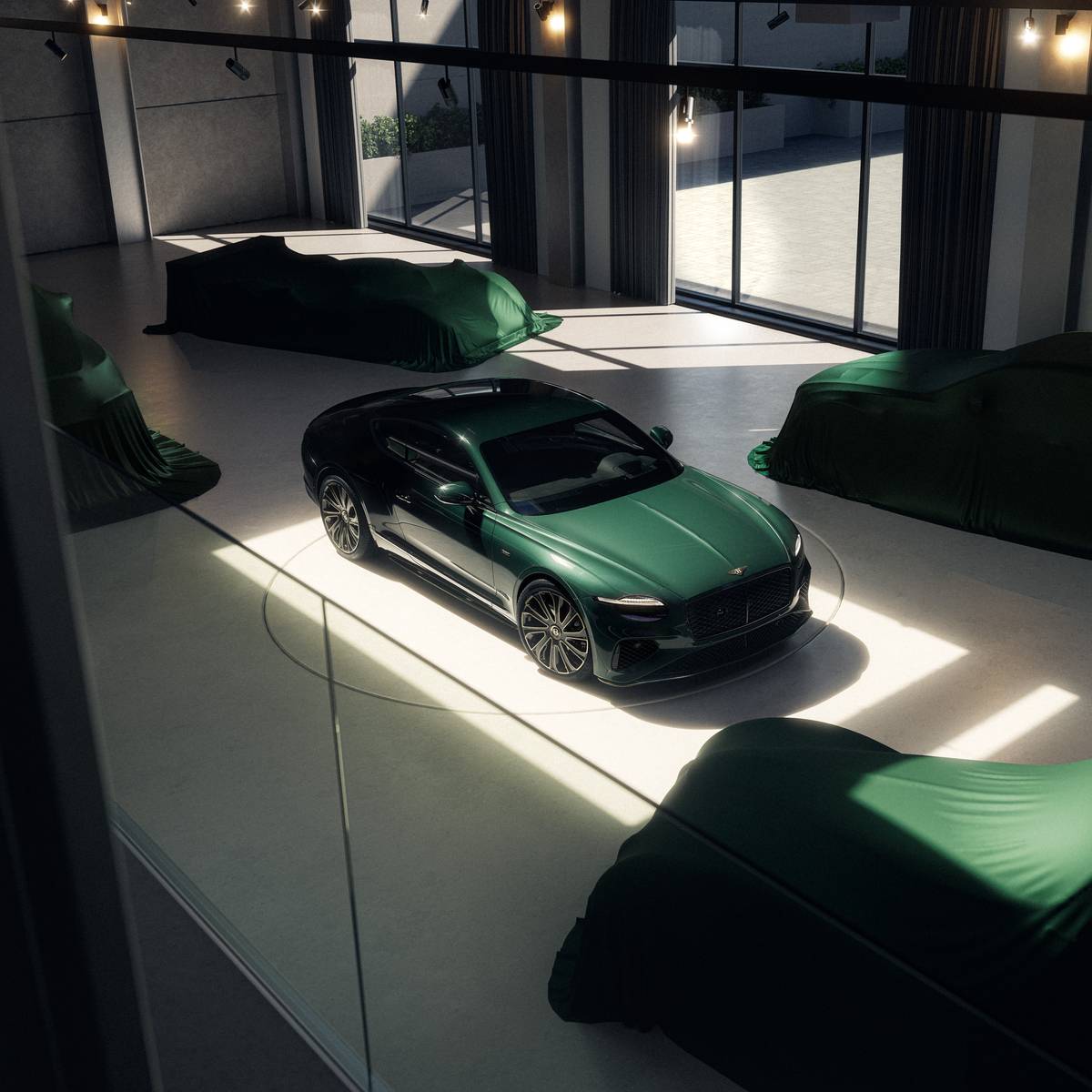
Bentley will include a green car cover, a commemorative book and a handcrafted presentation box with each vehicle.
The original 6½ Litre later evolved into the Speed Six, which won the 24 Hours of Le Mans in 1929 and 1930.
A century after the Olympia debut, Bentley has chosen a dozen modern Continental GTs to revisit that period of its history. The announcement did not specify pricing or the markets where the cars will be offered.