
ICC mandates Digong's attendance in upcoming trial after skipping last status conference
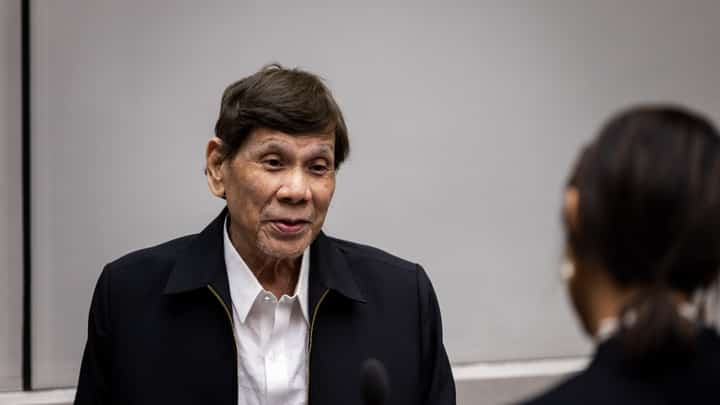
The 81-year-old ex-president Rodrigo Duterte was clad in a white button-down polo and a black collared jacket, with his face framed by a white third beard and eyebrows, as he appeared in the ICC courtroom for the third status conference on Wednesday, 16 September, before this trial in November.
International Criminal Court
The International Criminal Court on Monday warned former president Rodrigo Duterte’s camp that he will be mandated to attend his upcoming trial in person, starting 30 November, daily.
Trial Chamber III Presiding Judge Joana Korner issued the warning after the 81-year-old ex-leader skipped the fifth and final status conference before he stands trial for crimes against humanity tied to his bloody anti-narcotics campaign that killed thousands, mostly from poor communities.
“Mr. Duterte need not attend this morning, but once the actual trial starts, we will expect, as we said, attendance on a daily basis,” Korner told defense counsel Peter Haynes.
Duterte took part in the previous status conferences on 16 September and 13 October, but waived appearance for the last one, leaving the final procedural preparations solely to his lawyers.
While Duterte has been allowed to skip relevant ICC proceedings in the past, including the confirmation of charges hearing in February, the ICC mandates that the accused appear once trial proper opens, and the same applies to the former president.
Most of Monday’s proceedings focused on preparations for the evidentiary phase, allowing procedural fairness for the prosecution, the defense, and the victims’ camp.
Principal Counsel for Victims, Paolina Massidda, suggested using Tagalog in portions of their opening statements for the upcoming trial to quote the accounts verbatim, but the chamber rejected the request.
Korner ruled that the statements must be delivered in English pursuant to the Rome Statute.
The trial on 30 November is expected to run from 10 a.m. to 4 p.m. in The Hague, or 5 p.m. to 11 p.m. in Philippine time.
Given the time difference, the chamber acknowledged that the hearing schedule may pose challenges for witnesses from the Philippines who would testify remotely.
The victims’ camp and the prosecution proposed holding three sessions instead of four, starting and ending the trial earlier than usual to ensure the proceedings would not extend beyond 8 p.m. in the Philippines.
The chamber agreed that a schedule adjustment would be necessary, though no final agreement had been reached.
The chamber agreed to allocate at least 150 hours for the prosecution to present its evidence. Korner said the ICC prosecutors would decide how to distribute it.
During the conference, the prosecution presented a 2017 accomplishments report by the Duterte administration, listing 3.967 drug personalities killed in police operations between July 2016 and November 2017.
The prosecution said the figure is almost identical to its identified 3,422 deaths, maintaining that this will support the claim of systematic killings during Duterte’s presidency.
Duterte faces three counts of crimes against humanity of murder for the killings of nearly 80 individuals, including six children, allegedly suspected of drug dealing from 2013 to 2018, spanning his tenure as Davao mayor and as president.
The figure, however, is expected to rise further with the upcoming trial as ICC prosecutors intend to present additional witnesses.