
Phl asks China’s AIIB to fund infra projects
Although not owned by a single country, being a multilateral development bank run collectively by its 111 member states as shareholders, AIIB’s largest shareholder is China with roughly 26 to 27 percent of the voting power, followed by India at about 7.6 percent.
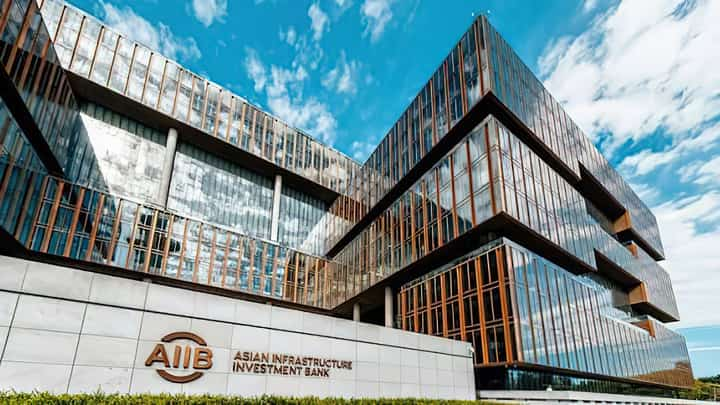
THE Department of Finance said its official had a meeting with Asian Infrastructure Investment Bank president Zou Jiayi to finalize a deal, as the Philippines seeks more flexible financing, including lower commitment fees, grants, and technical assistance from the bank to accelerate the country’s infrastructure projects, as well as renewable energy and climate initiatives.
Photograph courtesy of AIIB
Amid the country’s ballooning external debt, which, as of end-June, has already reached $154.93 billion, the Department of Finance (DoF) said it has reached out to Beijing-based Asian Infrastructure Investment Bank (AIIB) to seek more flexible financing, including lower commitment fees, grants and technical assistance, to accelerate infrastructure projects and support renewable energy and climate initiatives.
DoF International Finance Group Undersecretary Joven Balbosa said they already presented the country’s recommendations at the AIIB Board of Governors’ 2026 Annual Meeting in Doha, Qatar, on 28 September.
Discussions focused on expanding the bank’s development impact and driving innovation throughout the project cycle, the DoF said.
“We urge the Bank to continue developing innovative financial instruments and mobilizing private capital. We call on the Bank to prioritize scaling renewable energy, reducing power costs, and strengthening climate adaptation and mitigation projects,” Balbosa said.
Although not owned by a single country, being a multilateral development bank run collectively by its 111 member states as shareholders, AIIB’s largest shareholder is China with roughly 26 to 27 percent of the voting power, followed by India at about 7.6 percent.
The Philippines also called for more grants and technical assistance to improve project readiness and social development outcomes, lower commitment fees and greater flexibility in addressing implementation bottlenecks.
The government said more flexible financing would help complete critical infrastructure projects, attract private investment and support more affordable, climate-resilient energy.
Established in 2015, AIIB finances infrastructure and sustainable development projects across Asia and beyond. It has 111 approved members and $100 billion in authorized capital.
Balbosa represents the Philippines in the bank’s governance and policy discussions as one of its 12 directors.
Finance Secretary Frederick Go identified digitalization and lower energy costs as priority areas during a May meeting with AIIB officials.
“Two of the major issues in the ease of doing business are red tape and high energy costs. If there’s a way for us to work on these, then we can significantly enhance public service delivery and improve our investment environment, which will help us grow the economy,” Go said.
Following his meeting with Go, AIIB President Zou Jiayi reaffirmed the bank’s commitment to supporting the Philippines through financing and technical assistance tailored to the country’s priorities.
“We are here to listen and understand how we can support your priorities for the Philippines,” Zou said.
In May, the AIIB also announced a $300-million loan to International Container Terminal Services Inc., its first non-sovereign-backed transaction in the Philippines.
The financing will support the expansion and modernization of three container terminals: the Manila International Container Terminal, the South Luzon Container Terminal under development in Batangas, and the Mindanao Container Terminal.