
Remolona: BSP not hiking rates to defend peso
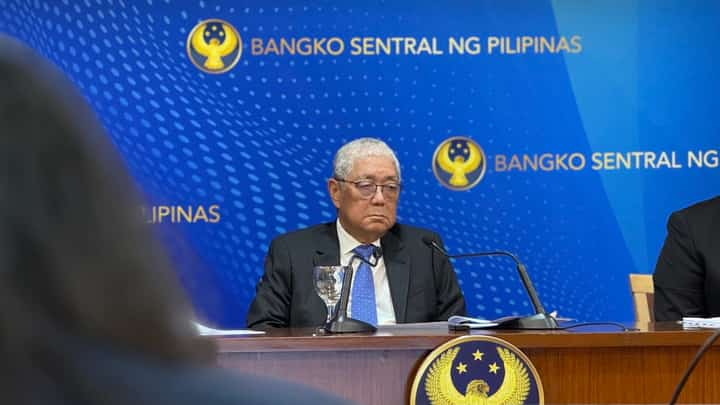
BANGKO Sentral ng Pilipinas (BSP) Governor Eli Remolona Jr. speaks at a press conference at the BSP Manila headquarters following the central bank’s “jumbo” 50-basis-point rate hike on Thursday.
Photo by Toby Magsaysay for DAILY TRIBUNE
Bangko Sentral ng Pilipinas (BSP) Governor Eli Remolona Jr. maintained the central bank’s hands-off approach to the Philippine peso, saying it does not use monetary policy to directly support the local currency, which has hit record lows more than 30 times since the onset of the Middle East conflict in March.
“We're not hiking the policy rate to defend the peso,” he said at a Thursday press conference following the BSP’s unprecedented 50-basis-point “jumbo” rate hike.
“We do intervene a little bit in the foreign exchange market, but that's mainly to avoid swings in the exchange rate that tend to be inflationary. We have estimates of how much the peso has to move before it becomes inflationary, and that's when we tend to intervene,” he added.
The BSP, whose primary mandate is price stability, raised interest rates aggressively amid a deteriorating inflation outlook for next year, citing upward price pressures from elevated oil prices, transport fares and the onset of a severe El Niño.
That same afternoon, the peso fell to a third consecutive record-low close of P63.52 per US dollar, marking a depreciation of about 9 percent from its 28 February close, the day before the United States launched its months-long conflict with Iran, disrupting oil supplies and fueling safe-haven demand for the dollar.
When asked about the threshold at which the peso’s depreciation becomes inflationary, Remolona declined to disclose the figure.
“Forgive me if I don't tell you the threshold, because then it helps speculators decide when to go in and when not to go in. But there is a threshold,” he said.
“Not every depreciation is inflationary. It has to be significant enough,” he added.
The peso has hit record lows following each of the BSP’s last two rate hikes. Former BSP Deputy Governor Diwa Guinigundo said the currency’s continued slide despite monetary tightening may indicate that the market does not fully believe the central bank is doing everything it can to combat accelerating inflation, which the BSP expects to average 6 percent in both 2026 and 2027.
“The peso’s reaction should not be dismissed. It may be telling us that markets are looking beyond the 25 basis points and asking a more consequential question: Does the BSP really intend to keep monetary policy restrictive until inflation is decisively and sustainably back on track toward the 2-4 percent target?,” he said in a commentary following the BSP’s August rate hike.
Asked on Thursday whether the BSP had intervened in the foreign exchange market that day, Remolona again declined to give a definitive answer.
“Oh, I don't check every day. Maybe once a week I get a report. Our interventionist is not here. [Senior Assistant Governor] Edna Villa is the one who would know,” he said.
Remolona has said the central bank prefers to let market forces determine the peso’s value, a position he reiterated on Thursday.
“We kind of come in without using up too much of our reserves. And then we end up just dampening the swing in the peso. We don't end up preventing the peso from depreciating.”