
Palace assures ample food supply amid El Niño threat
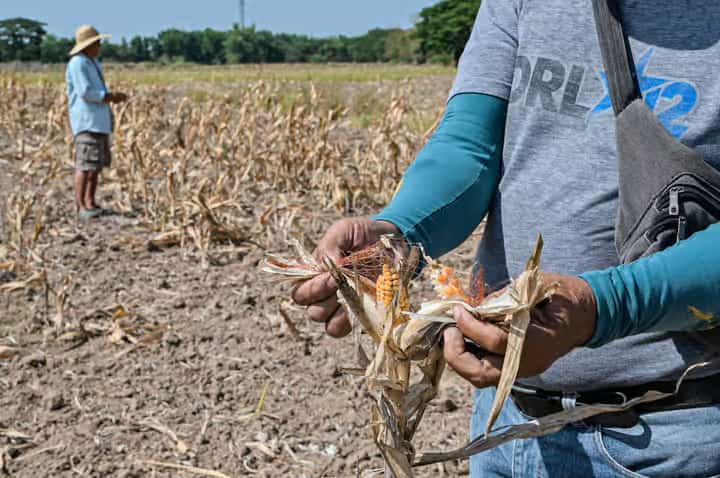
Malacañang on Wednesday assured the public that the Philippines has sufficient food supplies despite the anticipated effects of El Niño on agricultural production and water availability.
Palace Press Officer Claire Castro said the government had prepared measures to protect food, water and energy supplies following President Ferdinand Marcos Jr.'s meeting with the El Niño Task Force on Tuesday.
Castro said the country had rice stocks sufficient for 75 days, pork for 170 days and chicken for 125 days.
“In terms of agriculture and food security, there is an adequate supply of food; that is the order of the President. There is a 75-day stock of rice, 170 days of pork and 125 days of chicken. If necessary, we will import to increase the supply. But for now, that is the stock we have, which will assist farmers affected by El Niño,” Castro said.
She said the government was prepared to import additional food supplies if necessary to address potential shortages.
The Department of Social Welfare and Development and Department of Labor and Employment will also provide assistance through cash-for-work programs, emergency cash transfers and the Tulong Panghanapbuhay sa Ating Disadvantaged Workers (TUPAD) program.
The Technical Education and Skills Development Authority and other agencies will offer training and temporary employment opportunities to affected residents.
Water security measures
Castro said Marcos had ordered cloud-seeding operations and improved management of dams and other water sources to help mitigate potential shortages.
The government has also prepared 135 stationary water tanks and 182 mobile water tankers for deployment to communities experiencing water supply disruptions.
“DENR and MWSS have activated sixty-one decommissioned deep wells to increase water supply in Metro Manila. The completion of the Kaysakat Water Treatment Plant at the Upper Wawa Dam is being expedited. It will be completed by November 2026. It will add 160 million liters per day of water,” Castro said.
The Department of Trade and Industry and Department of the Interior and Local Government have been tasked with monitoring the prices of buckets and drums to prevent profiteering.
Health, energy preparations
The Department of Health will ensure that hospitals and other health facilities maintain adequate supplies of electricity, water and medicines during periods of extreme heat.
Castro said barangay health workers would monitor vulnerable residents, particularly senior citizens and people with existing illnesses.
The DOH will also prepare for a possible increase in dengue cases, including through blood donation activities.
“For health, we are ensuring that hospitals and health facilities have an adequate supply of electricity, water, and medicine. We are preparing against diseases that usually spread during extreme heat, such as dengue and heatstroke,” Castro said.
The Department of Science and Technology has been directed to provide two-day heat index forecasts to help the public prepare for dangerous temperatures.
Labor advisories will also be issued to protect outdoor workers, including delivery riders.
Meanwhile, the Department of Energy is preparing additional electricity supplies amid concerns that higher demand during the dry season could trigger power shortages, particularly in the Visayas.
Castro said the government was preparing 250 megawatts of battery energy storage capacity and 218 megawatts from power barges as backup supply.
Projects expected to add another 1,500 megawatts to the power supply are also being accelerated.
The Palace assured the public that petroleum supplies remained sufficient, with government agencies coordinating with international partners to secure additional fuel if needed.
Castro urged Filipinos to conserve water and electricity as the government implements measures to reduce the potential impact of El Niño.