
Tax reforms could unlock 7.1% of GDP fiscal gains — WB
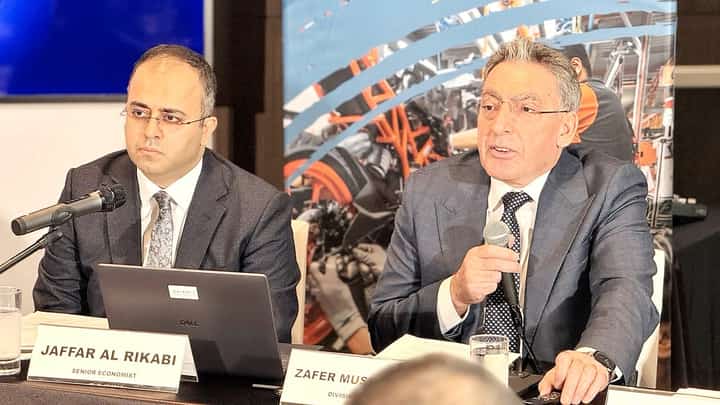
JAFFAR Al Rikabi, World Bank senior economist (left) and Zafer Mustafaoglu, World Bank division director for the Philippines, Malaysia and Brunei speak at a press conference at the AC Hotel in Pasig on Monday morning.
Photograph by Toby Magsaysay for DAILY TRIBUNE
The Philippines could unlock fiscal gains equivalent to as much as 7.1 percent of gross domestic product (GDP) by improving tax collection, government spending and public-sector efficiency, according to a new World Bank (WB) report.
The report, titled “Building on Reform: Public Finance for a Rising Philippines,” estimates that the country could generate additional fiscal revenue equivalent to between 3.6 percent and 7.1 percent of GDP annually by broadening the tax base, improving collection efficiency and making public spending more efficient and equitable.
The World Bank said these reforms could strengthen fiscal sustainability while supporting inclusive growth, without necessarily requiring higher spending.
Decades of hard work and sound policy
“Earlier this year, the Philippines crossed into upper-middle-income status, a testament to decades of hard work and sound policy,” said Zafer Mustafaoglu, division director for the Philippines, Malaysia and Brunei.
“The 3.6 percent to 7.1 percent of GDP in potential fiscal gains — hundreds of billions of pesos already within the system’s reach — can fuel the next chapter of that journey: more children learning to read, more families shielded from the financial devastation of illness, and millions of Filipinos lifted from poverty,” he added.
Areas where reforms could generate fiscal gains
Presented by World Bank officials on Monday morning, the report identifies three broad areas where reforms could generate fiscal gains.
The first is creating more fiscal space through executive-led reforms, including consolidated government procurement, easier tax payments, streamlined corporate tax incentives and tighter limits on appropriations.
Procurement reforms alone could generate savings of up to P435 billion annually, the World Bank said.
“In business as well as in strategic procurement for government, there is this concept known as bundling demand. If you bundle demand and you negotiate what is known as framework agreements with major suppliers, the government is able to negotiate much lower prices and make those prices available for agencies regardless of when they procure,” said Jaffar Al Rikabi, World Bank senior economist.
“So just doing that for the high value items, the common items, negotiating these type of agreements, can save the government, we estimate, around 1.8 to 2 percentage points of GDP,” he added.
The second involves addressing fiscal gaps through legislative and institutional reforms that could strengthen both revenue generation and public spending. These include expanding electronic invoicing and audits, rationalizing value-added tax exemptions and modernizing fiscal management systems without raising statutory tax rates.
Building citizens’ trust
“You build citizens’ trust when you show them that the resources you’re collecting are being utilized effectively, which increases their willingness to pay taxes,” Al Rikabi said.