
BRICS leaders call for de-escalation in Middle East, warn of global tensions
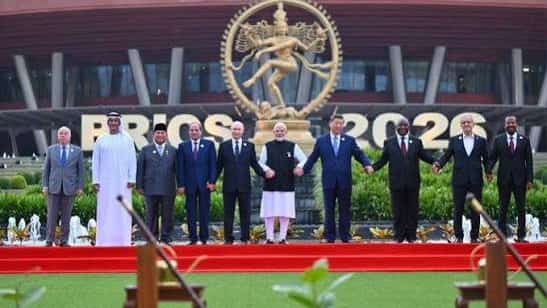
NEW DELHI, India — Leaders of the 11-member BRICS bloc called for the de-escalation of hostilities in the Middle East and voiced concern over growing tensions, polarization and fragmentation in the international order.
“We express deep concern over the continued escalation of tensions in the Middle East/West Asia and, recalling our respective national positions, call for exercising maximum restraint, as well as avoiding actions that could further aggravate the situation,” the leaders said in a joint statement released by India’s Ministry of External Affairs.
BRICS is composed of Brazil, China, Egypt, Ethiopia, India, Indonesia, Iran, Russia, Saudi Arabia, South Africa and the United Arab Emirates.
The leaders also called for the protection of civilians and civilian infrastructure in accordance with the principles of the United Nations Charter, including respect for the sovereignty and territorial integrity of states.
“We encourage increasing efforts, through dialogue and diplomacy, towards a long-term understanding that will contribute to lasting peace, security and stability in the region. We stress the need to work together to maintain smooth flow of global trade, supply chains and energy, in accordance with applicable international law,” the statement read.
The bloc also backed a multilateral approach to global issues while stressing the need to respect differing national positions.
It cited sustainable development, the eradication of hunger and poverty and the global response to climate change among areas requiring greater international cooperation.
At the same time, BRICS leaders expressed concern over what they described as attempts to link security issues with the climate change agenda.
The group also warned of growing nuclear risks.
“We express concern about the growing risks of nuclear danger and conflict. We reiterate the need for invigorating the system of disarmament, arms control and non-proliferation and for preserving its integrity and effectiveness to achieve global stability and international peace and security,” the statement said.
BRICS leaders also underscored the role of nuclear-weapon-free zones in strengthening the global non-proliferation regime.
They reaffirmed support for existing nuclear-weapon-free zones and efforts to establish a zone free of nuclear weapons and other weapons of mass destruction in the Middle East.