
What makes a good leader?
Youth gain lessons on leadership at Global Youth Summit NCR


YOUNG participants from schools across the National Capital Region come together for the Global Youth Summit NCR at the SM Mall of Asia Music Hall, drawing lessons on leadership, resilience, self-discovery and using their voice to make a difference in their communities.
Photographs courtesy of SM
What makes a good leader?
For the youth who gathered at the SM Mall of Asia Music Hall for the Global Youth Summit NCR stop, the answer came in different forms — from investing in yourself and adapting to change, to embracing who you are and, ultimately, using your voice for others.
Students from schools across the National Capital Region (NCR) gathered for the event, where speakers from different industries shared experiences and lessons on becoming better leaders in their communities.
The Global Youth Summit NCR was held with the support of partners SM Cares and Global Peace Foundation Philippines, whose involvement helped bring the leadership and youth development event to students across the region.

SM Cares Program Director for Children and Youth Royston Cabuñag opens the Global Youth Summit 2026 NCR, encouraging participants to lead with purpose and intention.
Invest in your future
The Credit Card Association of the Philippines brought actress Dimples Romana to the stage, where she shared lessons from her years in the entertainment industry and her journey toward success.
“I think it only takes one single button for you to hit in our minds and say, today, I’m going to be a great leader,” she said.
For Romana, leadership is closely tied to discipline, even when it comes to handling money. If a person cannot be trusted to manage their finances properly, she asked, how can they be trusted with bigger decisions?
She related the lesson to her own career, emphasizing that her journey was shaped by “very small, very intentional choices.”
Romana encouraged the students to view investing in themselves the same way they would invest their money — because investing in yourself is ultimately an investment in your future.
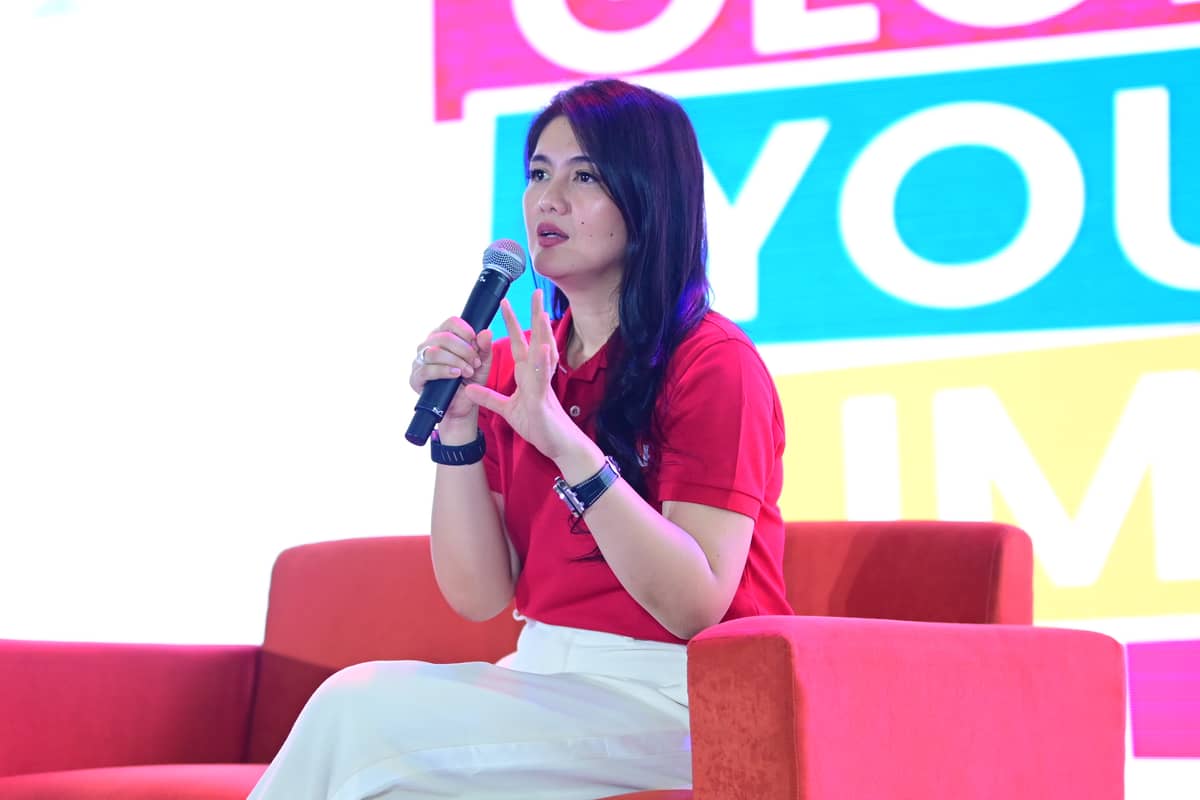
Dimples Romana highlights the importance of self-investment, resilience, and purposeful growth in achieving success.
Adaptation and evolution
Leadership, however, is not always about following a predetermined path.
For Sarah Jessica Caringal, corporate brand marketing manager of Brave Foods Global, leadership means being adaptable, innovative and observant while building something with purpose.
A fine arts student, Caringal never expected to find herself in the food industry. Her career eventually led her into branding and marketing, showing how a person’s path can change when they remain open to opportunities.
Her story reflects an important lesson in leadership: goals can evolve as you learn more about yourself and the world around you.
Caringal also shared how Brave Foods Global was built around its founders’ habit
of noticing. They observed people’s routines, habits, preferences and experiences before creating their brands — a quality she said leaders should possess.
As the business expanded, the company invested in inventory, commissaries, standardized recipes and other systems to maintain a consistent customer experience.
A good idea, she showed, is only the beginning. Leaders also need to build structures that allow an idea to survive and grow.
Then came the pandemic.
The company had to scale down, simplify its menu, shift toward delivery and make difficult decisions while looking after its employees. Some of those systems eventually helped the company grow stronger.
Leadership, then, is not always about growth. Sometimes, it means knowing when to adjust, make sacrifices and protect what matters so an organization can survive.
Caringal also stressed the importance of having people willing to ask difficult questions. Strong leadership is not about one person having all the answers, but about creating a team that can question, experiment and contribute ideas.
One of her strongest points was the shift from asking, “What else can we sell?” to “What else deserves to exist?”
The question moves leadership beyond simply achieving more and toward creating something meaningful.
For Caringal, innovation does not necessarily mean creating something complicated or revolutionary. Sometimes, it means finding your purpose and creating something meaningful and different, even when the path is difficult.
Be who you are
For content creator Aaron Maniego, leadership begins with something more personal: accepting yourself.
Maniego shared his journey toward self-love, beginning with childhood experiences of being bullied for being feminine and on the heavier side. As he grew older, he began to understand what he wanted for himself — to become famous.
His younger self could not have known what would be waiting for him along the way.
The pandemic became a turning point. Maniego continued working out and eventually built a muscular physique. One day, he uploaded a workout video on TikTok.
One viral video later, “Bortang Barbie” was born.
But just as he was reaching the success he had hoped for, another setback came. The death of his older sister caused him to break down and gain weight.
Eventually, Maniego found strength in the loss. He later joined Century Tuna’s SuperBods competition, which he described as a proud moment for being in a space where gay men are not always represented or seen.
Today, he embraces “Bortang Barbie” and the idea that there is no single way to be masculine or feminine. There can be a balance of both.
His story offered the students a different kind of leadership lesson: Setbacks will happen, but what matters is finding the strength to get back up and rediscover yourself each time.
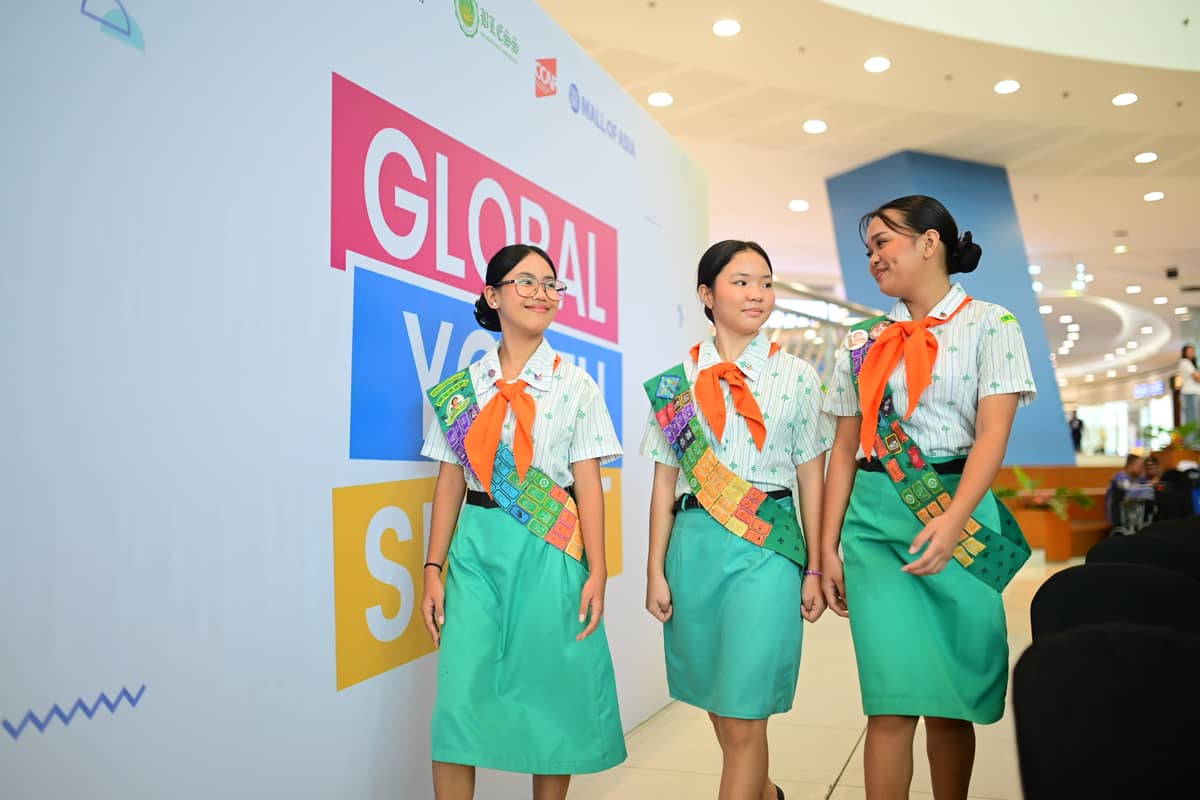
Members of the Girl Scouts of the Philippines join fellow youth leaders in exploring opportunities to learn, lead, and create positive impact.
Do it not just for you but for others, too
Karmina Constantino Torres, an anchor on ANC, gave students a glimpse into journalism while offering some of the event’s strongest lessons on leadership.
One of Torres’ strongest points was that leadership, much like journalism, should be “never about you.”
She emphasized that every question she asks should ultimately benefit the public: “Ask for the public, not for the subject. Not for myself, but for you guys.”
The same principle applies to leadership. A good leader makes decisions based on the welfare of the people they lead rather than personal recognition or advantage.
Torres described journalism as a responsibility to provide accurate, relevant and meaningful information to the public, emphasizing the importance of fairness, accuracy and integrity in reporting.
She also emphasized that “it is, however, all about listening,” explaining that listening allows journalists to understand what is being said and determine how to move a conversation forward.
Effective leaders do the same. They listen to their people, consider different perspectives and use what they hear to make better decisions.
Torres explained that journalists have to “think on our toes, especially when things don’t go as planned,” particularly in a live environment where unexpected situations can happen at any moment.
Leadership is much the same. Problems rarely happen exactly as expected, requiring leaders to remain composed and ready to make decisions quickly.
For Torres, communication is just as important. She pointed out that “anyone can” read the news, but her job is different because “this is all about communicating.” She does not simply mouth words; she tells stories in a way that “actually reaches you and touches you.”
Having good ideas is not enough if a leader cannot communicate them clearly and meaningfully.
Torres also said journalists are not there to tell people “how to think, what to feel,” but to give the public enough information to form their own opinions.
The same principle applies to leadership. Rather than creating followers who simply obey, good leaders should give people the knowledge, context and confidence to think for themselves.
She ended her speech with a reminder to “be biased,” clarifying that her bias is not for any particular person or political group, but “for country, and her people, always.”
For leaders, it is a reminder to have principles that guide their decisions and remain committed to those values even when doing so is difficult.
Torres also admitted that she was “a little nervous” speaking in front of so many people. Yet she still stepped forward and delivered her message.
Her openness showed that leaders do not have to be fearless or perfectly confident. Leadership can simply mean having the courage to move forward despite uncertainty or fear.
The biggest leadership lesson
So, what makes a good leader?
Perhaps there is no single answer.
From Romana’s reminder to invest in yourself, Caringal’s lesson on adapting to change, Maniego’s journey toward embracing who he is, to Torres’ call to put the public first, the speakers showed that leadership is not simply about being the person in charge.
It is about knowing when to grow, when to adapt, when to stand back up and, most importantly, who you are doing it for.
For the students who attended the Global Youth Summit NCR, the lessons were more than advice on how to lead. They were reminders that leadership is also a journey of becoming a better version of yourself — one measured not only by how far you go, but by how many people you bring with you along the way.