
Anti-graft court judge twits Bonoan ruling

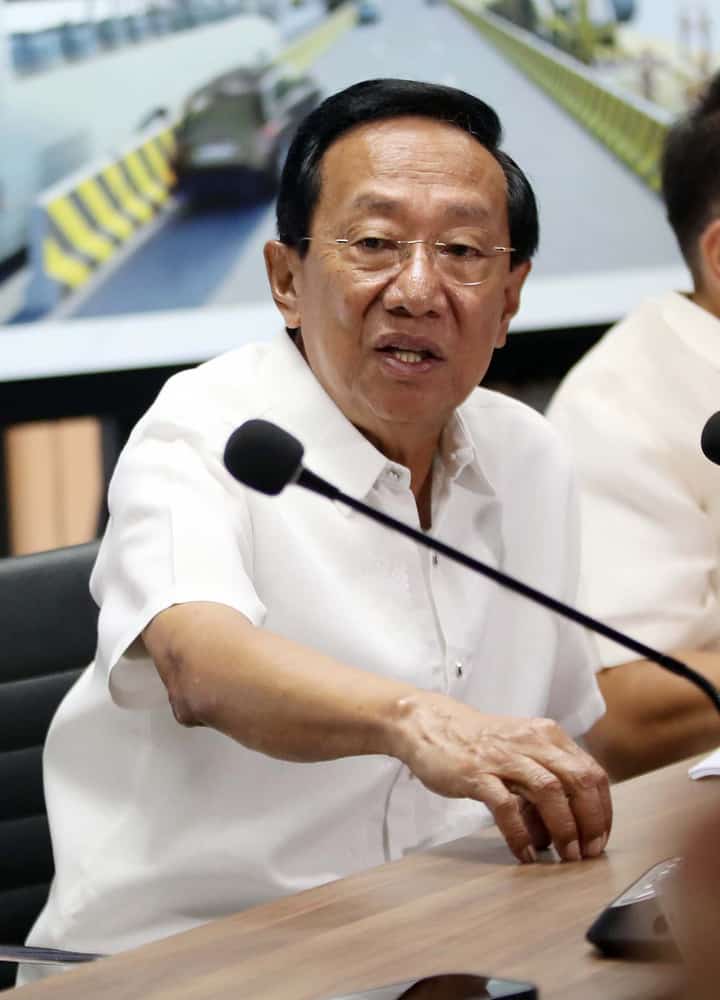
“If there is prima facie evidence with reasonable certainty of conviction on the part of Bonoan, why discharge him in the first place?”
Associate Justice Gener Gito of the Sandiganbayan Fifth Division challenged the decision of state prosecutors to exclude former Public Works Secretary Manuel Bonoan as a co-accused in the case of plunder and graft against Senator Jinggoy Estrada and other public officials.
Among the three justices in the Fifth Division, Gito was the sole individual that opposed the discharge of Bonoan from the crimes alleged in the original information that was submitted by the Office of the Ombudsman.
In his 32-page dissenting opinion to the ruling, the justice argued that while the Ombudsman had the ability and discretion to either prosecute or utilize an individual as a state witness, the same authority was “not absolute.”
“Its exercise remains subject to law, the applicable provisions of the Rules of Court, and the procedural safeguards protecting the substantial rights of the accused,” he said.
One of the particular points raised by Gito was the fact that the sought amendments of the prosecutors were “substantial” rather than “formal” in nature.
As he would explain, substantial amendments were changes to information that changed the “recital of facts” while subsequently altering the prosecution’s theory of the case.
Formal amendments, on the other hand, were changes made to the submitted case that changed the contents of a charge without affecting the prosecution’s theory or the accused’s substantial rights.
In the case of the Ombudsman’s amendments, Gito noted that the exclusion of Bonoan from the case had a direct effect on the prosecution’s theory when it came to how Estrada managed to include the subject projects in the national budget.
“Here, the proposed amendments do not merely remove Bonoan as an accused. They materially alter the allegations in the Information. The original Information alleged that accused Estrada “and” Bonoan caused, facilitated, or ensured the inclusion of the questioned projects in the national budget,” he explained.
Through the newly submitted information, however, Gito said that state prosecutors implied that the senator acted “by himself/and or through” the former cabinet secretary for the insertion.
With the adopted change, he said that state prosecutors were alleging alternative modes of participation, directly affecting how the prosecution and the defense approached the case.
“The proposed change is therefore more than a mere clarification or rearrangement of words. It broadens the factual basis and modes of participation of words. It broadens the factual basis and modes of participation upon which the prosecution may seek to establish criminal liability,” he said.
Rights of co-accused prejudiced
Aside from challenging the nature of the changes that were submitted, Gito said that another factor that he considered in denying the motion to discharge Bonoan was the rights of the three other former public officials implicated in the charges.
Along with Estrada and Bonoan, former Department of Public Works and Highways (DPWH) officials Denryl Cortuna, Manny Bulusan and Arturo Gonzales.
With all three former DPWH engineers arraigned on the original information, the justice said the amended information “prejudiced” their constitutional rights by amending it after the fact.
Gito maintained that given the development, the respondents were being asked to defend themselves on a “materially altered factual and evidentiary framework.”
“In effect, they would be compelled to reassess defenses and evidences prepared in response to the original accusations,” he said.
“The continued allegation of conspiracy does not alter this conclusion. The relevant inquiry is not whether the term “conspiracy” remains in the Amended Information, but whether the factual basis by which the prosecution seeks to establish it remains materially the same,” he added.
Setting such precedent, Gito said that the amended information could not be admitted against Cortuna, Bulusan, and Gonzales as it impaired the protections they were afforded after their arraignment.
‘Procedurally flawed’
While maintaining that his opinion and decision on the motion was not in any way a means to “hamstring the prosecution” in how it sought to prosecute the case and the individuals it sought to employ for its cases.
Gito did note, however, that what his opinion sought to point out was the fact that the Ombudsman’s decision to discharge Bonoan after it had already filed its charges was “procedurally flawed.”
“While the undersigned recognizes the prosecution’s laudable desire to prosecute those responsible for what is perceived to be the greatest larceny in the government coffers, such prosecution must nevertheless be pursued in accordance with the Rules, with due regards for the rights of the accused, and without encroaching upon judicial prerogative,” he said.
Notably, while Bonoan was discharged in the Fifth Division case, a similar motion from state prosecutors was denied in the Second Division, which handles a separate graft case involving Estrada.