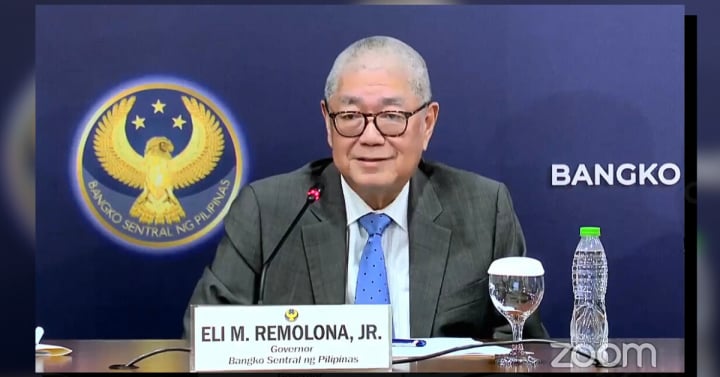
“We need to find a way to strengthen our exports. For example, initiatives such as Pax Silica could help, as could the Luzon Economic Corridor,” he added in Filipino.
US-led initiative
Pax Silica is a US-led initiative focused on artificial intelligence and supply-chain security. The Philippines formally joined the initiative in April alongside 23 other signatories, including the European Union, Israel, Japan, India, Singapore, South Korea and the United Kingdom.
Under the initiative, the Philippines and the United States are working on plans for a 4,000-acre industrial hub in New Clark City, envisioned as an AI-focused investment and manufacturing center within the Luzon Economic Corridor.
The project has generated discussion and criticism over the potential development of data centers in the area. The Bases Conversion and Development Authority, however, has said the proposed Pax Silica development is not intended to be a cluster of hyperscale data centers but an industrial hub that would include semiconductor and microchip manufacturing for computers, laptops, electric vehicles and other technologies.
Remolona cautioned that strengthening exports will not provide an immediate solution to the peso’s weakness and could take time to produce results.
Peso unlikely to return to P60 per US dollar
He noted that the peso is unlikely to return to P60 per US dollar, as doing so would come at the expense of the country’s foreign exchange reserves, which declined to a 1.5-year low in July.
“It is true that when goods are imported, a weaker peso will cause the prices of those imports to increase,” he said.
“[The depreciation] can be slowed down, but it can’t be fixed. It can’t go back to P60. That’s not possible,” he added.
A persistent trade deficit can put downward pressure on the peso because the country is buying more from abroad than it sells overseas. Philippine importers must purchase more US dollars to pay for those imports, increasing demand for dollars relative to pesos.
If dollar inflows from exports, remittances and investments do not keep pace, the peso weakens, meaning more pesos are needed to buy each dollar. A weaker peso, in turn, raises the local cost of dollar-priced imports, particularly fuel and other commodities, adding to inflationary pressure.
Philippine exports, however, have continued to post strong growth. 2025 exports reached a record $84.48 billion, up 15.3 percent from 2024, led by electronics. In the first seven months of 2026, exports rose another 12.9 percent year on year to $54.92 billion, also a record for the period. July alone reached $8.15 billion, up 10.8 percent from a year earlier.