
DENR cites Bayawan City as solid waste management model

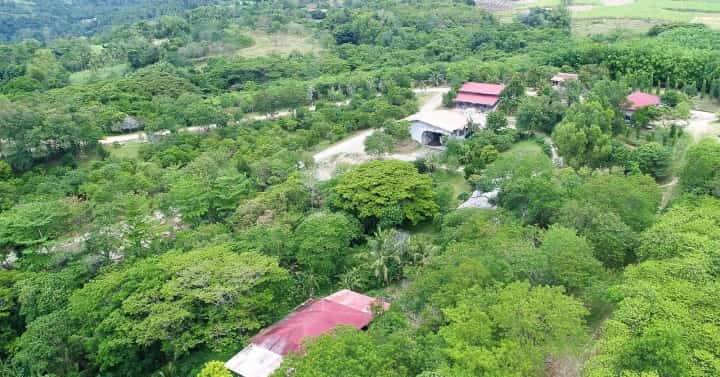
Proper landfill design is achievable, and local government units across the country should follow the example set by Bayawan City, Department of Environment and Natural Resources (DENR) Secretary Juan Miguel T. Cuna said during a recent inspection of the city’s waste management facility.
Cuna commended the city government for establishing effective solid waste practices under Republic Act 9003, also known as the Ecological Solid Waste Management Act of 2000, and urged other municipalities to replicate its operational framework.
“President Ferdinand Marcos Jr. has called on our barangays and local government units to become laboratories of workable solutions and showcases of best practices,” Cuna said.
“Bayawan is a clear example of that vision in action. Through strong local leadership, community participation and collaboration with the DENR, the city has shown that proper solid waste management can be sustained,” he added.
At the center of the city’s operations is the 27.4-hectare Bayawan City Waste Management and Ecology Center in Barangay Maninihon.
Established in 2010, the facility features a sanitary landfill cell, a materials recovery facility, a composting unit, a special waste vault and a septage management system. It currently serves all 28 barangays of Bayawan — covering 117,900 residents — as well as five neighboring municipalities and three private companies.
The city’s current system contrasts with conditions in the late 1990s, when unsegregated household waste and open dumping in Barangay Banga created severe environmental and health hazards.
In response, the city adopted a comprehensive waste management plan in 2002 that mandated source segregation, systematic collection, recycling and composting through local ordinances.
Under a pay-as-you-throw scheme, residents must attach designated stickers to sacks of residual waste before collection. Unsegregated waste is left uncollected, and violators face fines. Educational campaigns across local communities support the policy to maintain high compliance rates.
Through these measures, approximately 80 percent of waste segregation occurs before final disposal, allowing the city to recover recyclable materials and significantly reduce total waste volume. Deputized enforcers conduct regular monitoring to deter illegal dumping and nighttime violations.
The city’s progress has also involved resolving operational challenges. In 2023, the DENR issued a notice of violation to Bayawan after its wastewater effluent failed to meet environmental standards. Technical assistance from the agency enabled local officials to address the issue and regain compliance.
“There was a time when our effluent wastewater did not pass standards, and the DENR issued us a notice of violation,” said Irvin Joshua Elum, assistant manager of the waste management center. “But they did not stop there. They helped us resolve the situation by providing technical advice, and thankfully the problem was addressed.”
The local government’s waste management initiatives have earned several national accolades, including awards from the DENR’s regional office and the Presidential Lingkod Bayan Award conferred by the Civil Service Commission to the Bayawan Integrated Waste Management Team.
“Bayawan shows us that environmental laws work when they are implemented consistently and when communities are made part of the solution,” Cuna said. “This is a model that other local government units can learn from and adapt to their own local conditions.”
The DENR continues to urge local governments nationwide to enforce waste segregation at the source, maximize waste diversion and strictly adhere to federal environmental laws.