
Iran unable to import petrol
Iranians have in recent days queued outside petrol stations.
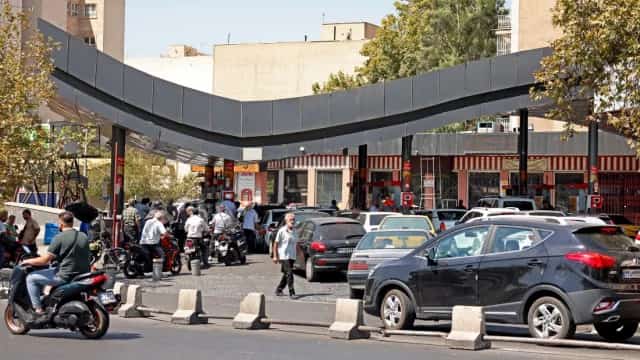
TEHRAN (AFP) — Iran has been unable to import enough petrol to make up for insufficient domestic production because of a United States naval blockade, a senior Iranian official said.
“Petrol production is insufficient, and because of the US naval blockade, we cannot import it,” the official IRNA news agency quoted Vice President Mohammad Jafar Ghaempanah as saying on Wednesday.
The remarks came as Iranians have in recent days queued outside petrol stations, with the war with the US increasingly shifting towards economic pressure on Tehran.
On Monday, the Iranian president’s chief of staff Mohsen Haji-Mirzaei said petrol quotas would be reviewed, without elaborating.
War broke out between Iran and the US on 28 February. Tehran has since seized control of the strategic Strait of Hormuz, with Washington imposing a naval counter-blockade on Iranian ports.
Ghaempanah criticized the distribution of highly subsidized fuel in Iran, saying the current system disproportionately benefits people who own multiple vehicles.
“The distribution of petrol in the country is inequitable. Owners of several vehicles benefit from subsidies, unlike those who do not own one,” he said.
Iran, a major oil producer with some of the world’s cheapest fuel, has for years heavily subsidized petrol, making any changes to pricing politically sensitive.
Hormuz control
Meanwhile, Iran and Oman are negotiating the opening of a temporary shipping corridor and the clearance of mines in the blockaded Strait of Hormuz, which both nations border.
They have yet to agree on the conditions for the waterway’s reopening as the Middle East war nears the six-month mark, but talks are ongoing.
Both countries sit on the strait crucial for the global oil and gas trade, and are trying to define the terms of a controlled resumption of shipping, which has been paralyzed by Tehran since the US-Israeli attacks.
A US-Iran memorandum of understanding signed in mid-June provided for the reopening of the Strait of Hormuz, and left it up to Iran and Oman “to define the future administration and maritime services” in the waterway, in discussion with Gulf states and in line with international law.
But the deal, which was supposed to pave the way for talks on permanently ending the war, has since fallen apart.
In Tehran on Tuesday, the Iranian and Omani foreign ministers discussed a framework agreement that would establish a “temporary corridor” for shipping and a project to clear mines in the strait, according to a joint statement.
Omani Foreign Minister Badr Albusaidi said on X after the talks that he hoped the new corridor and “practical arrangements to restore safe navigation” would be announced “soon.”
He added that “future management of the strait and a permanent solution will follow in due course.”
Iranian Deputy Foreign Minister Kazem Gharibabadi, in an interview with local media, explained that the proposed arrangement would see ships entering the Gulf pass through Iranian waters, while those leaving would use Omani waters then Iranian waters.
He also said that if the plan with Oman was agreed upon, the two would have 30 to 60 days to hammer out a permanent route, adding that Iran’s Revolutionary Guards were involved in the talks and that the maps under discussion were drawn up by the armed forces.
The Guards said on Wednesday that they had agreed in negotiations with Oman to share revenues earned from any fees imposed in the strait — an idea rejected by Washington.