
Military doctrine shifts from retaliation to offense
‘Iran should escalate earlier and more forcefully rather than wait for the U.S. or Israel to define the terms of the conflict.’
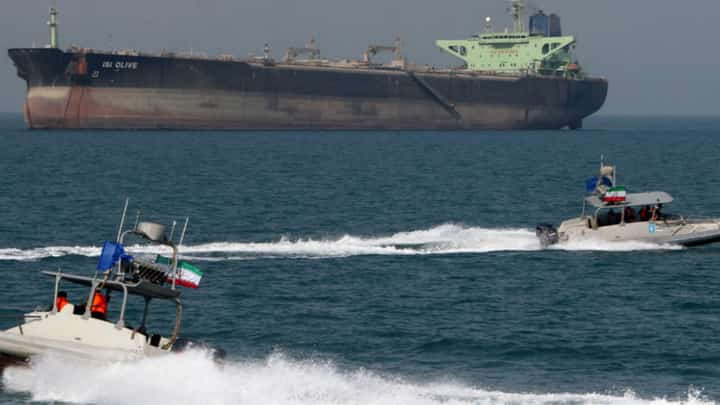
TEHRAN (AFP) — Six months into its war with the United States, Iran’s military has begun signaling a shift from retaliation to offense, which analysts say could reflect Tehran’s belief it holds leverage to advance its demands and break the stalemate.
Since US-Israeli strikes launched the war on 28 February, Tehran has largely portrayed its strikes against the US, Israel and Gulf countries as revenge for attacks on the Islamic republic.
Now, Iranian officials are openly talking about giving offensive operations a greater priority while keeping control over the strategic Strait of Hormuz, a key source of leverage against Washington that has disrupted a vital global energy route and driven up energy prices.
Iran’s supreme leader Mojtaba Khamenei outlined that approach in a reshuffle of top military commanders earlier this month, calling for “strengthening maximum deterrence and preparing to conduct large-scale offensive operations against the enemy.”
Last week, a deputy commander of Iran’s Revolutionary Guards indicated that Tehran was revising its military doctrine to give “offensive operations” strategic priority.
Analyst Sina Toossi of the Center for International Policy believes the shift to offensive operations does not mean Tehran was “adopting a doctrine of preventive war.”
Rather, he said, Tehran appears to have concluded that “if confrontation becomes unavoidable, Iran should escalate earlier and more forcefully rather than wait for the US or Israel to define the terms of the conflict.”
Ahmad Zeidabadi, a Tehran-based international relations expert, believes the shift reflects Tehran’s assessment of Washington’s intentions.
“The Islamic Republic believes the United States has likely ruled out war and now seeks to perpetuate the status quo including the US naval blockade and the economic pressure,” he told Agence France-Presse.
Iran’s calculus
Diplomatic efforts with the US remain stalled, especially since a 17 June truce collapsed and the US reimposed oil sanctions and the blockade on Iranian ports.
“Iranians believe that diplomacy is doomed to fail in the current climate and that the Americans will not accept their terms,” Zeidabadi said.
“Consequently, they may feel compelled to resort to offensive action to force the US to accept Iranian conditions ... and to initiate a new round of negotiations.”