
BRIDGING THE PHILIPPINES AND JAPAN THROUGH THE SKIES

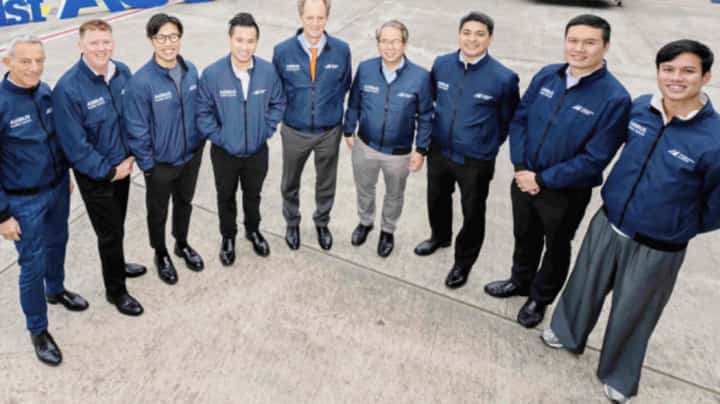

Long before international travel became routine, Philippine Airlines (PAL) was already building air links that would shape the country’s relationship with Japan. More than seven decades later, those connections continue to grow, making travel easier for tourists, business travelers, overseas Filipinos, and families while strengthening ties between the two nations.
As Asia’s first commercial airline and the Philippines’ only full-service network carrier, PAL launched scheduled DC-6 flights from Manila to Tokyo via Okinawa on 26 January 1949. The route marked one of the airline’s earliest international services and established an important link between the Philippines and Japan.
PAL’s contribution extended beyond transporting passengers. In 1951, the airline leased a Douglas DC-3 aircraft named Kinsei to support Japan’s efforts to establish its own national carrier. The aircraft was used for test flights and crew training as Japan Airlines prepared to begin operations.
Although services to Japan were temporarily suspended during the 1950s because of government service restrictions, flights later resumed as travel demand increased. In 1988, PAL expanded its Japan operations by introducing direct Cebu to Tokyo Narita flights, providing travelers from the Visayas with another convenient gateway to Japan.
As travel demand continued to grow, PAL invested in newer aircraft to strengthen its international network. The arrival of the Airbus A321neo in 2018 enabled the airline to operate longer nonstop narrow-body flights, including services to northern Japan, while improving operational efficiency.
The relationship between the Philippine and Japanese aviation industries deepened further in 2019 when ANA Holdings, the parent company of All Nippon Airways, acquired a 9.5 percent equity stake in PAL Holdings. Although ANA’s ownership was later diluted following PAL’s financial restructuring after the pandemic, the investment was a testament to the long-standing partnership between the two airlines.
One PAL flight to Japan also marked a moment of national pride. In 2021, the airline flew home members of the victorious Philippine Olympic team from the Tokyo Games, including Hidilyn Diaz after she won the country’s first Olympic gold medal. PAL later recognized Diaz as its first Forever Flyer.
Today, PAL continues to expand its presence in Japan to meet growing demand. Beginning in late October, the airline will increase Manila to Tokyo Narita flights from 14 to 21 weekly services, while Manila to Osaka flights will also rise from 14 to 21 weekly services. Flights between Manila and Sapporo will increase from three to five weekly services during the winter travel season.
The expanded schedule will bring PAL’s Japan operations to as many as 87 weekly flights. The airline now serves Tokyo’s Narita and Haneda airports, Osaka, Nagoya, Fukuoka, and Sapporo from Manila, as well as Narita and Osaka from Cebu, giving it the widest Japan network among Philippine carriers.

According to PAL President Richard Nuttall, the additional flights will provide travelers with greater flexibility during the peak winter season while supporting tourism, business, cultural exchanges and cargo movement between the Philippines and Japan.
More than seven decades after its first Tokyo flight, PAL continues to connect Filipinos to Japan while bringing the world closer through an expanding international network.