
New beacon of hope
Eala gives us a reason to look beyond our geographical, religious and political differences and remember that we, too, can believe in ourselves and win.
There was a time when the country came to a halt whenever Manny Pacquiao fought.
Streets emptied and the crime rate dropped as millions of Filipinos gathered around television sets in their homes, sari-sari stores, gyms, cinemas and restaurants, holding their collective breath while Pacquiao beat the hell out of bigger, stronger opponents.
For one fleeting moment, Pacquiao transformed from a superstar athlete into the living embodiment of national pride — a national treasure.
That’s why, when he hung up his gloves five years ago, Filipinos were left wondering: When would they feel that kind of unifying magic again?
On a balmy Saturday night, they got their answer.
Alex Eala played with left-handed grace, fiery composure, and an unyielding heart to pull off an earth-shaking upset of world No. 3 Iga Swiatek of Poland, sending her to the Round of 16 of the prestigious Wimbledon Championships.
No Filipino had ever made it that far in the Open era, and Eala, at just 21, had crossed the threshold from athletic prodigy to bona fide cultural icon.
The next morning, photos of her iconic diving return dominated front pages, while the entire nation — including President Ferdinand Marcos Jr. — congratulated her on a job well done, mirroring the height of Pacquiao’s popularity.
That’s why, when she battled the more seasoned Jasmine Paolini for a quarterfinal berth on Monday, Filipinos once again found themselves glued to their television screens, cheering and praying through every serve, every return, and every desperate dive.
The Philippine Sports Commission even organized a watch party at the Philsports Arena to allow more Filipinos to witness the match together.
But the parallels between Pacquiao and Eala extend beyond their achievements against athletically superior foes. What truly binds them in the hearts of Filipinos is their shared humility, which endears them to people from all walks of life.
Pacquiao was the rugged warrior from the streets of General Santos City who used boxing as his ticket out of poverty.
Eala’s story is different. She comes from a well-off family of athletes, with her mother a Southeast Asian Games swimming medalist.
Yet, like Pacquiao, she possesses the humility, determination, hunger, and never-say-die spirit to keep fighting even when the odds are stacked against her — qualities that truly define Filipinos.
When Eala stepped off Centre Court after her grueling campaign, she did not dwell on her improved world ranking or the substantial prize money she had earned.
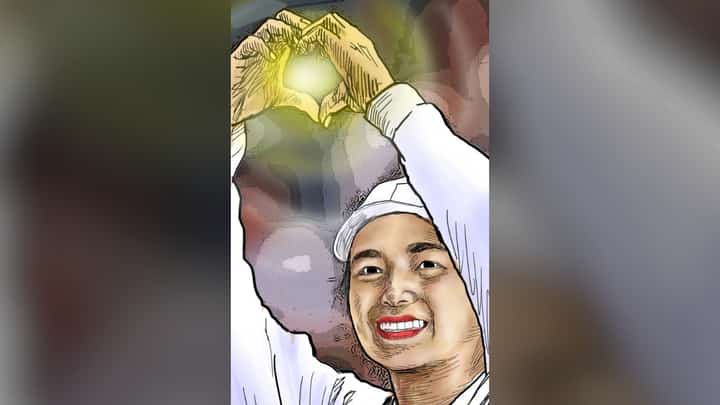
Instead, she displayed remarkable grace and modesty, forming a heart with her hands to thank the roaring Filipino crowd that had gathered at the All England Lawn Tennis and Croquet Club to cheer her on.
During the press conference after her stunning victory over Swiatek, she humbly recalled her beginnings, saying the win meant everything because “I trained with my brother and my grandfather every day after school with my ruffled socks, my light-up shoes, and my chubby cheeks.”
Like Pacquiao, Eala has never forgotten where she came from. While the rest of the world sees her as an emerging superstar and the rightful successor to Swiatek’s throne, Filipinos see one of their own — someone who also wakes up every morning, works hard, and relentlessly pursues a dream.
We must recognize that Eala is no longer merely an athlete. She has become an icon and a unifying force. In the years ahead, she will also be remembered as the pioneer who shattered the glass ceiling of Philippine tennis, proving that a tropical nation with limited tennis infrastructure could still produce a giant on the world’s biggest courts.
At this point, Eala is exactly what Filipinos need. In this climate of political and economic uncertainty, she provides a rare moment of reprieve. She gives us a reason to look beyond our geographical, religious, and political differences and remember that we, too, can believe in ourselves and win.
Her journey reminds us that the Filipino spirit is beautiful, resilient, and fully capable of conquering the world stage. Now, as she shifts to the hard courts in preparation for the US Open, she will carry more than a tennis racket.
She will carry the prayers, the smiles, the renewed faith, and the gratitude of a resilient nation that has found its new beacon of hope.