
Foreign investments slump to 10-year low
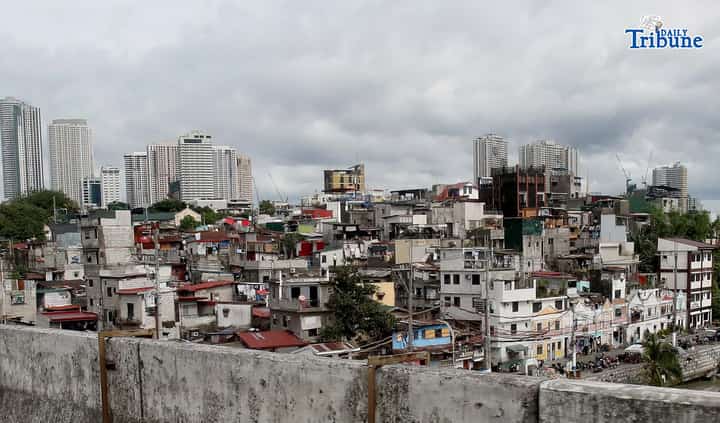
ECONOMIC OUTLOOK Buildings tower over a low-rise residential area in Pasig City. The United Nations said that as the country rebounds from a corruption scandal, the Philippine economy may expand at a faster pace this year and in 2027, supported by household consumption and easing inflation. In its latest World Economic Situation and Prospects report, the UN projected Philippine gross domestic product growth at 5.7 percent this year and 6.1 percent in 2027.
ANALY LABOR
Foreign direct investment (FDI) net inflows to the Philippines plunged to $250 million in April, the lowest monthly level in a decade and down 58.8 percent from $607 million a year earlier, as foreign investments in debt instruments weakened sharply.
Data from the Bangko Sentral ng Pilipinas (BSP) showed the decline was largely driven by a 91.7-percent drop in net investments in debt instruments to $44 million from $522 million in April 2025. Reinvestment of earnings also slipped 1.9 percent to $80 million.
This marks the lowest monthly FDI level since June 2016's $244 million.
Partly offsetting the decline was a surge in net equity capital investments, which jumped to $127 million from just $4 million a year earlier. Gross equity capital placements rose to $136 million, while withdrawals fell to $9 million from $108 million.
For the first four months of 2026, FDI net inflows reached $1.97 billion, down 26.5 percent from $2.68 billion in the same period last year. Lower investments in debt instruments and reinvested earnings more than offset gains in equity capital investments.
The BSP said equity capital placements were sourced mainly from Japan, the United States and Singapore, and were largely channeled to the manufacturing, financial and insurance, and real estate sectors.
FDI is considered a key source of long-term capital because it typically involves investments in productive assets such as factories, equipment and business expansion. Unlike portfolio investments, FDI is generally viewed as more stable and contributes to job creation, technology transfer and economic growth.
The Marcos administration has been pushing measures to attract more foreign capital, including efforts to ease business regulations, expand infrastructure development and open more sectors of the economy to foreign participation.