
Let’s get it on
Legal analysts have also shot down talk of an early dismissal of the articles of impeachment before the trial even begins.

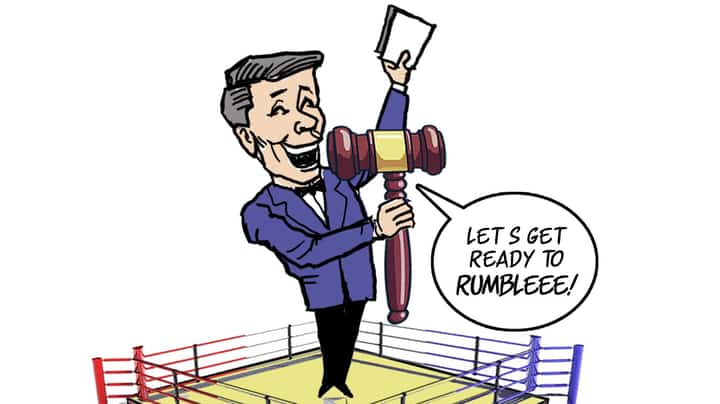
Senate President Sherwin Gatchalian, who is not a lawyer, will strike the gavel to open the impeachment trial of Vice President Sara Duterte on Monday, a first that legal experts said will test the acceptability of the proceedings under a presiding officer without formal legal training.
Impeachment trials run under the same rules of evidence that govern regular courts. These rules exist, a legal analyst noted, precisely to filter out testimony and evidence that could mislead the triers of fact, a safeguard borrowed from the American jury system, where the jurors are, in this case, the Senate judges.
But the analogy has limits. American juries are sequestered, insulated from press coverage and public opinion while a trial unfolds.
Senator-judges read newspapers, watch news coverage and face reporters in real time, raising the risk that a senator-judge, lawyer or not, comments on the merits of the case midtrial.
There is no mechanism to formally rebuke a senator-judge who crosses the line, highlighting the highly political nature of the process. The most that can be done is to raise a manifestation on the floor, noting that a remark does not reflect the body’s position.
The Senate’s dwindling roster of lawyers compounds the test. Only five sitting senators have law degrees: The Cayetano siblings, Pia and Alan Peter and Rodante Marcoleta, with the minority and Francis Pangilinan and Chiz Escudero for the dominant bloc.
Legal observers argue that in past trials, citing the late Senate President Juan Ponce Enrile’s role in presiding over the 2012 Corona impeachment trial, non-lawyer senators still understood rulings when they were explained in plain, reasonable terms because the audience for an impeachment trial is the public, not a bar examination panel.
Whether Gatchalian can do the same under sharper public scrutiny and a more adversarial setting remains an open question.
Legal analysts have also shot down talk of an early dismissal of the articles of impeachment before the trial even begins. Unlike regular courts, where a judge can dismiss a case for lack of jurisdiction, improper venue, res judicata, or prescription, the Senate Impeachment Court’s rules contain no similar mechanism.
None of those grounds, analysts noted, appears to apply here. The Constitution’s command to “try and hear” the