
Dy pushes measure to restrict dynasties, contractors in party-lists
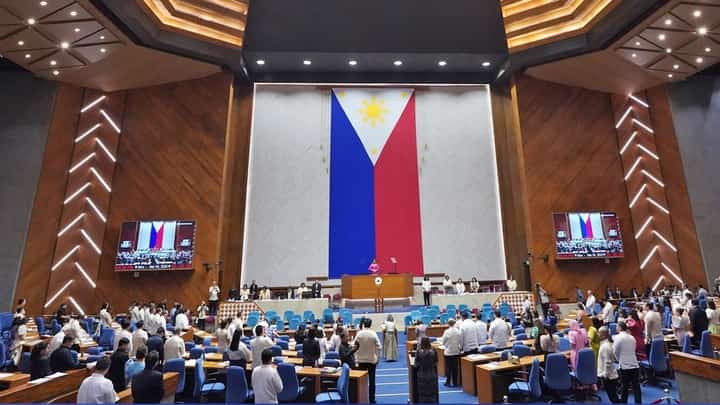
House Speaker Faustino “Bojie” Dy, along with other members of the House of Representatives, filed a bill seeking to provide stricter provisions to the party-list system to prohibit the existence of dynasties, and individuals seeking to unlawfully influence policies through Congress.
Dy said that partylists, which were first introduced through the 1987 Constitution, were meant to afford individuals who may not be properly represented when it comes to legislative decisions the ability to field a representative.
The lawmaker stressed that it was not established to enable certain political families the ability to widen their grasp on government.
“If we truly stand for a more open, equal, and inclusive democracy, it must be ensured that the party-list system remains grounded on its original purpose, which was to give sectors and communities that lack representation the ability to participate in the creation of laws,” he said.
Through House Bill No. 9906, the Party-List System Act would be reformed to include provisions that effectively disqualify aspiring partylist candidates that are found to have a close relationship to a member of Congress, government contractors, and former elective officials.
Its restriction offers a similar coverage to the Anti-Political Dynasty Act that was passed at the House of Representatives on 3 June, restricting familial relations up to the second degree of consanguinity.
Aside from dynasties, the proposal also seeks to disallow individuals seeking public office that were awarded government contracts, concessions, franchises, or public-private partnership agreements within a five year period prior to the election date.
Likewise, any individual that has a substantial stake in a particular corporation that participates in the implementation of government contracts would be denied candidacy.
The measure would also require party-lists to guarantee that their organization was neither directly or indirectly formed through political dynasties, and would require returning candidates to observe a one-election-cycle cooling-off period prior to re-pursuing public office.
As for already elected and incumbent party-lists, the bill instills a transparency clause wherein the organizations are required to submit financial reports that would be overseen by the Commission on Elections to ensure that compliance was followed.
“The trust of the public rests on the belief that the representatives are truly serving their respective sectors and not their personal interests. This is the goal of this proposal,” Dy said.
The House Speaker noted that the proposed amendments to the existing party-list law allows for the integrity of the overall system to be protected while also ensuring that individuals still receive appropriate representation as was mandated in the Constitution.