
24 Pinoys freed by Russia, returned to Philippines
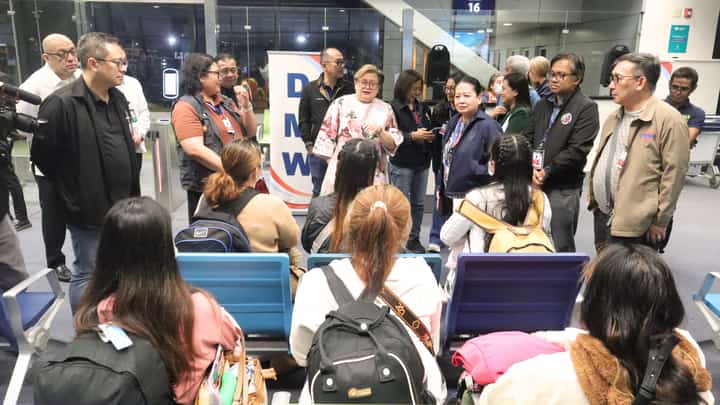
Twenty-four overseas Filipino workers who were detained, without charges, for nine months in Russia have safely returned to the Philippines after being released by Russian President Vladimir Putin.
The swift repatriation came after President Marcos Jr. took the opportunity to raise the plight of the detained Filipinos during a bilateral meeting with Putin on the sidelines of the two-day ASEAN-Russia Commemorative Summit in Kazan earlier this week, where the former sits as ASEAN chair.
Putin was quick to act on Marcos’ request and freed the OFWs, who were believed to be victims of an illegal recruitment scheme, after two days.
The first batch of repatriates arrived around 12 midnight on Sunday, with the second group arriving shortly after at around 4 a.m.
They were welcomed by Foreign Affairs Secretary Ma. Theresa Lazaro along with the DFA team.
The OFWs were held in detention in Irkutsk, Siberia, for months over immigration-related issues. Approximately 15,000 Filipinos are currently living and working in Russia, according to the DFA.
During the talks, Putin said he was previously unaware of the detentions, though he confirmed that the Filipinos in question had not been charged with any wrongdoing. Subsequently, he authorized their release and deportation.
Although the Philippines is a key ally of the United States, Manila also maintains diplomatic ties with Russia, and the two countries agreed to expand bilateral cooperation in energy, food security, and agriculture during the two summits.