
Mindanao grid recovery seen complete by weekend

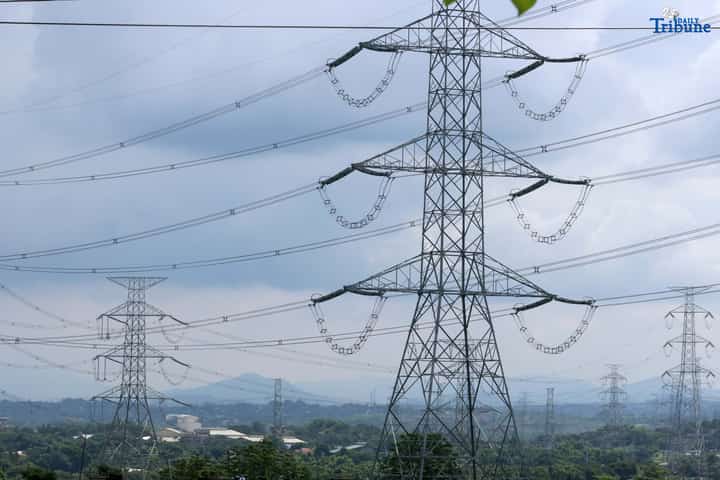
The magnitude 7.8 earthquake that disrupted up to 800 megawatts (MW) of power capacity in Mindanao this week exposed vulnerabilities in the country's interconnected power system, triggering the region's first Yellow Alert of the year and contributing to a Red Alert in the Visayas as supply margins tightened.
Despite the disruption, the Department of Energy (DOE) expects the situation to stabilize before the weekend as damaged power facilities gradually return to operation.
Speaking to reporters on the sidelines of a forum hosted by the Management Association of the Philippines on Wednesday, Energy Secretary Sharon S. Garin said restoration efforts are progressing steadily.
“Within the week, we'll normalize Mindanao,” Garin said, noting that the number of affected households has dropped significantly to about 130 from roughly 840,000 immediately after the earthquake.
Four generating units—two in Malita and two in Sarangani—remain offline but are scheduled for phased restoration over the coming days.
The DOE is taking a cautious approach to restarting generation and transmission facilities as rushing the process could lead to additional outages and prolong recovery.
“We're trying to be as fast as we can, but we have to be very careful because if you bring it too fast, it could result in a longer-term blackout,” Garin said.
The earthquake's effects extended beyond Mindanao. On Wednesday, the National Grid Corp. of the Philippines (NGCP) placed the Mindanao Grid under Yellow Alert for the first time this year after a combination of earthquake-related plant outages, the tripping of GNPower Kauswagan Unit 4, the unavailability of Filinvest Unit 3, and rising electricity demand reduced reserve margins.
Mindanao had an available capacity of 2,731 MW against projected peak demand of 2,611 MW. However, more than 1,259 MW remained unavailable due to forced outages and derated operations.
The supply disruption also affected the Visayas, which relies heavily on power imports from both Mindanao and Luzon.
Reduced electricity transfers through the Mindanao-Visayas Interconnection Project contributed to a Red Alert in the Visayas Grid from 1 p.m. to 7 p.m. Available capacity stood at 2,429 MW, only slightly above projected demand of 2,421 MW.
According to Garin, the situation underscores a broader challenge facing the country's power sector: rising electricity demand is increasingly straining a grid that depends on energy transfers between island groups.
“When demand increases in either Luzon or Mindanao, they can no longer supply as much power to the Visayas, resulting in shortages,” she said.
Meanwhile, NGCP said transmission services have largely been restored, with repairs ongoing at several facilities near the earthquake's epicenter in Southwestern Mindanao. All hospitals in affected areas have already been re-energized.