
Public wants flood probe, not coverup
Yet the underlying reason for the friction in the chamber runs deep, as it involves exposing anomalies in flood mitigation projects spanning multiple administrations.

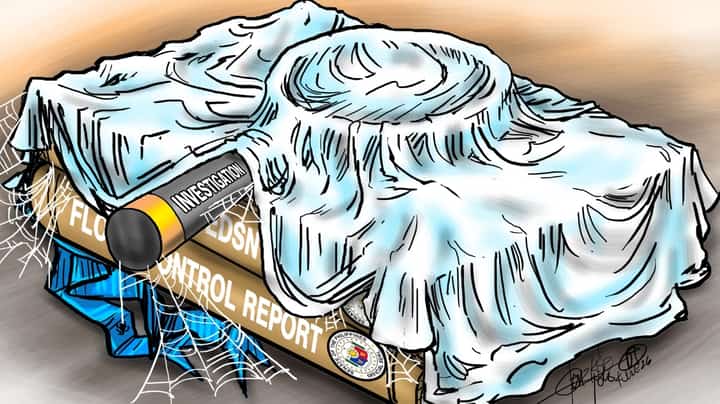
The majority has strongly made clear its intentions in the current upheaval in the Senate, and the minority has made its own equally clear by trying to stop them.
As the leadership moves decisively to reopen the Blue Ribbon committee investigation into the flood control corruption, the minority has responded not with competing proposals or demands for greater rigor but with determined obstruction.
When accountability threatens the right people, the process suddenly becomes precious.
Senator Sherwin Gatchalian was elected Senate President Pro Tempore on Wednesday, replacing Senator Loren Legarda, as the chamber grappled with the continued absence of Senate President Alan Peter Cayetano and his allies.
Gatchalian said the Senate leadership was compelled to proceed with the session because Cayetano continued to be absent.
Yet the underlying reason for the friction in the chamber runs deep, as it involves exposing anomalies in flood mitigation projects spanning multiple administrations.
In Marikina, Bulacan, and low lying communities across Metro Manila and surrounding provinces, the flooding never stopped.
Former Blue Ribbon panel chairperson Senator Panfilo Lacson had suspended the investigation, with incomplete findings stuffed into a partial committee report.
The report was unable to secure enough signatures for plenary sponsorship, as some of his peers indicated that accountability had been quietly shelved throughout the report.
The majority had moved to pull it back off the shelf. A flood control subcommittee under Senator Rodante Marcoleta was formed, with Cayetano explicitly committing to an investigation covering all administrations, all agencies, and all parties with exposure to the findings.
That is precisely what the minority could not abide, which is why their obstruction of the inquiry was nothing less than institutional interference on behalf of interests that have reason to fear where an honest investigation would lead.
Nature, however, is unforgiving in reminding the Filipinos who suffer in the floodwaters.
They deserve to know where their money went and why communities repeatedly promised flood-resilient infrastructure continue to drown with each seasonal rainfall.
A majority with both the mandate and the will seeks to follow the evidence regardless of whose name appears at the end of the paper trail.
The chamber will be judged not by the alliances that formed its new leadership, but by how it handles its constitutional and legislative responsibilities.
The majority knows this. The minority has answered with delay, procedural friction, and the familiar processes of those who would rather the blue ribbon panel stay closed than risk where an honest reckoning might lead.
Legislators are entrusted with public funds and their constitutional obligation is to hold the executive branch accountable for how those funds were spent.
When institutional standing is deployed not to investigate but to obstruct, officeholders do not merely fail their office, they become accessories to the coverup.
The majority is doing the work. The minority is running interference, likely performing the bidding of those who would prefer it undone.
When the noise settles and the politics is resolved, Filipinos will remember who demanded answers for the billions spent on flood control and those who made sure those answers would never come.