
Palace says dengue vaccine under FDA review
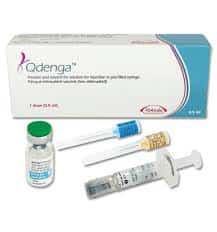
Malacañang on Tuesday said a dengue vaccine currently being evaluated by health authorities remains under review by the Food and Drug Administration, as the government awaits the applicant's response to questions raised during the evaluation process.
Presidential Communications Office Undersecretary Claire Castro said the FDA is scrutinizing TAK-003, commercially known as Qdenga, a dengue vaccine developed by Japanese pharmaceutical company Takeda.
Quoting information provided by the Department of Health, Castro said published data showed lower efficacy rates among children aged 4 to 5 compared with older age groups.
“Sabi kasi ng nailathalang datos, pinakamababa ang efficacy ng TAK-003 o Qdenga sa mga batang 4 to 5 years old kumpara sa 6 years old pataas. Sabi rin kasi ng datos na hindi maisasantabi ang maaaring mas magkaroon ng malalang dengue type 3 sa mga nabakunahang hindi pa nagka-dengue dati,” Castro said.
She noted that dengue type 3 is among the strains commonly circulating in the Philippines, adding that the government is waiting for the vaccine applicant's response to the issues raised during the review.
TAK-003, marketed globally as Qdenga, is a live-attenuated tetravalent vaccine designed to provide protection against all four dengue virus serotypes. The vaccine has been approved in several countries across Europe, Asia and Latin America.
Castro also cited a World Health Organization position paper stating that vector control remains the primary strategy for preventing and controlling dengue transmission.
“Sa madaling salita, kapag walang lamok, walang dengue,” Castro said, highlighting the Department of Health's anti-dengue campaign led by Health Secretary Ted Herbosa.
According to government data, dengue cases nationwide have declined by 57 percent this year, with 48,151 recorded infections compared with 110,924 during the same period last year.
The Philippines remains among the countries with the highest dengue burden in Southeast Asia and is classified by the World Health Organization as dengue-endemic.
The issue revives memories of the Dengvaxia controversy that erupted in 2018 following allegations linking the vaccine to the deaths of children who had received the immunization. However, no direct scientific link has been established between the vaccine and the fatalities investigated by authorities.