
Power’s new arithmetic
Together, the US and China account for roughly 40 percent of global GDP and nearly a quarter of global merchandise trade.

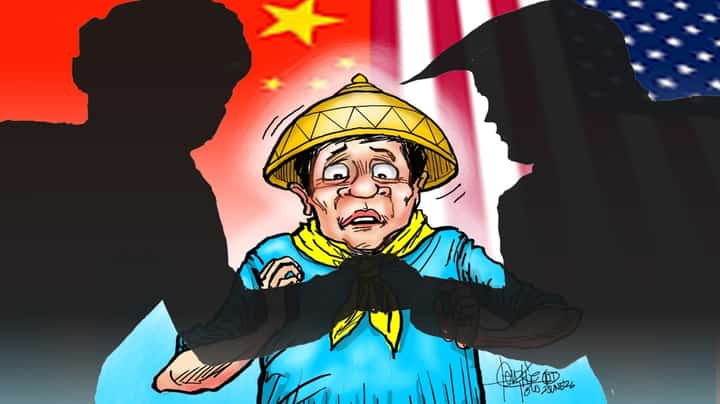
On the surface, it looked like another Donald Trump spectacle. There were the red carpets, the corporate titans in tow, the promises of billions in deals and, of course, the photo opportunities with Xi Jinping, carefully arranged for maximum television and social media impact.
The recent visit to Beijing by America’s fair-haired boy was presented as a trade mission involving Boeing aircraft, American beef, soybeans, and liquefied natural gas, among many other possible areas of cooperation.
While newspapers dutifully reported the figures and analysts debated whether the Americans had extracted enough concessions from the Chinese, something more interesting may have happened.
The language has changed. No one is talking anymore about transforming China into a Western-style economy. Neither is anyone speaking seriously about an economic decoupling. Instead, the conversation has become brutally transactional.
How many planes? How much energy? How much grain? How much access? How much influence?
The ideological fireworks of the previous decade has given way to the cold arithmetic of power. That, we may posit, should make smaller countries like the Philippines nervous.
When great powers start talking directly to one another, things become less comfortable.
In the nineteenth century, it was called the Concert of Europe. During the Cold War, it was known as détente. Different names, same principle. The biggest players sit at the table while everyone else studies the menu and hopes they are not on it.
History offers a useful reminder. In 1972, Richard Nixon journeyed to Beijing and produced the Shanghai Communiqué with Mao Zedong and Zhou Enlai. The US and China did not suddenly become friends. They simply discovered that countering the Soviet Union mattered more than their ideological differences.
The Nixon-Mao opening reshaped Asia for decades. Many of the countries most affected by it were never consulted. For the Philippines, this mattered more than most people realized.
We have spent the last several years becoming accustomed to hearing ourselves described as strategically important. We have heard foreign policy experts speak of our location as if we were prime real estate.
The South China Sea, through which an estimated $3.4 trillion worth of trade passes annually, is one of the most strategically important waterways on earth. Nearby lies Taiwan, perhaps the world’s most dangerous geopolitical flashpoint.
The South China Sea elevated our geopolitical stock. American military access expanded under the Enhanced Defense Cooperation Agreement, which now includes nine agreed sites across the Philippines. Washington repeatedly describes its defense commitment to Manila as “ironclad.”
Suddenly, we are no longer spectators but participants — or so we like to think.
Snap out of it.
What happens if Washington and Beijing discover once again that they have more to gain from talking than fighting over the West Philippine Sea and the future of Taiwan?
After all, the two giants remain deeply intertwined. Together, the US and China account for roughly 40 percent of global GDP and nearly a quarter of global merchandise trade. Their rivalry is real, but so is their mutual dependence.
Don’t get us wrong. The Philippines would not disappear from the map. Far from it. Geography is destiny and we happen to sit in a very valuable neighborhood. But there is a difference between being a player and being a piece on the chessboard.
The irony is that a warmer relationship between the United States and China would probably benefit the global economy, including our own.
China is now the Philippines’ largest trading partner, while our security relationship remains firmly anchored on Washington. Improved relations between the two powers would likely support trade, lower inflationary pressures, and encourage investment.
Yet wealth and influence are not the same thing.
A nation can prosper while losing leverage. It can enjoy economic stability even as decisions affecting its future are increasingly made elsewhere. That is the paradox beneath the headlines about trade deals and tariff negotiations.
The world may not be entering an age of conflict. It may be entering an age of accommodation. And for countries like the Philippines, accommodation among giants has always been a mixed blessing.
The question is whether they are discussing business or deciding where the furniture should go — while the rest of us wait outside the door.