
Trinidad: WPS stand should be ‘litmus test’ for 2028 bets

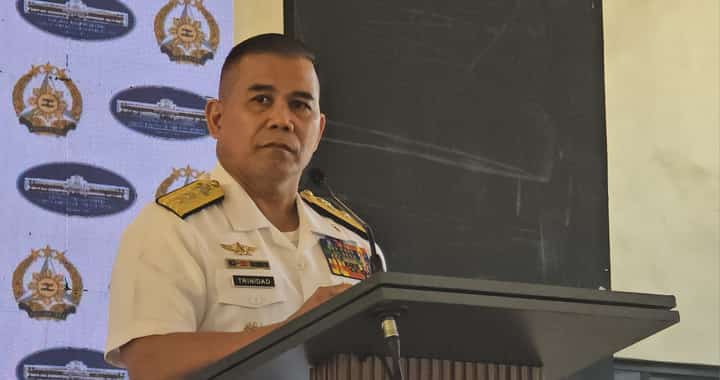
REAR Admiral Roy Vincent Trinidad, Armed Forces of the Philippines (AFP) spokesperson for the West Philippine Sea (WPS) addressing media queries during a press conference at the Philippine Air Force headquarters in Pasay City on Tuesday 24 June 2025.
Photo by Lade Jean Kabagani for DAILY TRIBUNE
Candidates seeking national posts in the 2028 elections should be judged by their position on the West Philippine Sea (WPS), a Philippine security official said Friday, warning that the territorial dispute has become a defining national issue amid growing foreign influence and disinformation campaigns.
Speaking during the Special Kapihan forum at the Manila Prince Hotel, Spokesperson for the West Philippine Sea Rear Adm. Roy Vincent Trinidad said voters must scrutinize aspiring leaders and demand clear positions on the country’s maritime claims and sovereignty rights.
“Importante sa taong bayan na maintindihan natin ang pinaglalaban. Ang pinaglalaban natin are geared towards our national interest,” Trinidad said.
“Kailangan yung plataporma ng national leaders natin and aspiring national leaders must be aligned with our national interest,” he added.
Trinidad said the WPS issue can no longer be viewed solely as a military or maritime concern, stressing that it now encompasses national security, food security, energy resources, and the country’s long-term geopolitical future.
“Dapat tanungin ng taong bayan, ng mga botante, kung ano ang paninindigan ng mga kandidato sa West Philippine Sea,” he said.
The remarks come as tensions continue between the Philippines and China in disputed areas of the South China Sea, including near Ayungin Shoal and Bajo de Masinloc, where repeated confrontations between Chinese and Philippine vessels have drawn international attention.
The government, meanwhile, continues to boost maritime capabilities in the contested waters. Philippine Coast Guard Admiral Ronnie Gavan said the Coast Guard is working toward maintaining a “persistent presence” in Philippine fishing grounds and expects to acquire at least 56 additional vessels as part of modernization efforts.
He also underscored the importance of partnerships with allied and like-minded nations, saying the Philippines cannot address security threats in the West Philippine Sea alone.
“Kailangan natin ng partner,” Gavan said, citing expanded maritime cooperation and multilateral exercises with countries such as the United States and Australia.