




She came, she saw, she cackled

Text size
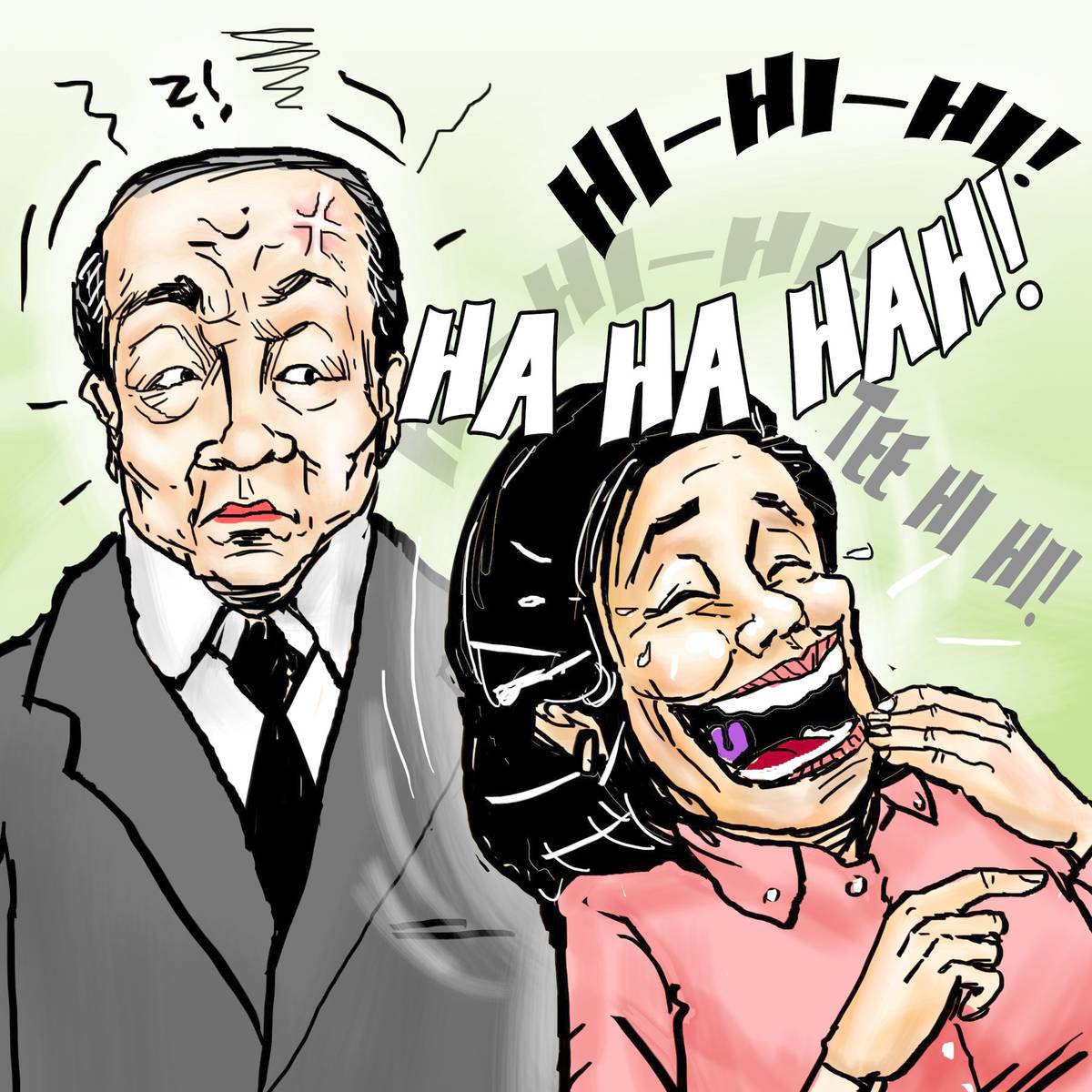
Which high-ranking secretary made quite the impression, and not entirely a favorable one, during a high-stakes diplomatic gathering in the Land of the Rising Sun?
Sources whispered to Nosy Tarsee that this official, whose star rose meteorically amid the global turbulence in the sands of the Middle East, found herself in a moment of unbridled mirth in one of Tokyo’s most hallowed diplomatic sanctuaries, the very kind of space where even a whisper feels like an intrusion.
While the crème de la crème of the two nations’ leadership prepared to convene for what insiders described as a momentous occasion, our subject’s laughter reportedly bounced off the walls of the official state residence — a place where silence isn’t merely preferred, it is an unspoken covenant.
“Her laughter filled the room,” confided one witness. “You could hear every note of it.”
What made the moment particularly jarring wasn’t merely the volume; it was where it happened and why it mattered so deeply to the Japanese.
At the heart of Japanese aesthetics lies the concept of ma, a reverence for negative space, pause, and quiet. Silence in Japan is not awkward — it is architectural.
It communicates respect, thoughtfulness, and awareness of one’s surroundings. To rupture that silence, especially in a formal diplomatic setting, is to dismantle something the Japanese consider almost sacred.
Perhaps no concept is more central to understanding Japanese public behavior than meiwaku, the deep cultural shame associated with causing inconvenience or discomfort to others.
Unlike Western cultures where individual expression is celebrated, Japanese society measures conduct through its impact on the group.
A loud laugh in a solemn space is not merely bad manners, it is a social transgression that registers as being almost aggressive to Japanese sensibilities.
Hindu immigrants abroad celebrate in either August or September Ganesh Chaturthi, a 10-day festival commemorating the…
President Ferdinand Marcos Jr. on Tuesday called for women’s greater representation in leadership across Southeast…
The Senate impeachment court on Tuesday denied the prosecution’s bid to compel Vice President Sara Duterte to confirm…
