
Philippine, Australian armies launch Kasangga 2026-1 drills

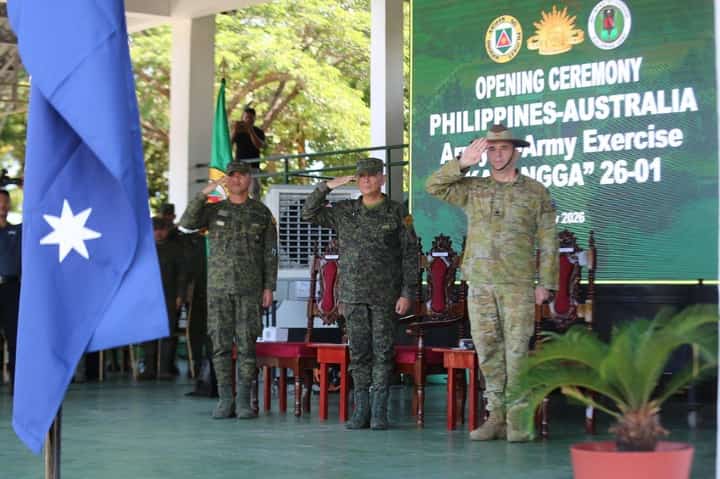
The Philippine Army, through the 9th Infantry “Spear” Division, formally opened the Philippines-Australia Army-to-Army Exercise “Kasangga” 2026-1 in Camarines Sur on 25 May.
The monthlong bilateral exercise, conducted in partnership with the Australian Army, aims to strengthen interoperability, enhance command-and-control capabilities, and improve combined arms operations among participating forces.
Training activities under the ongoing exercise include intelligence operations, movement and maneuver, fire support, civil-military operations, sustainment, medical operations, jungle warfare, and force protection.
A total of 278 Philippine Army personnel from the 83rd Infantry Battalion, 9th Division Training School, 565th Engineer Construction Battalion, 9th Field Artillery Battalion, and 21st Cavalry Company are participating in the bilateral drills.
For its part, the Australian Army deployed 86 personnel.
Marking their first participation in the Kasangga exercise, the Philippine Air Force and the Philippine Navy deployed 18 and 22 personnel, respectively.
The first Kasangga exercise conducted in the Bicol Region was held in November 2024. Military officials said the successful conduct of the initial exercise paved the way for expanded training engagements and stronger military cooperation between the two nations.
Kasangga 2026-1, which means “ally” or “partner” in Filipino, includes training scenarios designed to challenge participating troops while enhancing their understanding of each other’s tactics, techniques, and procedures.
The regular bilateral exercise also supports the Philippine Army’s ongoing shift toward external security operations.