
Concrete promises
When a structure collapses, it is usually laborers, nearby residents, and ordinary citizens who pay the price.


As rescuers continue to dig through the rubble of the collapsed Angeles City building, the immediate concern remains finding survivors and recovering those who did not make it out.
Families waiting outside the perimeter deserve answers about their missing loved ones before the rest of us start arguing about engineering standards, building permits and government accountability.
Those questions are coming, as they should.
A nine-story structure does not simply fold into itself because fate happened to be in a bad mood that morning. Buildings are among the most heavily regulated constructions.
Before a single column rises from the ground, plans must be drawn, calculations checked, permits issued, inspections conducted and certifications signed. An entire chain of professionals and public officials exists precisely to prevent this sort of disaster.
Which is why the collapse immediately raises an uncomfortable possibility. If every safeguard functioned as intended, why are rescuers now pulling bodies from a mountain of concrete and steel?
The investigation will eventually determine whether the cause involved faulty design, substandard materials, construction shortcuts, unauthorized modifications, or some combination of all four. Yet regardless of what technical explanation emerges, the broader issue remains the same.
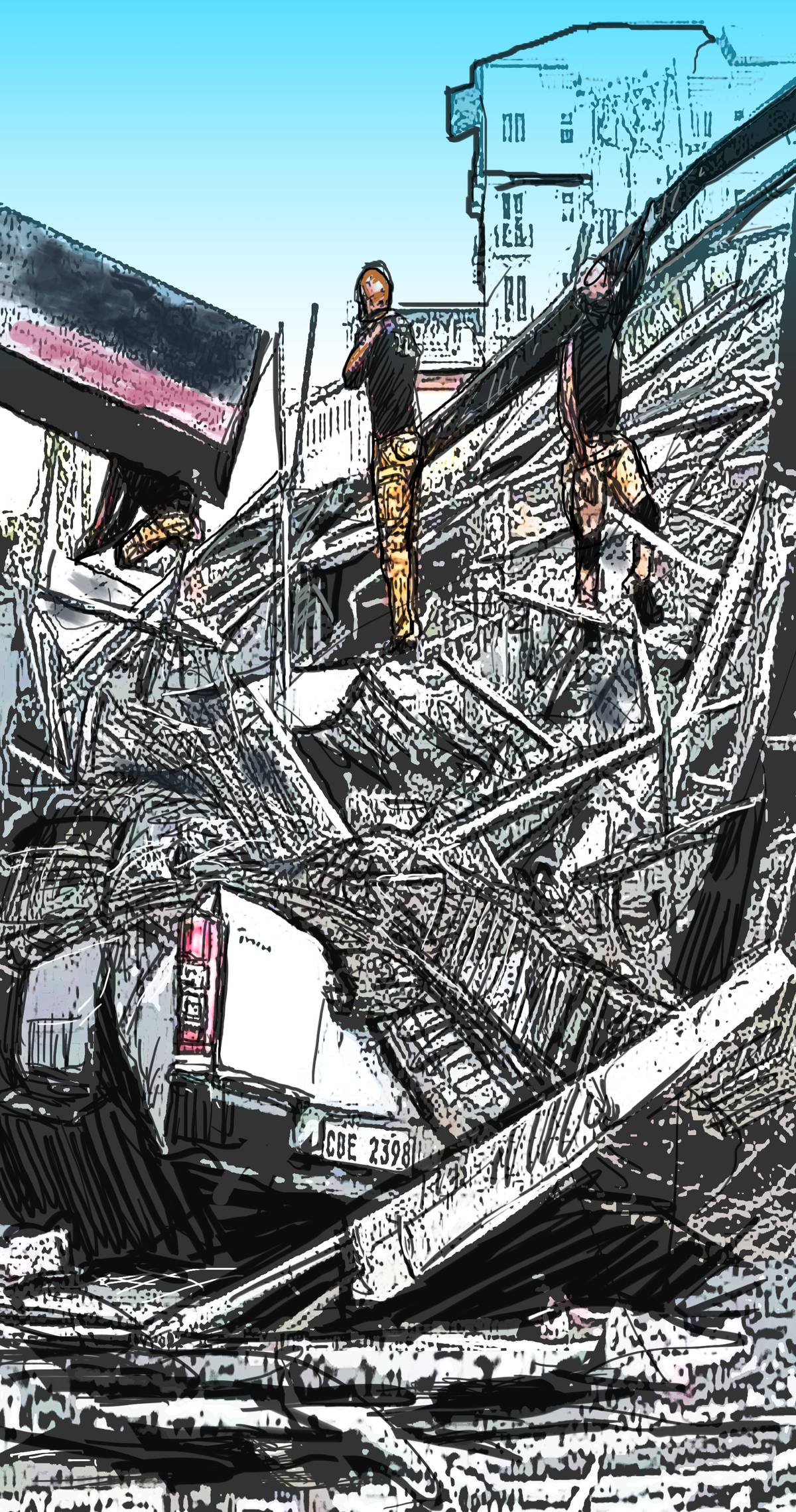
Somebody was entrusted with protecting the public from this outcome and that trust was either neglected, abused, or incompetently exercised.
Construction projects are often discussed as engineering exercises, but they are also economic arrangements. Every additional safety measure costs money. Every inspection delays progress.
The people financing projects naturally want them completed as quickly and cheaply as possible, while regulators are supposed to represent the interests of everyone who might someday live, work, or pass near those structures.
The incentives are rarely distributed equally.
When a project is completed ahead of schedule and under budget, developers celebrate and local officials point to another sign of economic activity. When a structure collapses, it is usually laborers, nearby residents and ordinary citizens who pay the price. The benefits are private; the risks become public.
That reality makes it impossible to treat the Angeles tragedy as merely an unfortunate accident. The contractor should be required to explain how the project was being executed and whether approved plans were being followed.
The project engineers should defend their calculations and supervisory procedures. City officials who approved permits and certified compliance should expect scrutiny over what inspections actually took place.
The public deserves more than vague assurances that everything was done according to procedure. Every scandal in Philippine history was supposedly done according to procedure.
What makes the incident particularly troubling is that it happened in a country that has spent years warning citizens about the eventual arrival of “The Big One.”
If a building cannot survive the stresses of its own construction, how confident should the public be about its ability to withstand a major earthquake?
The issue extends beyond Angeles City. Every condominium buyer, office tenant, hotel guest, and employee working in a high-rise has a reasonable expectation that somebody verified the integrity of the structure around them.
They assume that engineering standards were followed, inspections were genuine and approvals were granted because requirements were satisfied — not because the paperwork happened to be complete.
Whether that assumption is justified is precisely what this investigation must determine.
The families waiting for news of their missing relatives deserve accountability. The workers who entered that building believing it was safe deserve accountability.
If negligence occurred, those responsible should face the consequences regardless of whether they work for the contractor, the developer, or the government.
Otherwise, the next collapse will become merely another tragedy waiting patiently for its turn in the headlines.