
THEATER REVIEW: 'Jesus Christ Superstar' — faith in a new vision
If you’re a diehard fan of the 1973 film, like I am, the idea of watching an entirely different interpretation feels terrifying.


If you’re a diehard fan of the 1973 film, like I am, the idea of watching an entirely different interpretation feels terrifying.
The Norman Jewison film became the blueprint of our relationship with the rock opera. Fans do not want a “blasphemous” rendition of a musical they hold sacred, and the thought of someone other than Ted Neeley singing “Gethsemane” or someone other than Carl Anderson performing “Heaven on Their Minds” feels almost implausible. The fear of a new interpretation entering that sacred space is real.
But against my own instincts as a purist, I watched the 2026 GMG Productions of Jesus Christ Superstar in Solaire. Twice.
I compartmentalized the experiences, though. I tucked the 1973 film into a sealed corner of memory, locked it away, and told myself: untouchable. The Solaire production would be its own entity, I told myself. It would be carrying the spine of the film — without competing with it.
If you cannot do that, then honestly, what is the point of entertaining something you already consider heretical? But for the curious, the open-minded, and the half-fans with cash to burn, then why not?
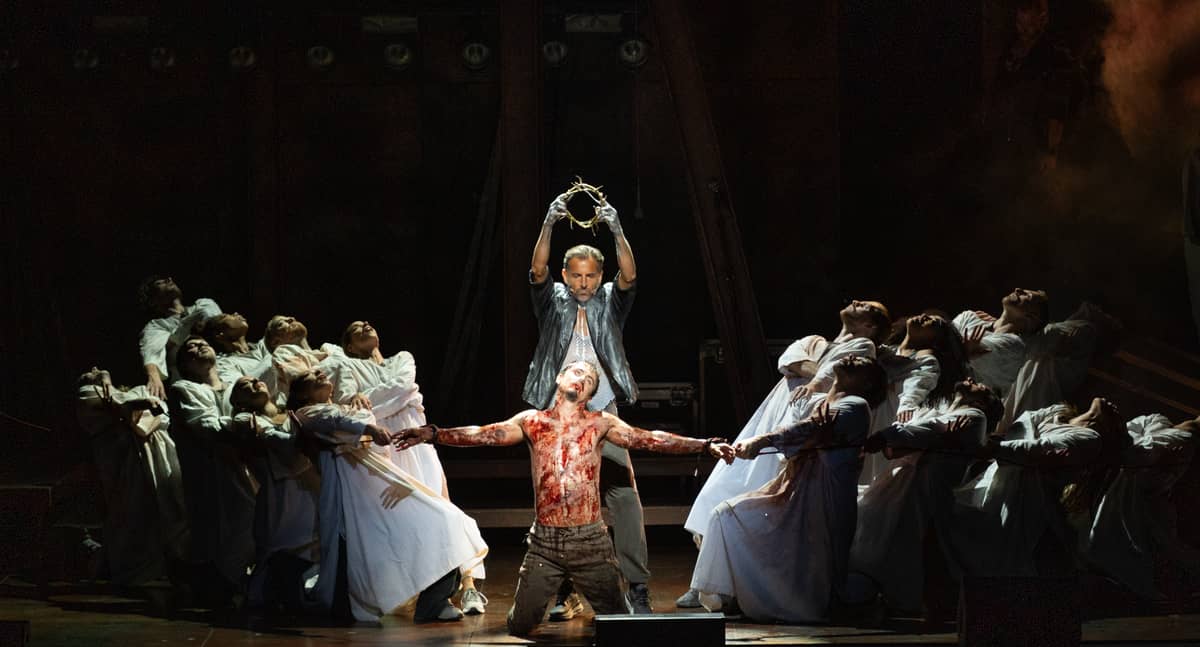
Luke Street, Ricardo Afonso, and the Jesus Christ Superstar Company
Zeus Martinez Photography
Yes, we know it was a concept album first. Jesus Christ Superstar bled out of the inspired, angsty collaboration between Tim Rice (lyrics) and Andrew Lloyd Webber (music) first as a record, assembled across scattered London sessions, then later cementing its phenomenal hook through the film immortalized by Neeley’s Jesus and Anderson’s Judas.
And we, the diehard fans of the film, embraced this version that carved itself into our collective spirit through evergreen lyrics, thrilling funk-rock, theatrical voices, and the strange power to move our Christian beings to the core.
Loosely based on the Gospel accounts of the Passion, the musical is a psychological excavation of Jesus, Judas, and those orbiting them, rendered in blunt, contemporary language.
This Regent’s Park Open Air Theatre production brought to Manila by GMG Productions avoids recreating the hippie counterculture iconography and sun-bleached desert aesthetic of the 1973 Jewison film masterpiece.
At Solaire, the world is dressed in athleisure. Jesus’ followers, the ensemble, in gym clothes. The stage in amber, molten gold, bronze, burnt orange, and charcoal.
At stage left stands a multi-level scaffold with stairs, balconies, ladders, and hidden corners occupied by the ensemble. Characters singing from above resemble political orators, celebrity performers, or authoritarian figures looming over the crowd. Metallic gold palm fronds replace naturalistic foliage and the Romans wear oversized cement-like masks resembling monumental stone busts.
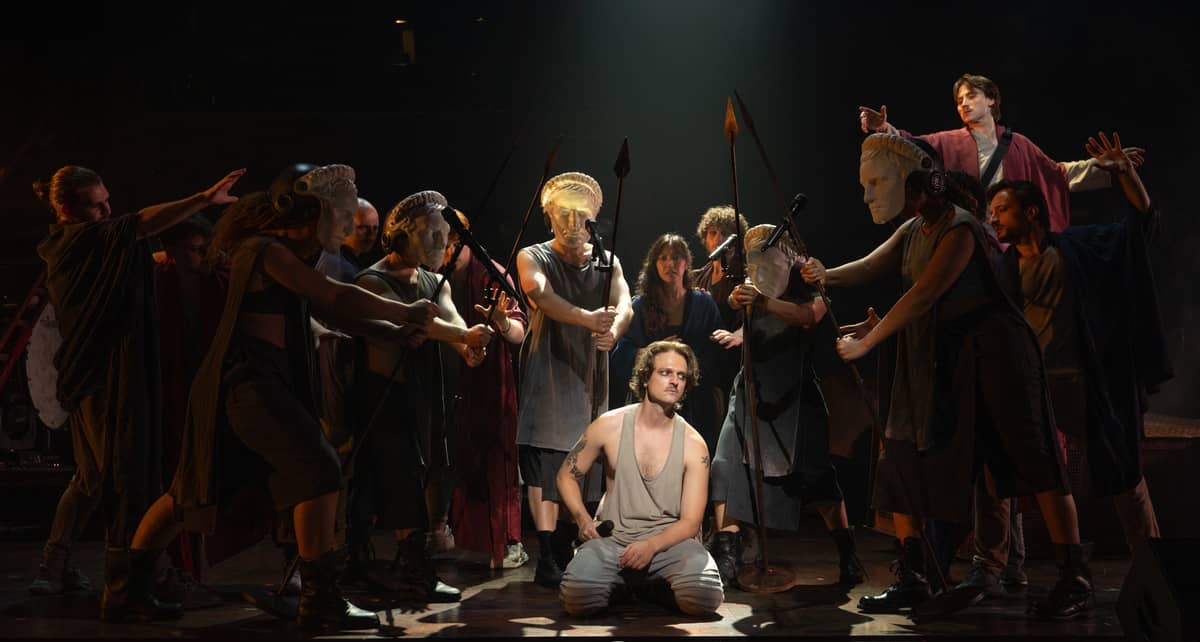
Joshua Bess, Gab Pangilinan, and the Jesus Chris Superstar International Tour Company,
Vitt Salvador
I first saw the Manila show during the 5 May gala and recoiled at the choreography. Taste is subjective, of course. Technically, the production is polished and professional. But my Jesus that night was an understudy (Joshua Bess) opposite principal Judas Javon King, so I returned to watch the intended Jesus for the role: Luke Street. Interestingly, though not listed in my playbill, the Judas during my second viewing on 17 May was Ricardo Afonso.
I still cringed at the choreography the second time, sometimes enough to make me look away or focus instead on an actor’s face. I also personally dislike the streetwear — hooded layers, joggers, oversized tanks, sneakers, dusty neutrals.
But Street and Afonso redeem the production.
Street captures the tension, doubt, and fear of Jesus during his final week with striking emotional precision. His voice carries shades of Ted Neeley while remaining distinctly his own. In “Gethsemane,” he revives the full beauty of the symphonic rock piece, layering it with the agonized, aria-like pain of a man approaching a brutal death.
Afonso, meanwhile, brings a more mature Judas compared to King’s more youthful, energetic interpretation. His performance feels lived-in, as though Judas has become second skin.
He no longer seems to perform the role but inhabit it: fearful of the Jesus movement, arrogant and judgmental, yet still deeply attached to Jesus. Judas is not a villain, but a friend, disciple, and secret adversary. As the story’s central point of view, Afonso effectively sings about politics, empire, paranoia, and confusion over what Jesus and his followers are becoming.
Afonso and Street evoke that love-hate friendship teetering on the edge before finally snapping the moment Judas plunges his hands into silver and reveals glitter-stained hands.
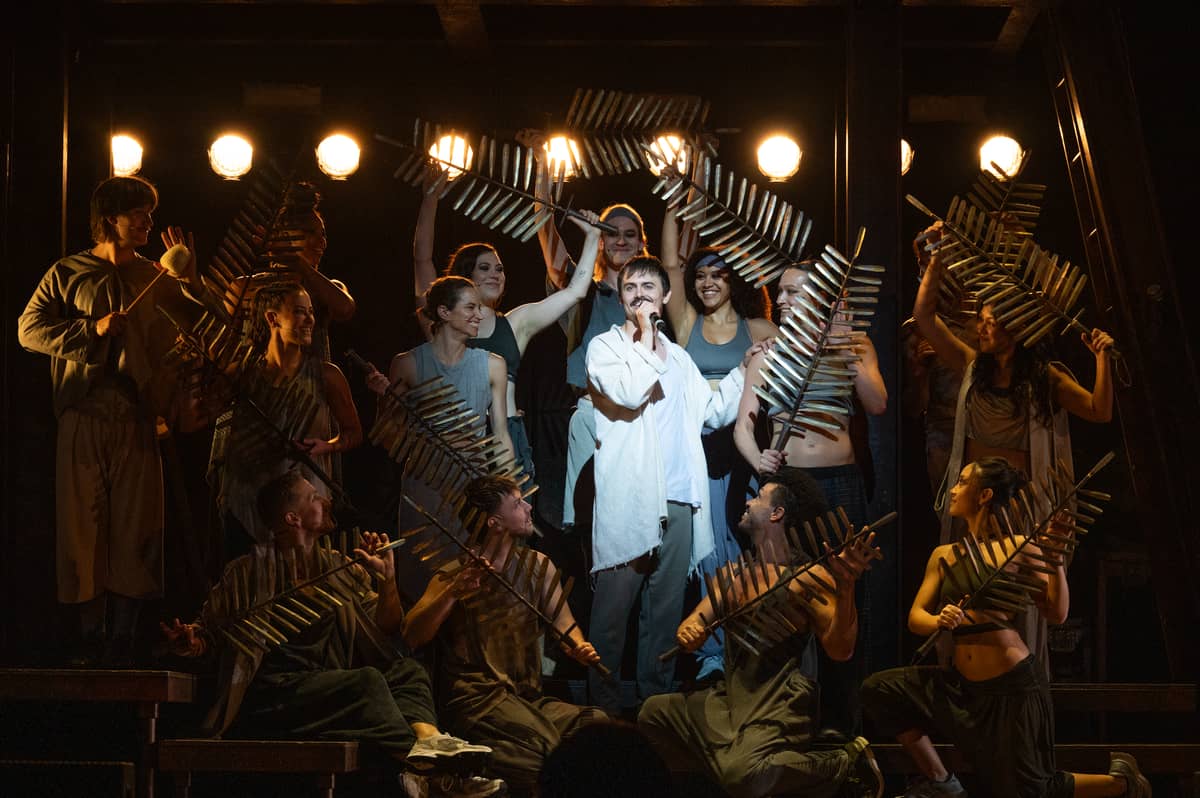
Luke Street, Gab Pangilinan and the Jesus Christ Superstar Company.
Zeus Martinez Photography.
Other visual and vocal standouts are Pilate (Ethan Hardy Benson), like a leather-clad rock impresario, and Herod and his extravagant drag-inspired wardrobe.
Unfortunately, the only Filipino cast member, Gab Pangilinan as Magdalene, feels too safe, reduced to merely singing rather than communicating Magdalene’s psyche. But she develops a warmer and more convincing rapport with Street compared to understudy Joshua Bess.
The production’s most brilliant device, though, is glitter.
In one stunning moment, Judas plunges his hands into silver coins and emerges permanently stained in glitter. And so, betrayal becomes physical contamination, turning his betrayal and guilt into something impossible to hide.
The same visual language reaches heartbreaking effect during the “39 lashes” sequence. Instead of blood, bursts of glitter explode across Jesus’ body with every strike. Under the concert lighting, the particles become sweat, blood, pain, and mass spectacle all at once.
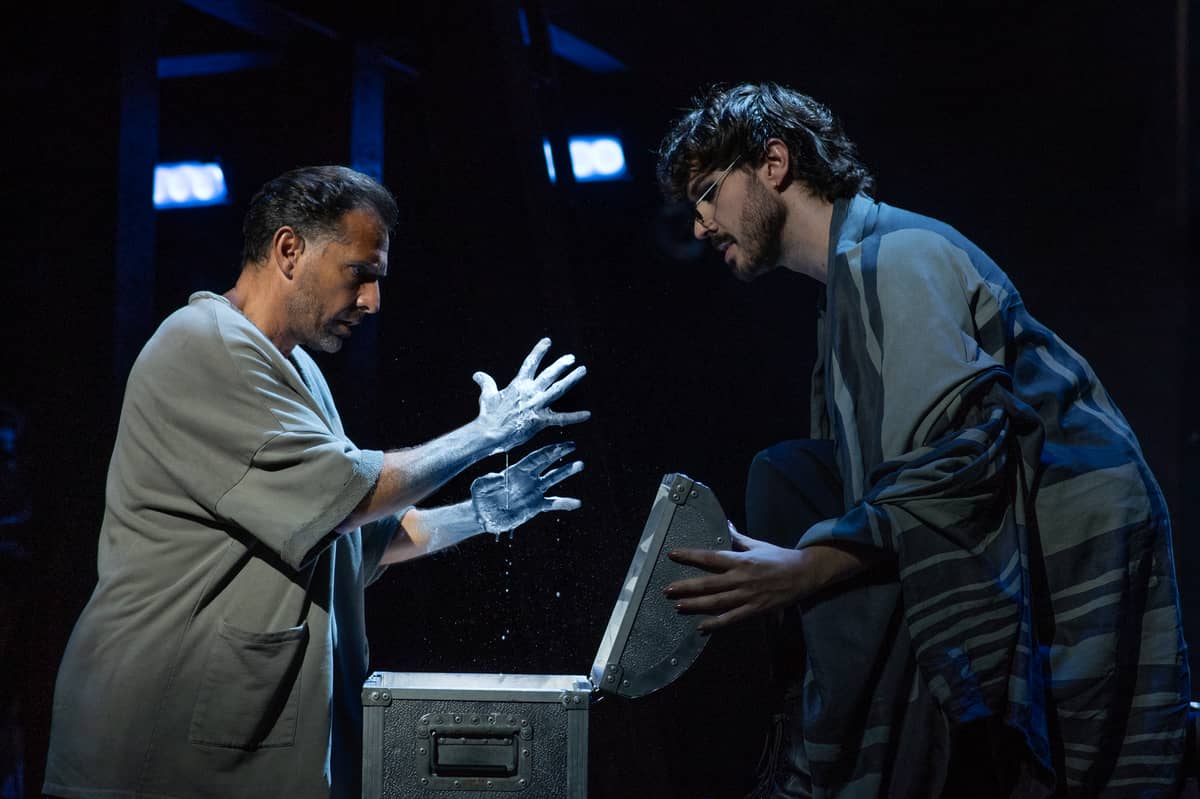
Ricardo Afonso and Grant Hodges.
Zeus Martinez Photography
That choice defines the production’s philosophy. Nothing is literal. Microphones become weapons, confessional objects, and instruments of death. Corded microphones transform into nooses. Illuminated crosses mirror the circular concert spotlights overhead. The visual vocabulary remains coherent from beginning to end.
But the music remains the engine driving everything forward: theatrical, raw, and feverish.
Despite my reservations about the choreography and costuming, Street and Afonso give this production its pulse. Their performances carry enough grit, urgency, and emotional danger to pull the musical out of the long shadow of the 1973 film and make it stand on its own.
For purists unwilling to embrace another interpretation, nothing will replace the Jewison classic. But for those willing to loosen their grip on nostalgia, this production proves that “Jesus Christ Superstar” still possesses the power to unsettle, wound, and electrify decades later.
“Jesus Christ Superstar” runs at The Theatre at Solaire until 31 May, with only its final eight performances left for the Manila run.