
Samsung Electronics, union in talks as court blunts planned strike
A South Korean court orders the union to ensure any strike did not disrupt production.
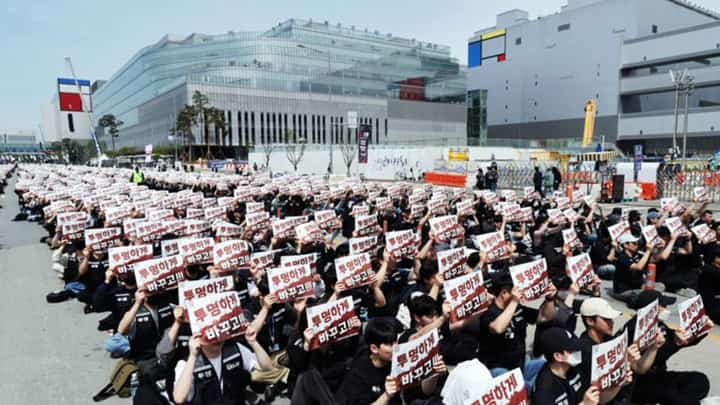
SEOUL (Reuters) — Samsung Electronics and its labor union started talks on Monday in a last-ditch bidto avert the biggest strike in the tech giant’s history, amid concern that a walkout by more than 45,000 workers could hit South Korea’s economy and disrupt global supply chains.
The threatened 18-day strike starting on Thursday comes amid an acute global shortage in memory chips, which are essential components in artificial intelligence data centers, smartphones and laptops. The shortage has fueled soaring profits at Samsung and its peers in recent months.
Monday’s talks follow the collapse last week of a first round of government-mediated negotiations over pay and bonuses at the world’s largest memory chipmaker, which accounts for nearly a quarter of South Korea’s exports.
Adding to pressure on the union, a South Korean court partially granted Samsung’s request for an injunction, ordering the union to ensure any strike did not disrupt production.
The ruling means that a strike must not lead to the degradation of materials used in production, while operations related to safety and avoiding product damage must be maintained at normal levels, a court spokesperson said by telephone.
The two main unions could face fines of 100 million won ($72,000) per day each if they failed to comply, while union leaders could be fined 10 million won per day, the spokesperson said.
The union said in a statement the court ruling would not dissuade it from pursuing a strike if talks did not achieve a deal, but pledged to engage seriously in negotiations.
Samsung Electronics declined to comment.
South Korean government officials have increasingly voiced worries about a strike, warning it could pose significant risk to economic growth, exports and financial markets.