
Gathering builders, dreamers and engineers for a future that won’t collapse

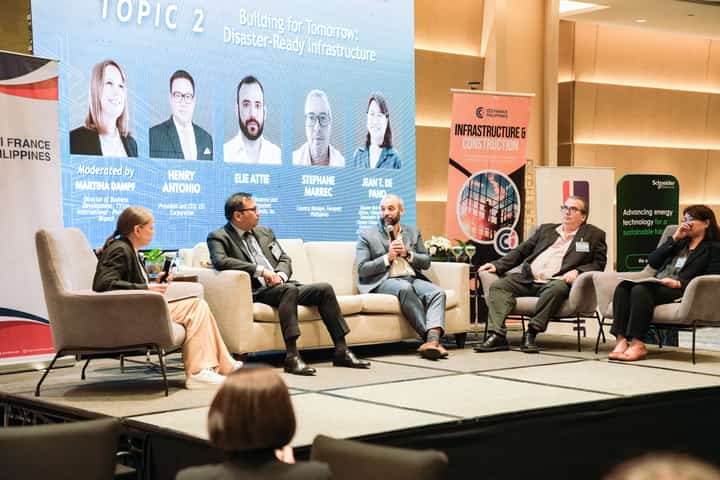
Infrastructure conferences are often exercises in endurance with a parade of PowerPoint slides, acronyms, and men in suits discussing drainage systems with the emotional range of drying cement. But the inaugural “Build to Last: Infrastructure and Construction Conference” by the French Chamber of Commerce and Industry in the Philippines showed why such conversations direly matter in our country.
Held last 16 April at Ascott Bonifacio Global City, the gathering brought together policymakers, developers, engineers, sustainability advocates, and corporate heavyweights to discuss a question that grows more urgent every typhoon season — how exactly do you build a modern nation that can survive the future?
The event opened with remarks from the French Ambassador to the Philippines, Her Excellency Marie Fontanel, who underscored the increasingly close ties between France and the Philippines, particularly in sustainable infrastructure and climate-focused development. Government voices followed, including Undersecretary Nicasio Conti from the Department of Public Works and Highways and Director Marissa Cerezo of the Department of Energy, both stressing that resilience can no longer be treated as optional architecture garnish.
Three major discussions shaped the day. The first, led by ENGIE Philippines Managing Director Jean-Baptiste Dreanic, tackled sustainable energy and the race toward greener construction practices, along with Artelia Philippines and Ayala Property Management Corporation discussing the uncomfortable truth that climate deadlines do not care about bureaucracy.
Another session with Henry D. Antonio, President and CEO of EEI Corporation, focused on disaster-ready infrastructure — a particularly sharp conversation in a country annually acquainted with floods, earthquakes, and storms dramatic enough to deserve their own film franchise. Other speakers from Freyssinet International Manila, Inc. and the Asian Development Bank emphasized future-proofing projects before disaster arrives instead of apologizing afterward.
A third panel explored smart infrastructure and digital systems, where companies like Arthaland, Schneider Electric, Legrand Philippines and Fort Manila argued that the cities of tomorrow will need more than steel and concrete. They will need intelligence.
Architect Felino Palafox Jr. closed the discussions with a vision of Philippine urban development that was ambitious without sounding delusional, no small feat in this economy.