
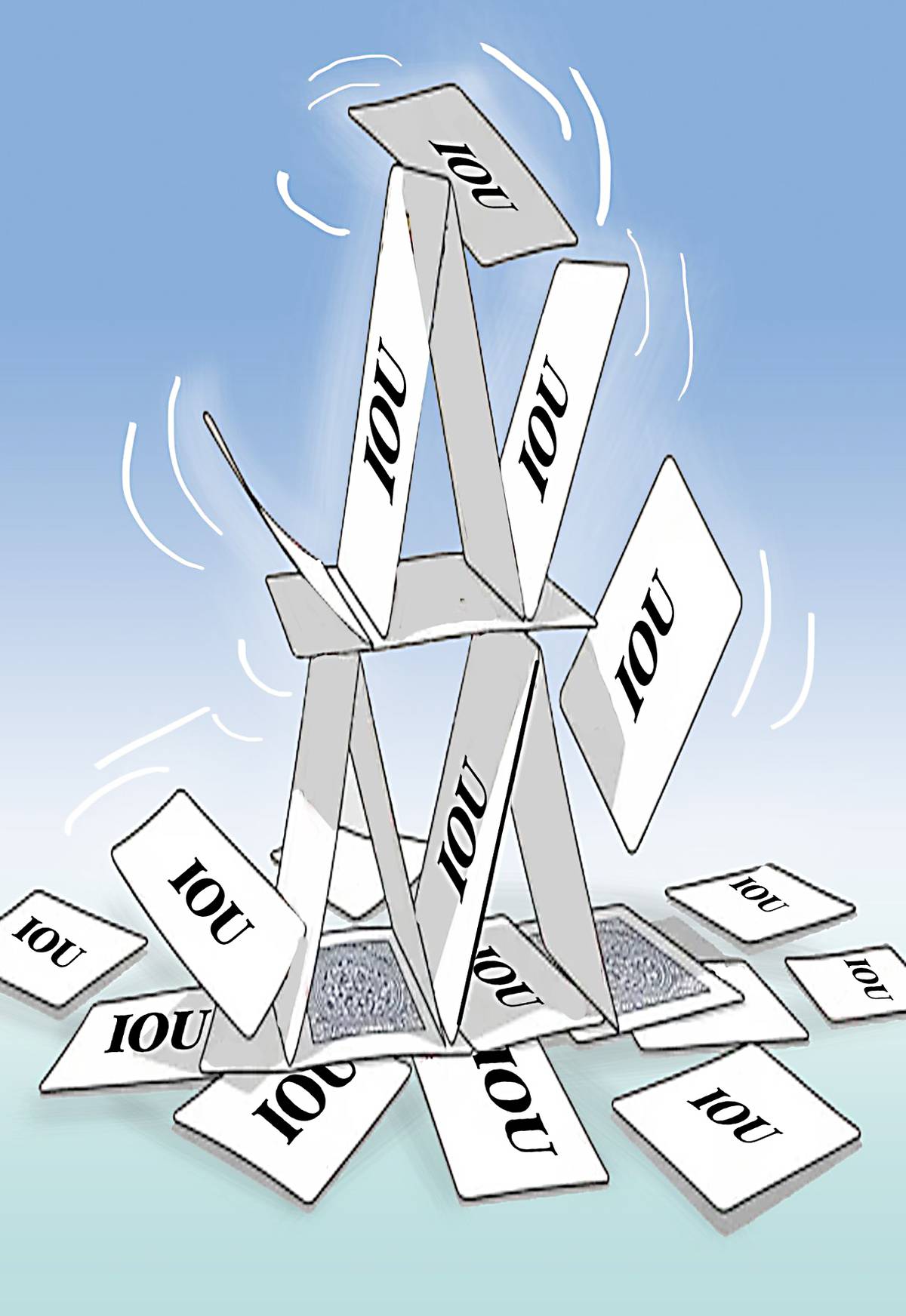
Crumbling house that debt built


Empires are not built to fail. But sometimes they are built slightly faster than they can afford.
There is a certain kind of empire that looks magnificent from the outside — sprawling, essential and seemingly untouchable.
But occasionally, a closer look at the books tells a quieter and more complicated story.
Word reaches Nosy Tarsee of a sprawling conglomerate — a household name in its home market, with interests in everything from food and transport to power and infrastructure — that may be quietly staring down a wall of obligations built brick by brick in the name of growth.
The architecture of this particular empire is worth understanding. At its core sits a parent holding company that functions less like an operating business and more like a very expensive bet.
Its assets consist largely of stakes in subsidiaries — long-cycle investments in power, infrastructure, consumer goods and property.
The parent company itself generates relatively little income directly. It survives largely on what flows upward from its subsidiaries.
And for now, the flow does not appear to be fully keeping pace.
In its most recent fiscal year, the parent company’s financing costs, interest expenses and related charges reportedly exceeded P40 billion.
Then comes the maturity issue, which is where the picture becomes more interesting.
Debt falling due within the next 12 months reportedly jumped to more than P85 billion, more than 10 times the figure recorded a year earlier. Total long-term obligations have reportedly surpassed P694 billion.
For a company sitting on around P60 billion in cash while generating roughly P35 billion in annual operating cash flow, the arithmetic naturally attracts attention.
Refinancing, of course, is the expected answer. Companies of this size rarely pay off debt walls outright. They roll them forward.
But rolling debt requires one thing markets never permanently guarantee: confidence.