
Across seas and centuries: Museo del Galeón opens as world’s first galleon trade museum
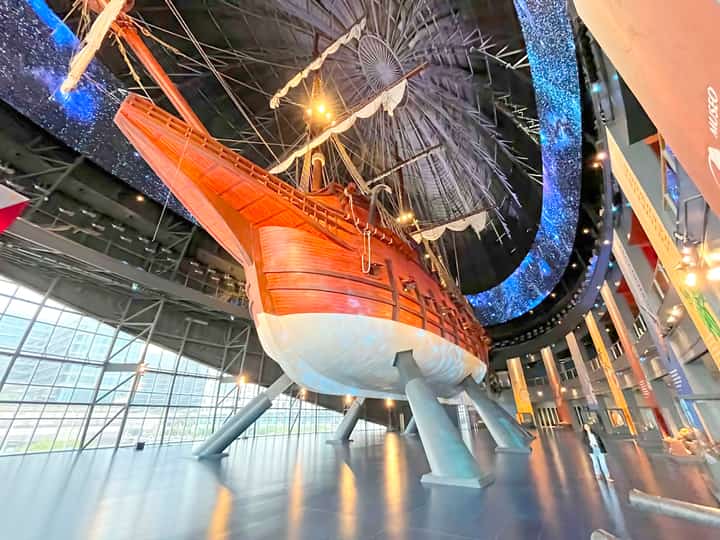
Lasting two and a half centuries, the Manila-Acapulco Galleon Trade remains one of the most important chapters in world history. More than a commercial route, it became a vast transpacific bridge that enabled the exchange of goods, ideas, faith, people and cultures across continents.
It linked Asia, the Americas, and Europe, and helped make Manila, through Cavite Puerto, a major center of trade in Asia.
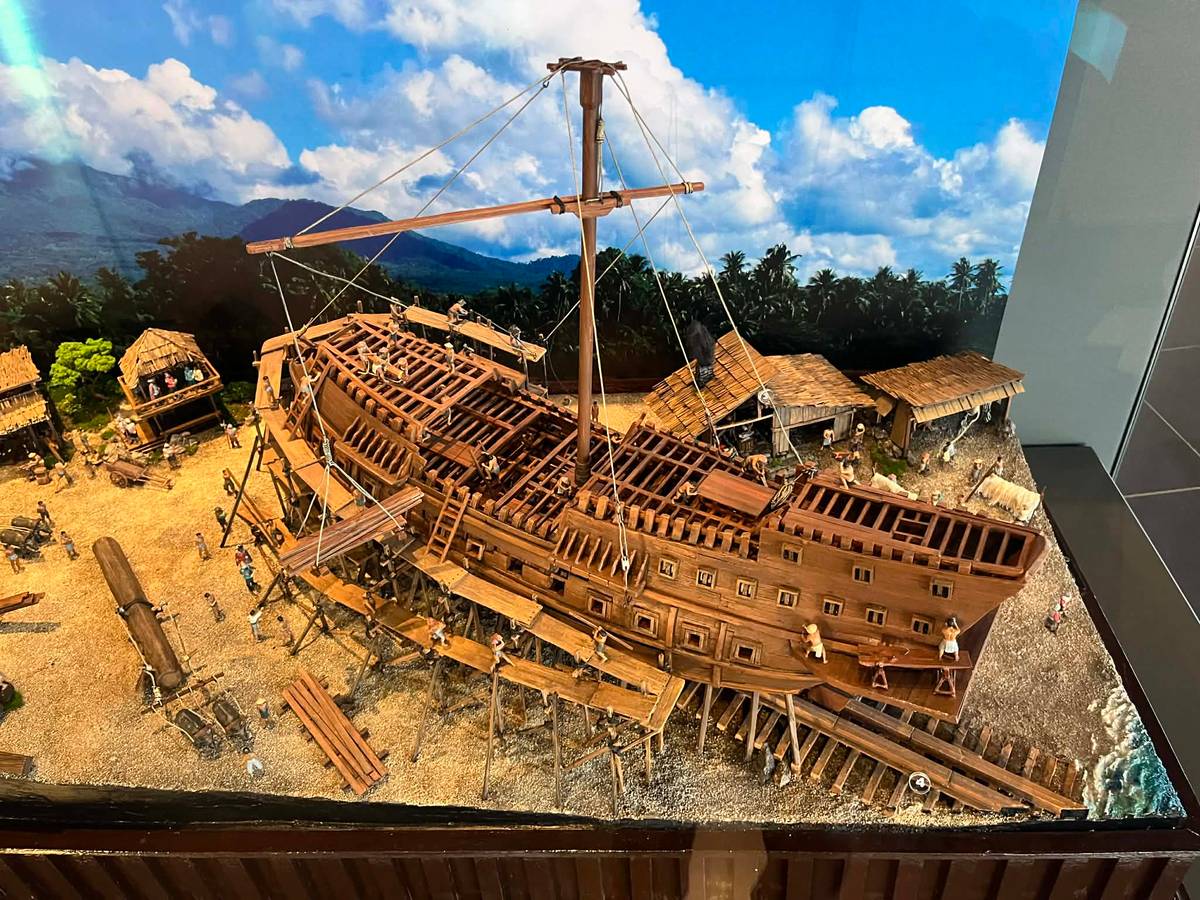
A diorama shows how galleons were built, recalling the shipbuilding traditions that supported the Manila-Acapulco Galleon Trade.
In 2015, Filipino and Mexican experts began initial talks in Manila for the ambitious purpose of serially nominating sites associated with this significant era in global maritime history for inscription on the prestigious UNESCO World Heritage List.
That plan did not materialize. However, a separate project honoring the historic trade pushed through: a museum that, in many ways, stands as the first in the world exclusively dedicated to the Manila-Acapulco Galleon Trade.
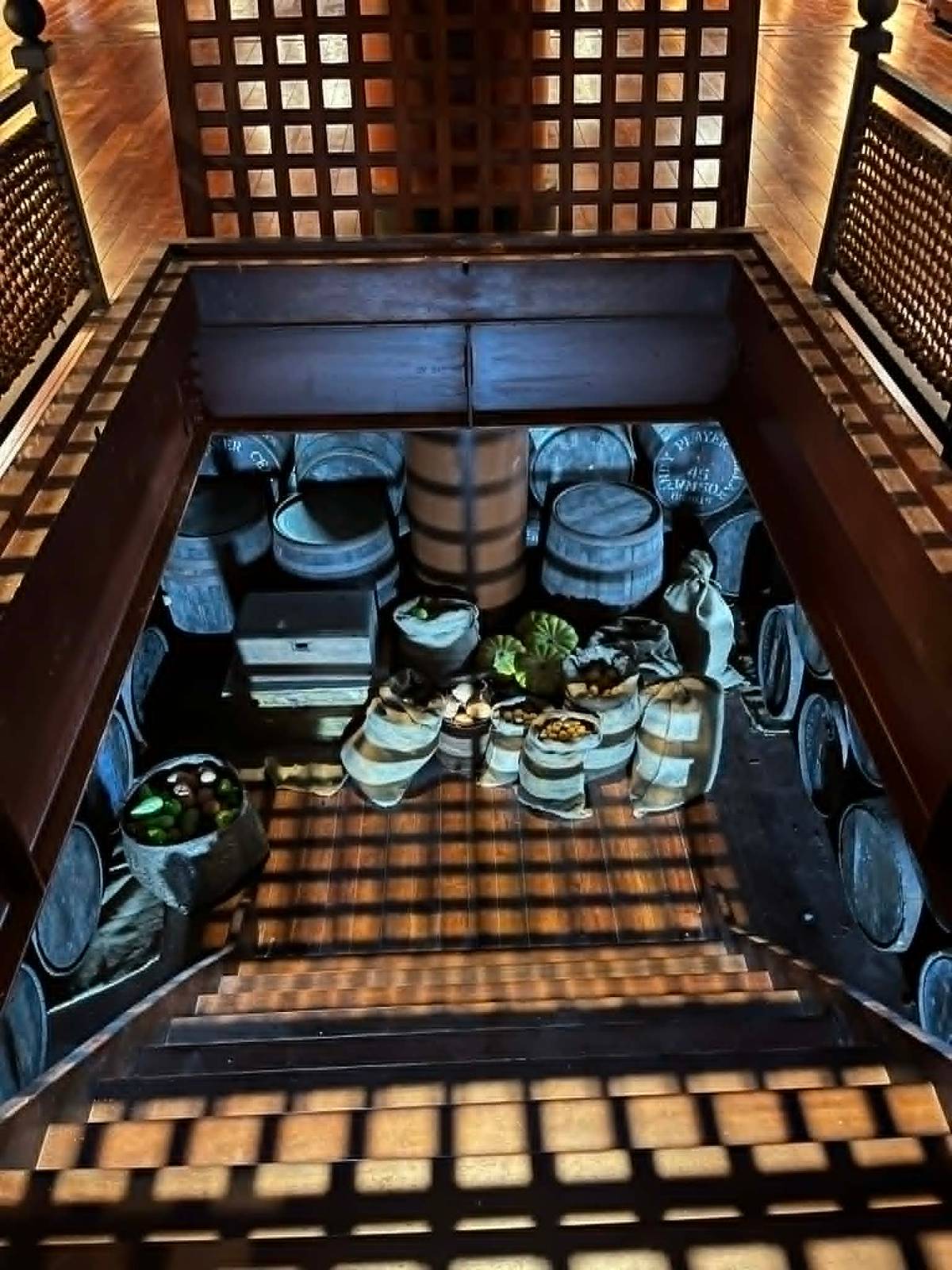
A display recreates the cargo hold of a galleon, showing goods carried across oceans during the Manila-Acapulco trade.
Inaugurated on 23 April and opened to the public on 1 May, Museo del Galeón is located at the SM Mall of Asia Complex in Pasay City, housed inside a postmodernist domed structure.
The museum was the brainchild of former Senate President Edgardo Angara, its founding chairman. It is currently led by Ambassador Carlos Salinas as chairman, Doris Magsaysay-Ho as president, and Manuel Luis Quezon III as executive director. Among its trustees are Gloria Angara, Carlos Madrid Alvarez-Piñer, Enrique Razon Jr. and Hans Sy.
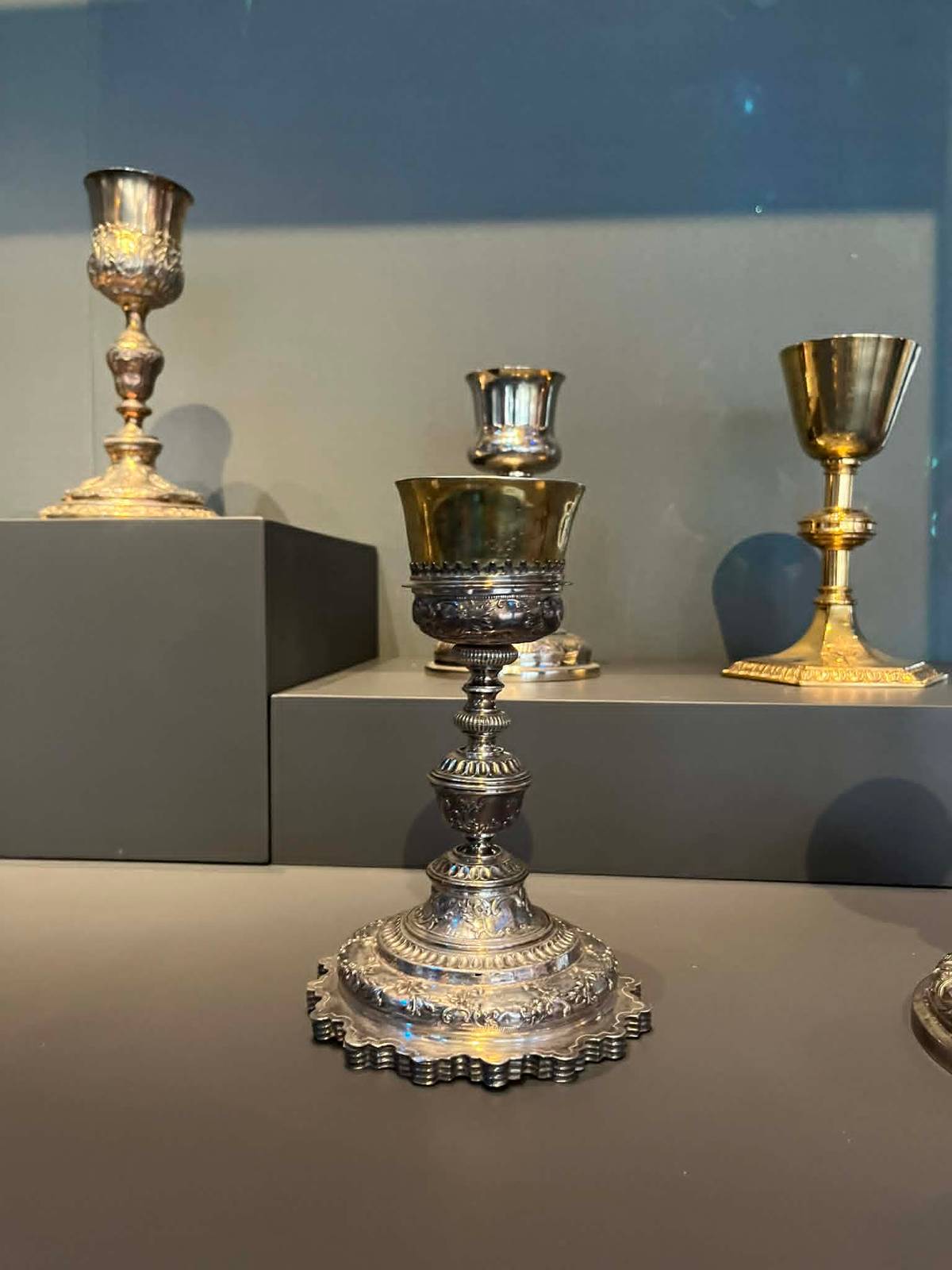
CHALICE and other religious objects form part of the museum’s exhibits on faith, trade and cultural exchange.
Immersive experience
The museum’s main attraction is a full-scale replica of one of the many galleons named Espiritu Santo, which was originally built in Cavite in 1602. Inside the replica, visitors can imagine what life was like aboard a galleon during the nearly 800 recorded voyages made between 1565 and 1815.
According to Quezon III, the galleon and the museum itself “shine a light on an important yet often overlooked chapter of Philippine heritage, using immersive storytelling to bring the country’s maritime history closer to the public.”
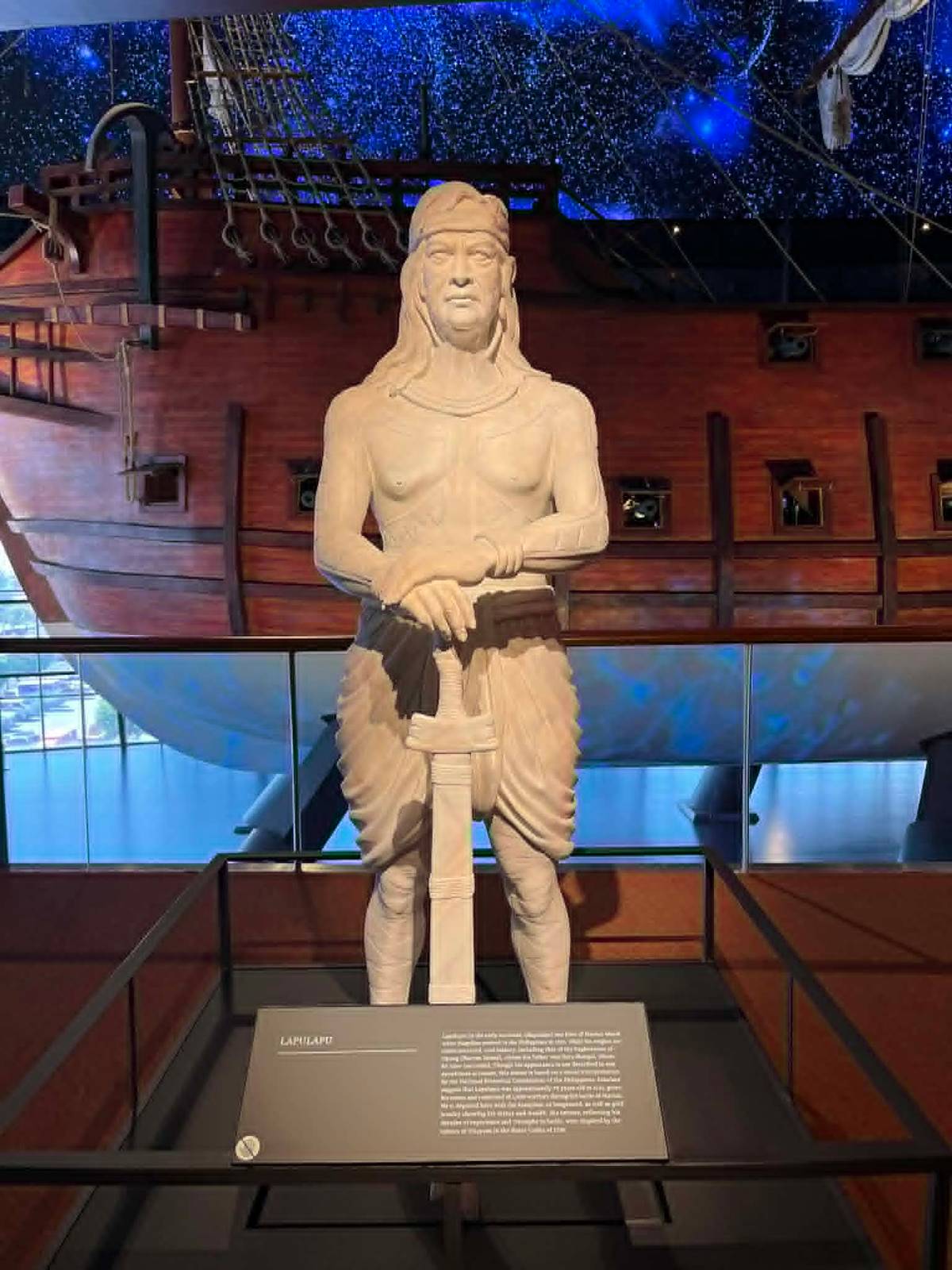
STATUE of Lapulapu.
Beyond the vessels themselves, the museum seeks to deepen public understanding of the maritime nature of the Philippines. It explores the wide-ranging impact of the galleon trade, including the movement of goods and people, the exchange of cultures and traditions, and the influences that reached even botany and language.
It also highlights the social, cultural, and human narratives connected to the galleon trade, as well as the broader maritime history and heritage of the country.
Through this, Quezon III said, the museum “helps open a deeper conversation about identity, heritage, and our responsibility to the future.”
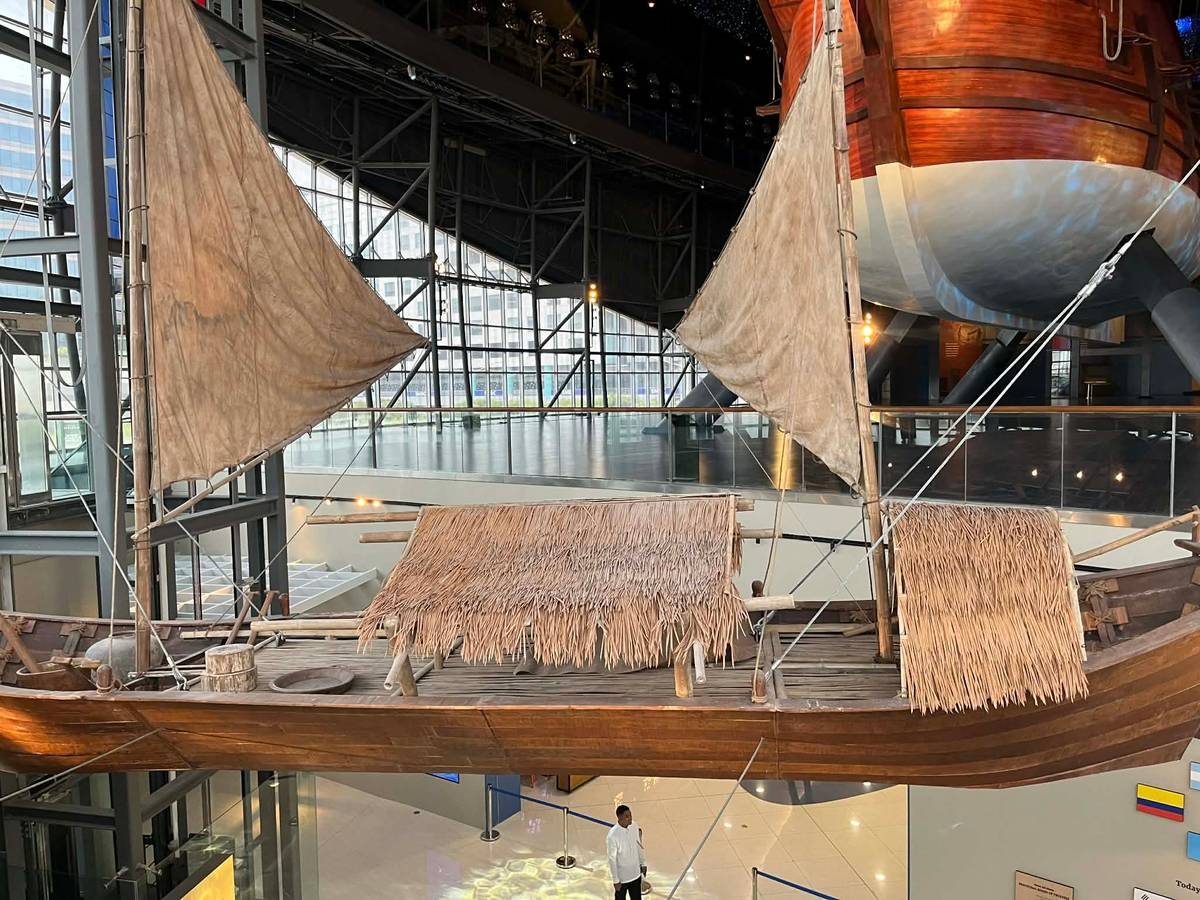
REPLICA of the Butuan balangay highlights the Philippines’ long maritime tradition before and beyond the galleon trade.
Maritime history
Once fully completed, the museum will feature four galleries covering Philippine maritime history, from the country’s early seafaring traditions to its present status as one of the world’s leading sources of mariners. The galleries will also examine transpacific maritime trade and its effects and legacies in Asia, North and South America and Europe.
Among its current features is an overhead installation of 181 galleons, representing the number of ships that plied the route. It also has 10 monumental pillars symbolizing the defining themes of the galleon trade, and the Sea of Lights, an LED display that presents world maritime history, seascapes, constellations, and storms that shaped, and continue to shape, ship movements around the world.
The Sea of Lights is the largest indoor LED display in the country. Among museums worldwide, it is also considered the largest indoor LED band installation.
A learning hub, which will occupy a portion of the museum’s nearly one-hectare exhibition space, is also in development.
On exhibit
As part of its permanent collection and exhibition, Museo del Galeón features replicas of the Butuan balangay, church objects such as chalices and religious images, a mantón de Manila, ceramics, old maps, spices and floral species brought through the galleon trade.
The museum also has sculptural pieces by Paete master Luis Ac-ac, as well as larger-than-life statues of Rajah Humabon and Lapulapu.
The statue of Lapulapu is particularly notable, as it presents what the museum describes as a historically grounded representation of the hero of the Battle of Mactan, based on research by historian Danny Gerona.
Museo del Galeón is open from Wednesday to Sunday, 10 a.m. to 7 p.m.