
PHLPost releases stamps featuring iconic plazas


The Philippine Postal Corporation (PHLPost) has released a new collection of stamps featuring historic town plazas across the country to highlight Filipino identity and history in celebration of National Heritage Month.
“This new stamp collection pays tribute to the country’s historic town plazas, which have long served as the heart of Filipino communities. By immortalizing these landmarks on stamps, PHLPost underscores their role as living symbols of Filipino heritage,” PHLPost said in a statement.
Philippine plazas are important public spaces that reflect the country’s history, culture, and community life. “More than just open areas in towns and cities, plazas are symbolic centers where social, religious, political, and cultural activities take place,” the statement added.
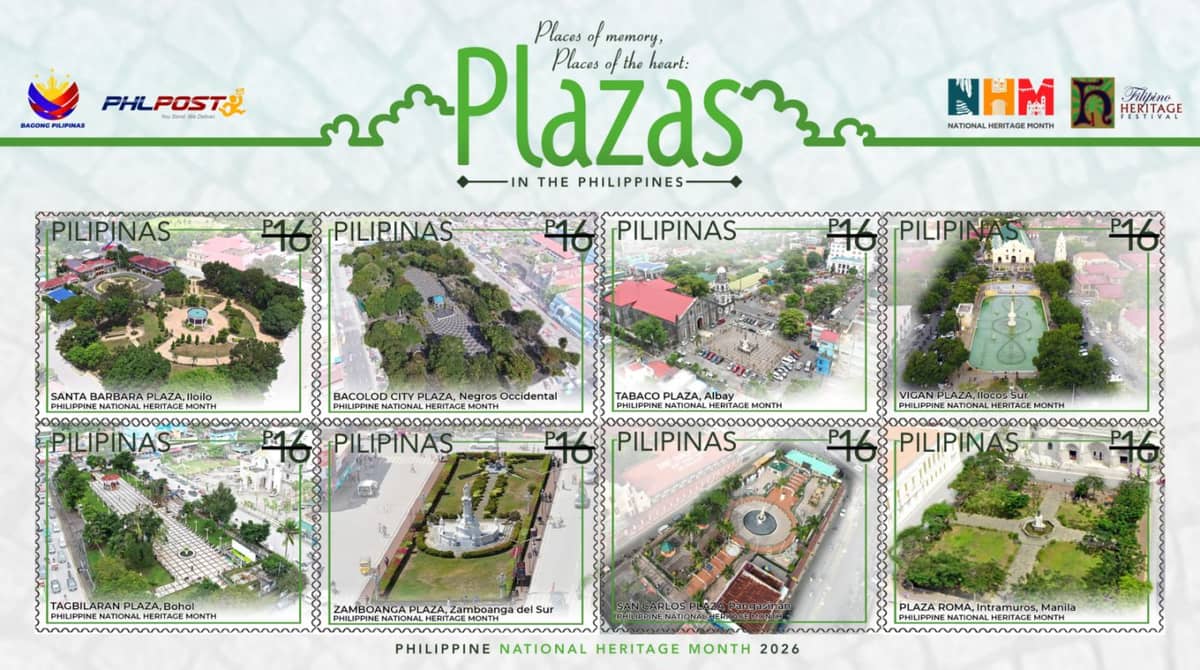

The plaza-themed stamps feature the architectural beauty and historical significance of several public squares, including Sta. Barbara Plaza in Iloilo, Bacolod City Plaza in Negros Occidental, Tabaco Plaza in Albay, Vigan Plaza in Ilocos Sur, Zamboanga Plaza in Zamboanga del Sur, San Carlos Plaza in Pangasinan, and Plaza Roma in Intramuros, Manila.
“Often surrounded by churches, municipal halls, and heritage buildings, these public spaces reflect the Philippines’ layered history, blending indigenous traditions with colonial influences, and continuing to evolve as vibrant hubs of everyday life,” the release said.
The stamps were designed by PHLPost in-house artist Jose Antonio Jayme and coordinated with Judith Neric of Filipino Heritage Festival Inc. The photos featured in the stamps were credited to architect Paulo Alcanzaren, a Filipino landscape architect and urban planner known for his advocacy in reclaiming public spaces and his research on Philippine plazas. Alcanzaren has spent many years documenting the heritage of plazas across towns and cities in the country.
PHLPost said it uses philately as a storytelling medium, “turning small pieces of postage into educational and collectible artifacts that celebrate Filipino identity,” and aims to promote awareness and appreciation of the nation’s cultural legacy.
“Beyond their functional use, these stamps are expected to attract collectors, historians, and the general public, encouraging a deeper appreciation of the Philippines’ rich cultural landscape,” the statement concluded.