
Multi-shocks retard Phl economy
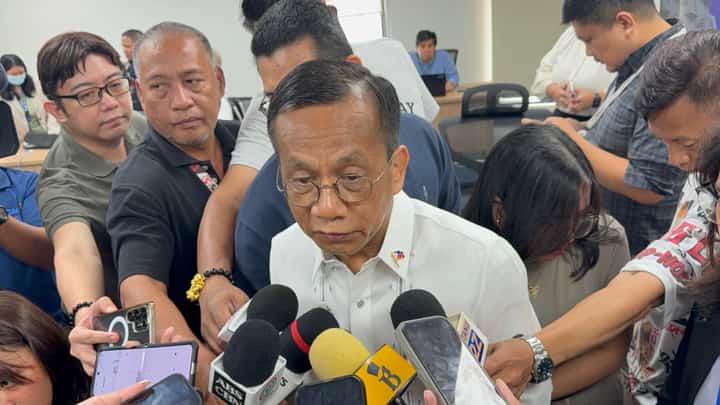
DEPDEV Secretary Arsenio Balisacan speaks to reporters following a Thursday, 7 May press conference at the Philippine Statistics Authority headquarters in Quezon City.
Photograph by Toby Magsaysay for DAILY TRIBUNE
Philippine economic growth slowed further at the start of 2026, extending last year’s second-half slump as the Marcos Jr. administration continues to grapple with domestic corruption issues and the global energy crisis.
At a Thursday press conference at the Philippine Statistics Authority headquarters in Quezon City, government officials reported gross domestic product (GDP) growth for the first quarter fell to 2.8 percent — 0.2 percentage points lower than the already weak fourth-quarter 2025 rate and the slowest since the 1.8 percent growth recorded in the first quarter of 2021 at the height of the Covid-19 pandemic.
Department of Economy, Planning and Development (DEPDev) Secretary Arsenio Balisacan said the country lagged behind regional peers such as Indonesia, Vietnam and China, noting the weak print reflects a combination of domestic and external headwinds.
Lingering effects of flood control projects corruption
“First, the lingering effects of the flood control corruption controversy weighed on consumer sentiment and business and investment confidence. Second, delays in the passage and release of the 2026 national budget slowed the rollout of critical government programs and infrastructure projects, particularly in public construction,” he said.
“Third and foremost, the conflict in the Middle East, which escalated toward the end of February, triggered higher global oil prices and renewed supply chain pressures, creating additional risks for oil-importing economies such as the Philippines,” Balisacan added.
With the latest data, the economy has now slowed for three consecutive quarters — a downtrend that began in July last year when the President flagged alleged anomalies in flood control projects nationwide.
Still-unresolved scandal
The still-unresolved “Floodgate” scandal triggered a contraction in public infrastructure spending and eroded investor confidence, contributing to weaker-than-expected full-year 2025 GDP growth of 4.4 percent — the third straight year the current administration has missed its growth targets.
Balisacan earlier noted that the “sharp slowdown in public construction” shaved off 1.1 percentage points from GDP — equivalent to trillions of pesos in lost output. The probes into the genesis of the scandal also saw debates arise regarding the constitutionality of unprogrammed appropriations and discretionary funds, of which about P238 billion has been disbursed in response to the energy shock.
Marcos administration’s highest priorities
“Restoring public trust and strengthening institutional credibility remain among the Marcos administration’s highest priorities,” Balisacan said. “Addressing corruption fairly and transparently is essential to rebuilding confidence among businesses, investors and consumers alike.”
Most analysts, as well as the central bank, subsequently lowered their growth projections for the Philippines as a result of the controversy — which may influence an already-soured general investor sentiment, while also potentially impacting future monetary policy decisions and borrowing costs.
Compounding these domestic strains is the Middle East conflict, which has further destabilized the already fragile economic backdrop. Headline inflation surged to 7.2 percent in April — four times higher than end-2025 levels — driven by elevated fuel, transport, and food costs.
Reversing course
The Bangko Sentral ng Pilipinas, which had previously cut rates twice to support growth in the fallout of the graft scandal, was forced to reverse course and hike interest rates last month as inflationary pressures intensified — raising the risk of slower economic expansion and even weaker Filipino purchasing power ahead.