
ADB lowers Philippine growth outlook on oil shock
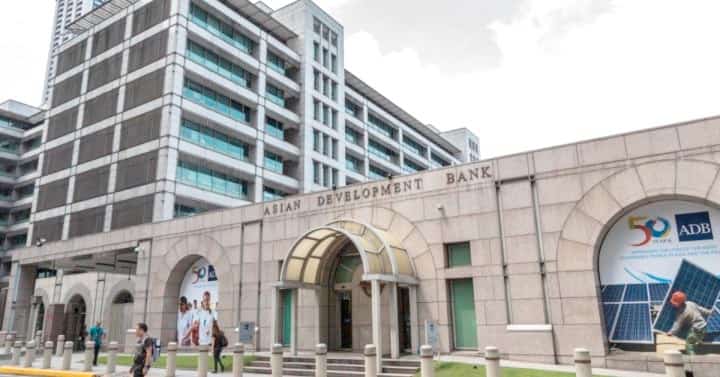
THE Asian Development Bank likewise trimmed its 2026 growth outlook from 5.7 percent to 5.3 percent, citing ‘weak infrastructure spending amid investigations of publicly funded projects, and natural hazards.’
PHOTOGRAPH COURTESY OF DBP
The Metro Manila-based Asian Development Bank (ADB) has cut its 2026 growth projection for the Philippines, as the Middle East crisis is expected to weigh on economic activity across the region for the foreseeable future.
In its Asian Development Outlook for April 2026, the multilateral lender said it now projects Philippine gross domestic product (GDP) growth at 4.4 percent for 2026—a 0.9-percentage-point downgrade from its December forecast, reflecting the impact of the global energy crisis stemming from the Middle East conflict.
ADB noted that for developing Asia and the Pacific—of which the Philippines is part—growth is expected to moderate to 5.1 percent in both 2026 and 2027, while inflation is projected to rise to 3.6 percent before easing to 2.4 percent next year.
However, ADB Principal Economist John Beirne warned that under a worst-case scenario, a prolonged conflict could further drag down regional growth. He noted that the April 2026 outlook was prepared prior to more recent developments, including the two-week ceasefire agreement, which he described as fragile.
“[E]vents since 10th March suggest that a prolonged conflict is increasingly likely. The two-week ceasefire announced earlier this week provides some optimism, but appears quite fragile,” he said at a press conference during the report’s launch.
“In this case, disruptions would persist for around 1 year, with oil prices rising to around $155 per barrel in the middle of this year, and remaining elevated into next year. So under this scenario, developing Asia and the Pacific could lose around 1.3 percentage points of cumulative GDP growth over this year and next year—broadly in line with the impact at the global level,” Beirne added.
Announced earlier this week, the two-week ceasefire is intended to allow parties to finalize a potential peace agreement and reopen the Strait of Hormuz—a critical global chokepoint that handles about 20 percent of the world’s oil supply. However, recent Israeli strikes in Lebanon and continued threats to shipping flows point to lingering instability despite the temporary reprieve.
“We could see further disruption, we could see persistence [as well] in the energy price elevation, and I think at the moment, it's very uncertain,” Beirne added.
Beirne said economic activity across developing Asia and the Pacific in 2026 will be supported by steady labor markets, strong public infrastructure spending, and accommodative policies. However, the conflict is expected to weigh on growth through higher production costs, rising consumer prices, and weaker external demand from trade and tourism.
ADB’s forecast aligns with the Bangko Sentral ng Pilipinas (BSP)’s recent downward revision of its own 2026 Philippine growth projection to 4.4 percent, also reflecting the impact of the Middle East conflict, which has driven heightened volatility in global oil prices.
Meanwhile, S&P Global maintained its bullish long-term outlook on the Philippine economy, affirming its credit ratings and 2026 GDP growth forecast of 5.8 percent, supported by a potential second-half rebound and “supportive policy dynamics and an improving investment climate” despite the recent oil price shock.