
ME war, tariffs make ASEAN investors’ confidence conscious
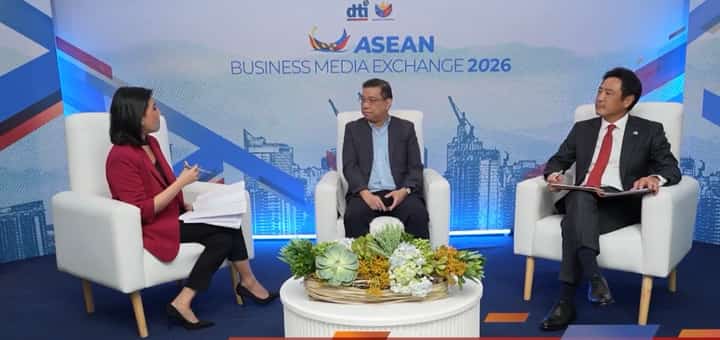
MACTAN, Cebu—As the Middle East war persists, and tariff woes remain, investors in the ASEAN region are now more cautious, Philippine Trade and Industry Undersecretary and Board of Investments managing head Ceferino Rodolfo admitted on Thursday.
This was amid the recent Asian Development Bank GDP growth for Southeast Asia, stating that it still sees solid growth fueled by robust domestic demand.
The sub-regional GDP of the ADB for the ASEAN region is projected to expand by 4.7 percent in 2026 and 4.8 percent in 2027, though dynamics will vary across economies.
“The biggest enemy of investor confidence is uncertainty. And in this context, because of the uncertainties brought about by what is happening from the tariffs to the Middle East crisis. What it has brought about is a more conscious investment attitude towards ASEAN in general, and across sectors,” Usec. Rodolfo said during the ASEAN Business Media Exchange, which is part of the ASEAN Summit 2026.
“But I have to say that there are certain key sectors that have been receiving a lot of attention, and not just attention, a lot of action from investors. So, there are opportunities within the crisis, and for the Philippines, we are fortunate enough to have already, even before the crisis, laid down the foundation so that we can accelerate the actions by investors on these particular sectors,” he added.
Rodolfo said the geopolitical tensions, which resulted in global oil shocks, have opened doors for other sectors for investments in the country, namely the renewable energy, mining and mineral processing, digital infrastructure (submarine cables to fiber optic networks, telco towers and data centers the low-hanging fruit, tourism, as well as high-value manufacturing, including semiconductors and electronics.
For the renewable energy sector, Rodolfo said the Philippine government is focused on 4Ps—Policy reform, Permitting process, Partnerships, and People and workforce development.
“For Policy reforms, we already have policies in place before the crisis. For the Permitting process, we have the Green Lane facility, among other interventions,” according to Rodolfo.
The BOI earlier reported that renewable energy investments for 2026 are surging, approving over P20.4 billion in RE projects during February 2026 alone, accounting for 55.9 percent of total approved investments for that month.
From January to February 2026, energy projects, largely driven by renewables, reached P 22.4 billion, making up 47.7 percent of total approvals.
More Japanese investors for Phl seen—Sumitomo Bank
Rodolfo’s investment assessment for the Philippines was supported by Hiroyasu Kanda, the Manila Branch Managing Director and Country Head of Sumitomo Mitsui Banking Corporation (SMBC), who said Japanese investors have a strong interest in looking for business opportunities in the Philippines.
“And of course, given the current significant changes in the environment, they are definitely reviewing their business strategies. But we in SMBC are confident that the Philippines still attracts more Japanese investors,” he said, being one of the panelists at the ASEAN Business Media Exchange.
Last month, SMBC, the BoI, and Rizal Commercial Banking Corporation entered into a tripartite Memorandum of Understanding to deepen cooperation in promoting and facilitating investments across priority sectors, strengthening BoI efforts to attract more Japanese investments into the country.
SMBC is a leading global financial institution and the core banking subsidiary of Sumitomo Mitsui Financial Group.
It offers a broad range of financial services and has a long-standing presence in the Philippines, including being the first foreign bank to establish a branch in the country following the liberalization of foreign bank entry in 2015.
In 2025, FDI inflows from Japan reached $904.15 million, while approved investments amounted to P34.03 billion.
Japanese companies continue to play a significant role across key sectors such as electronics and semiconductors, automotive manufacturing, infrastructure and construction, and IT-BPM, reinforcing Japan’s position as one of the Philippines’ most important economic partners. (RAFFY AYENG)