
DepEd orders full shift to Government Recognition for private senior high schools by 2027–2028

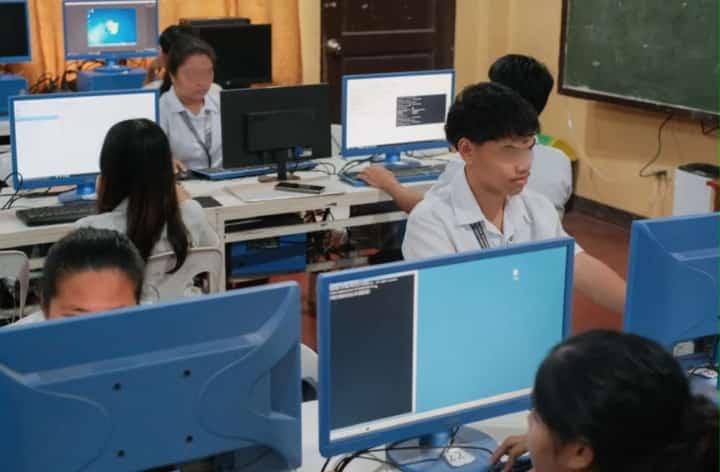
Education Secretary Sonny Angara has mandated all private senior high schools to transition from provisional permits to formal government recognition by School Year 2027–2028 to elevate academic standards. This new policy strengthens institutional accountability and ensures that over 1.4 million learners nationwide receive quality and protected education.
DepEd PH
The Department of Education (DepEd) has mandated all private institutions offering Senior High School (SHS) to move from provisional permits to formal Government Recognition by School Year 2027–2028, in a policy aimed at tightening quality assurance and regulatory oversight in the sector.
Education Secretary Sonny Angara said DepEd Order No. 12, s. 2026 addresses long-standing gaps in the regulation of private SHS programs and is intended to standardize compliance with national education requirements.
“Sa pamamagitan ng Government Recognition, mas malinaw ang pamantayan, mas accountable ang institutions, at mas protektado ang learners,” Angara said.
Under the new directive, private SHS providers with existing permits must secure Government Recognition, which will serve as permanent authorization to operate and certify compliance with DepEd standards.
The recognition process will evaluate schools based on curriculum implementation, school leadership, facilities, learner support systems, faculty qualifications, institutional planning, and financial management.
DepEd said a one-year transition period will be implemented in SY 2026–2027 to allow schools to comply without disrupting student enrollment and access to education services.
During this period, certain institutions—including those accredited by the Federation of Accrediting Agencies of the Philippines (FAAP), certified by the Private Education Assistance Committee (PEAC), and participating in the Strengthened SHS Pilot Schools program—may be granted automatic recognition, subject to validation safeguards.
Beginning SY 2027–2028, only private SHS institutions with Government Recognition will be allowed to admit Grade 11 students under the SHS Voucher Program, a government subsidy scheme that supports enrollment in private schools.
As of SY 2024–2025, private institutions account for 38 percent of all SHS providers nationwide and serve about 1.46 million Grade 11 and 12 learners.
However, DepEd noted that many schools have continued to operate under provisional permits for over a decade due to previously unclear and outdated recognition procedures.
The new policy also introduces enforcement mechanisms, including monitoring systems and sanctions for non-compliance. It likewise outlines learner protection measures such as continuity of schooling, voucher portability, and structured transfer procedures in cases of denial, suspension, or revocation of recognition.
Anchored on Republic Act No. 10533 or the Enhanced Basic Education Act of 2013, the reform is aligned with the Quality Basic Education Development Plan 2025–2035 and DepEd’s broader push for strengthened public–private complementarity in education delivery.
DepEd’s Private Education Office will lead implementation in coordination with regional and division offices nationwide.