
DA pours P55M into food safety labs
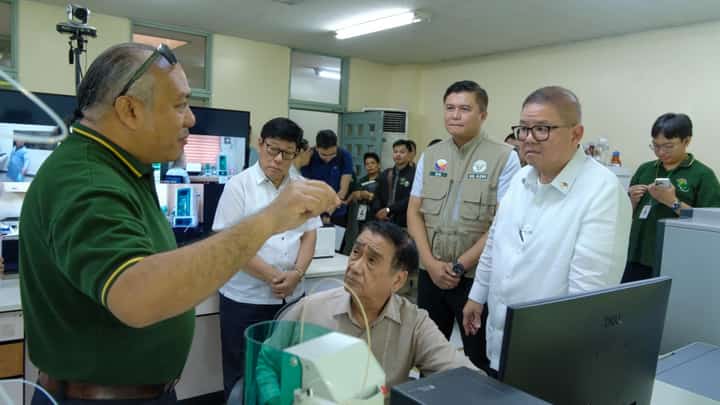
The Department of Agriculture (DA) is investing P55 million to strengthen food safety monitoring nationwide, rolling out upgraded laboratory facilities capable of detecting nitrate and nitrite contaminants in vegetables and other plant-based food products.
The initiative equips laboratories under the Bureau of Plant Industry with advanced testing capabilities, signaling a more science-driven approach to food regulation as authorities work to establish stronger monitoring standards for agricultural products.
Agriculture Secretary Francisco P. Tiu Laurel Jr. said the program supports broader efforts to improve public health protection while enhancing the export readiness of Philippine produce.
“This is part of our continuing effort to ensure food security, protect public health while preparing our capacity broaden access for Philippine plant products to markets abroad,” Tiu Laurel said.
Under the program, nitrate-testing capability has been deployed across five BPI laboratories located in Quezon City, Cebu, Baguio, Davao, and Cagayan de Oro. The facilities are designed to analyze contaminants commonly found in leafy vegetables and other crops vulnerable to nitrate accumulation.
Authorities said recovery testing has already been completed, while validation procedures are continuing to ensure accuracy and consistency in results.
With no existing Philippine benchmark for nitrate contamination in plant-based food, regulators are temporarily using European Union standards as reference points while local baseline data is being developed.
The project also covers the procurement of ion chromatograph equipment, laboratory chemicals, and specialized training for technical personnel to support nationwide monitoring operations.
Officials said the upgraded laboratories would help regulators monitor contamination trends more systematically and lay the groundwork for science-based food safety standards in the country.
The initiative could also support exporters that need to comply with stricter international safety requirements, although tighter monitoring may lead to higher compliance demands for producers adjusting to more rigorous testing systems.
The Agriculture department said the investment forms part of a wider effort to modernize food safety regulation and improve confidence in Philippine agricultural products both locally and abroad.