
Philippines, Japan reaffirm stronger defense cooperation

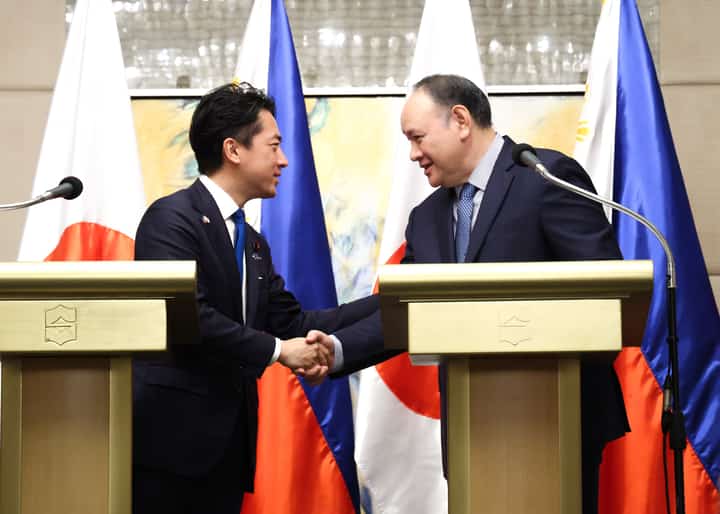
Philippines and Japan reaffirm stronger defense cooperation in Makati City, advancing the Reciprocal Access Agreement, new equipment and technology deals, and joint exercises like Balikatan to boost maritime security, regional deterrence, and a Free and Open Indo-Pacific.
The Department of National Defense (DND) on Wednesday reported that Defense Secretary Gilberto Teodoro Jr. and Japan Defense Minister Shinjiro Koizumi held a Defense Ministerial Meeting in Makati City on 5 May 2026, reaffirming the continued strengthening of defense ties between the Philippines and Japan.
The DND said the two defense leaders welcomed the steady progress in operational cooperation, including the implementation of the Philippines-Japan Reciprocal Access Agreement (RAA) and the signing of the Acquisition and Cross-Servicing Agreement (ACSA).
They also noted the growing scope of joint and multilateral activities, including humanitarian assistance and disaster relief exercises, as well as Japan’s participation in Exercise Balikatan, as key drivers of enhanced interoperability.
In his remarks, Teodoro emphasized the depth of strategic trust underpinning defense agreements between partners, noting that the RAA “should not be taken as a pure defense-to-defense or a military-to-military agreement, but as an expression of the highest form of trust and confidence, and an expression of the highest level of engagement of two countries, because of shared interests and a shared future.”
He further underscored the need to translate shared commitments into concrete outcomes, stressing the importance “to make sure that we work very rapidly into translating our shared vision into operational realities, not only bilaterally, but together with our allies.”
Both sides reaffirmed their commitment to upholding a rules-based international order and expressed serious concern over developments in the East China Sea and South China Sea.
They underscored the importance of strengthening maritime domain awareness, information sharing, and operational coordination to address evolving regional security challenges.
In light of Japan’s review of its Three Principles on the Transfer of Defense Equipment and Technology and its Implementing Guidelines, the ministers also agreed to further expand cooperation in defense equipment and technology through the signing of a Statement on the Further Promotion of Defense Equipment and Technology Cooperation.
They emphasized the need to enhance institutional mechanisms and advance new initiatives that contribute to regional deterrence and stability.
The meeting highlighted the Philippines’ commitment to deepening strategic partnerships and promoting peace and stability in the Indo-Pacific through sustained and practical defense cooperation.
Koizumi, for his part, said they shared the view that, in addition to the bilateral joint training that Japan and the Philippines have continuously conducted in the field of humanitarian assistance and disaster relief, the ongoing participation of the Japan Self-Defense Forces in field training during the Philippines-United States co-hosted Exercise Balikatan 41-26 — conducted under the application of the RAA — symbolizes the deepening of operational cooperation between the two countries.
The two ministers also shared the view that cooperation between Japan and the Philippines is vital to the national resilience of both countries.
They confirmed their intention to ensure the integrated functioning of existing and new consultation platforms at the levels of defense ministers, vice ministers, and working-level officials of both defense establishments, covering policy, operations, and defense equipment and technology cooperation under the framework of ministerial-level dialogue.
In addition to strengthening bilateral cooperation, the two ministers agreed to enhance defense partnerships in multilateral settings, including Japan-Philippines-US, Australia-Japan-Philippines-US, and ASEAN.
Under the leadership of President Ferdinand Marcos Jr. and Japanese Prime Minister Sanae Takaichi, the two ministers expressed their determination to enhance concrete bilateral and multilateral actions under the Free and Open Indo-Pacific (FOIP) framework.