
House approves National Land Use Act amid shrinking farmlands
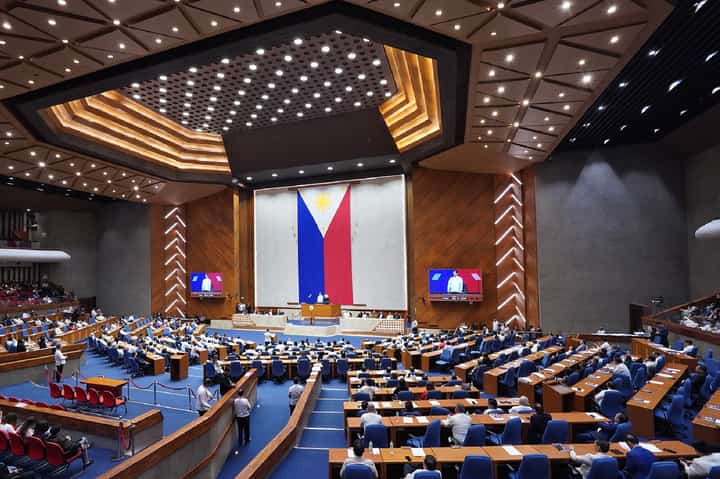
The House of Representatives of the Philippines approved House Bill No. 8466, or the National Land Use Act, on third and final reading after garnering 224 votes in favor, three against, and no abstentions during Tuesday’s plenary session.
The bill seeks to establish a national framework for the sustainable use of land, addressing concerns on housing, the improper conversion of prime agricultural lands, the protection of forests and ancestral domains, and the implementation of climate and disaster risk management plans.
The measure proposes the creation of a National Land Use Commission under the Office of the President, which would formulate a 30-year National Physical Framework Plan to be updated every 10 years. The framework would identify settlements, production areas, and other land uses, with regional, provincial, city, and municipal land plans required to align with the commission’s blueprint.
“This is one of those bills that people may not talk about every day, but they will feel it when farms are protected, homes are built in safer places, roads are planned better, and communities are spared from avoidable disasters,” said House Majority Leader and Ilocos Norte 1st District Rep. Sandro Marcos, one of the bill’s principal authors.
The bill, which is part of the Legislative-Executive Development Advisory Council (LEDAC) priority measures, marks its second consecutive approval in Congress after nearly 28 years of deliberations.
Shrinking farmlands
According to the Philippine Statistics Authority, the average farm size in the country declined by 77 percent, from 3.61 hectares in 1970 to 0.83 hectares in 2022, with the decrease continuing since 1991.
Despite the shrinking average farm size, the number of farms increased to 7.43 million in 2022, based on PSA data.
Western Visayas recorded the highest number of farms at 779,000, covering 454,000 hectares, while the National Capital Region posted the lowest with 34,000 farms covering 15,000 hectares.
The International Coalition for Human Rights in the Philippines (ICHRP) also reported cases of mass displacement in rural communities in Mindoro, the Cordillera, and Negros. In Toboso, Negros Occidental, the Army’s 79th Infantry Battalion reported 19 deaths of alleged rebels, while the Communist Party of the Philippines disputed the figure, claiming that nine of those killed were civilians.
In Mariveles, Bataan, 17 farmers alleged that around 400 hectares of land had been grabbed by former presidential spokesperson Harry Roque, prompting the National Bureau of Investigation to launch an investigation in March 2026.
During Earth Day on April 22, the Kilusang Magbubukid ng Pilipinas claimed that land grabbing and the displacement of rural communities were being carried out under the guise of green investments.
The Bureau of Agricultural Statistics also reported that the country has been losing around 27,000 hectares of agricultural land annually since 1991.
Implications of the measure
Leyte Rep. Martin Romualdez, another principal author of the bill, said the measure seeks to balance development and protection.
“Land use sounds technical, but at its heart it is about fairness: where people can live safely, where farmers can keep producing food, where businesses can invest responsibly, and where government can build without creating new problems,” Romualdez said.
Illegal land conversion under the bill would carry penalties of up to P100,000 in fines and imprisonment of up to 12 years.
Among the three lawmakers who voted against the bill was Gabriela Party-list Rep. Sarah Elago, who argued that the measure could open the door to the commercialization of natural resources through provisions allowing multiple land-use zones, including mining activities.
The bill classifies land into four categories: protection and conservation, housing and settlement, public works, and production.