
DoTr probes ‘ghost riders’ amid cash payouts
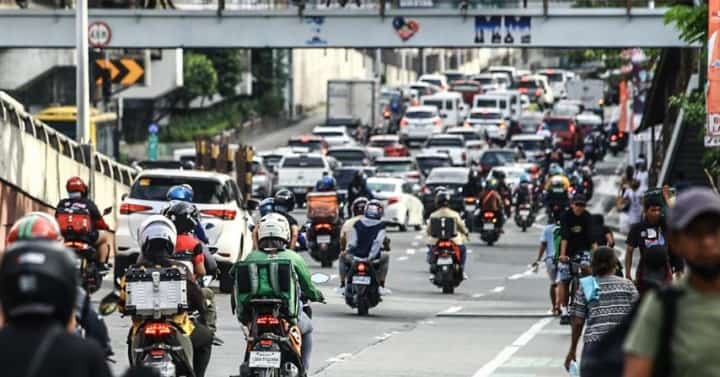
The Department of Transportation (DoTr) has uncovered widespread irregularities involving “ghost riders” within transport network services, revealing that thousands of unauthorized drivers were included in government fuel subsidy lists.
Transportation Secretary Giovanni Lopez said the discrepancies were discovered during the distribution of financial aid to drivers affected by rising fuel prices.
While verifying master lists for jeepneys, taxis and transport network vehicle services (TNVS), authorities found thousands of names that were not legitimately registered or authorized to operate.
“There are indeed ghost riders,” Lopez said, citing that the lists included “colorum,” or unregistered, drivers.
The agency estimates there are approximately 30,000 questionable entries for four-wheel ride-hailing services and more than 200,000 for motorcycle taxis. Lopez said the responsibility lies with the transport network companies because the data originated from their platforms.
According to Lopez, some platforms bypassed Land Transportation Franchising and Regulatory Board (LTFRB) regulations by onboarding drivers after official slots were already filled.
“Drivers should first be granted a franchise by the LTFRB before being onboarded,” Lopez said. “What happened was that even after the slots were filled, additional drivers were still allowed to join without proper authorization.”
The investigation also revealed that some drivers were allegedly charged exorbitant “onboarding fees” ranging from P25,000 to P90,000, in addition to standard commission rates. These fees were often collected even from applicants who lacked the required provisional authority to drive.
“Some drivers were told they would not be onboarded unless they paid,” Lopez said. “That raises serious questions about where the money is going.”
The Transportation chief suggested the practice involves a complex network of companies, operators, and intermediaries, hinting at potential complicity among current or former government officials.
“It’s impossible that they did not know,” Lopez said. “There are too many irregularities for this to have gone unnoticed.”
The DoTr has begun transitioning to a fully digital onboarding and monitoring system to eliminate manual loopholes and tighten verification. A formal investigation into the liability of private companies and government regulators will begin following the completion of the current payout cycle.