
JV: Philippines still facing urgent housing crisis, warns of worsening backlog

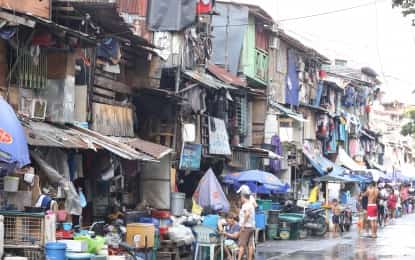
Senator JV Ejercito stressed the urgency of addressing the Philippines’ deepening housing crisis, warning that the country could need around 22 million housing units by 2040 amid a widening backlog and millions of informal settlers.
At the Senate, Ejercito cited current estimates showing a housing backlog of 2.2 million units and around 3.7 million informal settler families (ISFs), underscoring what he described as a growing national shortage of decent and affordable housing.
“Behind these numbers are extended families in cramped up spaces and shared bedrooms, those who would rather put food on the table than pay for a bigger house,” Ejercito said, adding that even minimum wage earners and members of the middle class continue to struggle with long-term housing security and remain renters.
He emphasized that the country’s housing situation reflects a broader systemic issue, where “there is no sufficient housing security for ordinary Filipinos.”
As principal author of Republic Act No. 11201, which created the Department of Human Settlements and Urban Development (DSHUD), Ejercito reiterated that the law was designed to streamline housing policies and consolidate government functions in order to accelerate housing delivery and reduce the national backlog.
Senate Resolution 318 seeks to examine the effects of DHSUD Memorandum Circular No. 2025-014, which centralized the evaluation and approval of housing projects from regional offices to the agency’s central office.
Ejercito warned that the shift to a centralized system could result in bottlenecks and delays in processing housing projects, potentially worsening the existing backlog.
He said the chamber aims to gather the perspectives of housing developers, who are key partners in delivering housing projects nationwide, to assess whether the new system has improved coordination or instead created delays, uncertainties, and additional costs.
“We want to hear directly from them on whether the shift to a centralized evaluation and approval process has improved coordination, or if it has instead created delays, uncertainties, and additional costs on their part,” he said.
The senator added that it is critical to ensure that housing policies are not only well-designed on paper but also effective in implementation.
“We cannot allow more Filipinos to suffer from these, especially when housing is a fundamental need,” he said, further stressing that inefficiencies in the system should not further delay housing access for millions of Filipinos.
“At the end of the day, the question is: does centralization lead to better coordination and accountability, or does it create barriers to timely and efficient housing delivery?” Ejercito said.